Library of Ephemera
For more than forty years, I have kept a small, changing library of found fragments, discarded things, remainders of life, damaged books and materials halfway on their way to becoming something else.
A box of stories
The library began with a box collaged by a great-aunt from cut-out birthday cards. I first used it as a story box and then as a library for precious lost and found materials, placing discarded pieces inside. When it became full, I sorted through them, pinned some up, made collage notes from others and created room for more. Since then, the fragments have been kept, moved around and collated over time.
ancestral care &…
Many of the materials have come from streets, op-shop bins and library discard piles: fragments of paper, lost shopping lists, damaged books, cards, packaging, images and small objects that had been thrown away. As a child, I hid deceased animals under my bed, hoping I could nurse them back to life.
There is a strange care in keeping things that have been discarded or damaged. Some things are passed on, lost or returned. Even plastic bags are sometimes kept with care. They remind me that we live among materials made from our seabed ancestors, with very little regard for their antiquity.
Materials in transition
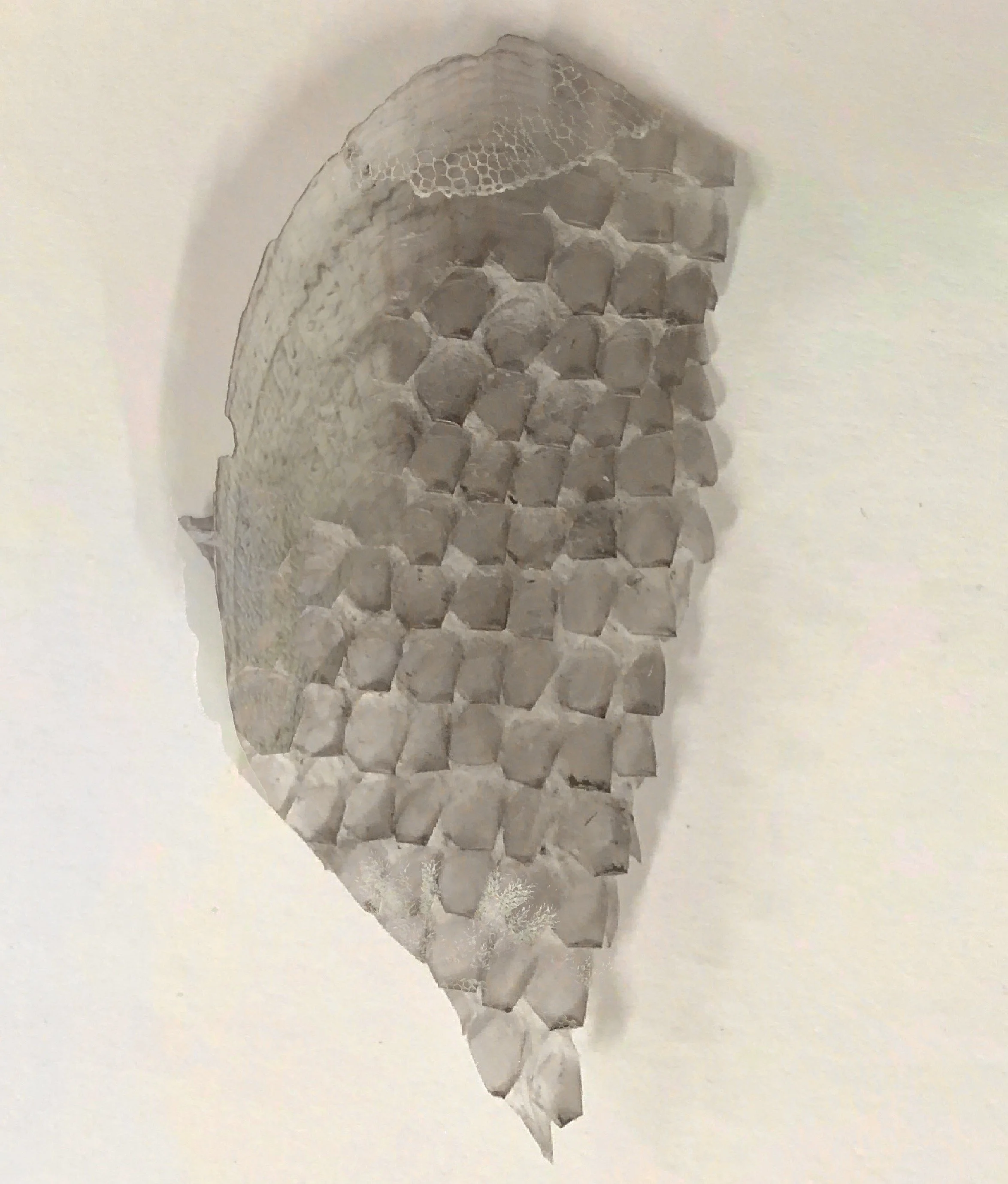
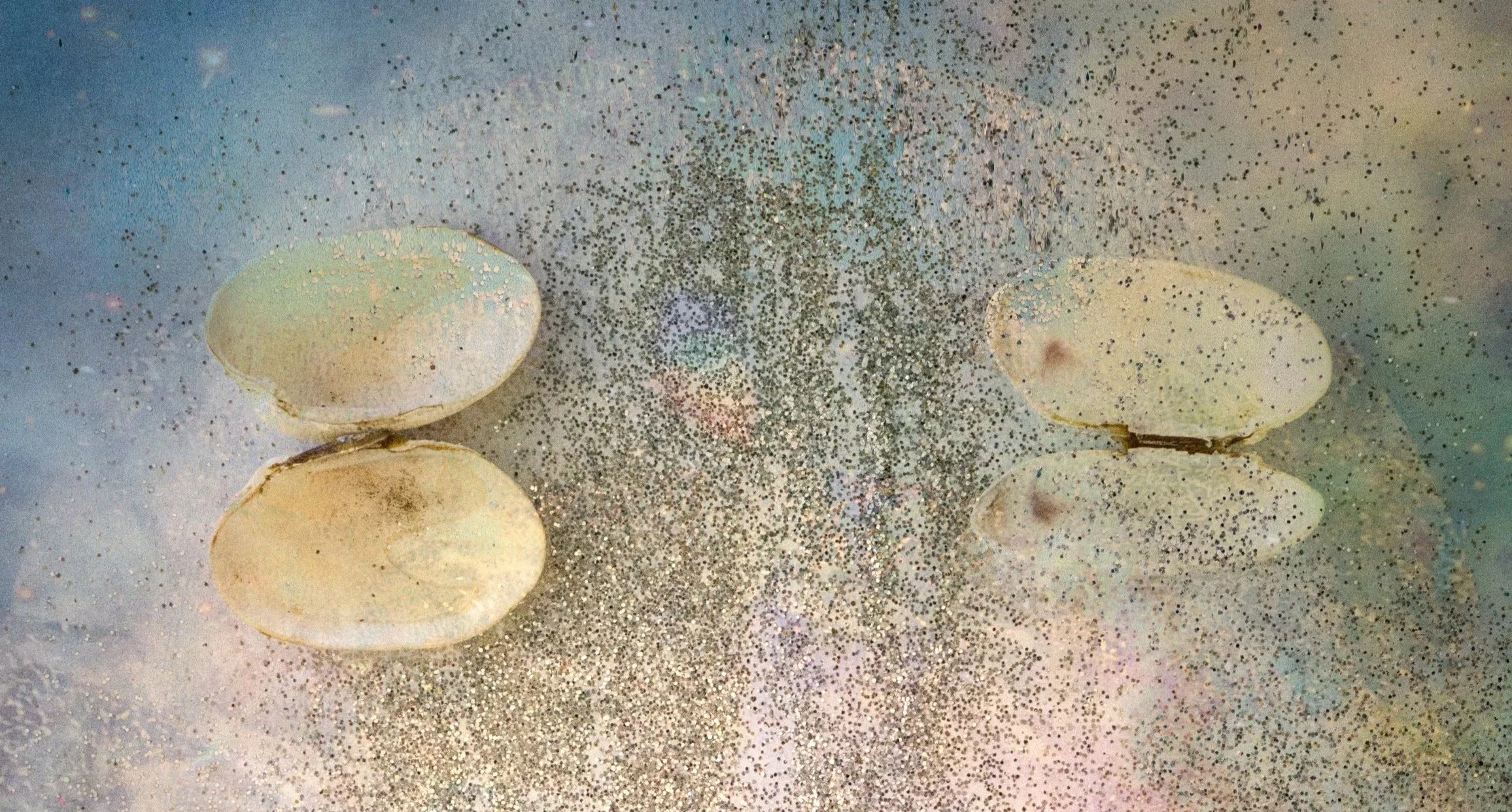
The library includes paper fragments, old books, bark, leaves, seed pods, feathers, bones, insect traces, stones, soil, fibres, packaging, broken objects and materials from studio work. Some things remain in a box or drawer for years. Others are photographed, scanned, pressed, pinned up, drawn with, made into collage notes, used as sources for colour or incorporated into an artwork.
A small fragment can hold a particular day, person, place, use, texture, material ancestry. Its significance may not be immediately apparent; sometimes it emerges only through repeated handling and recontextualisation.
Sorting, making and letting go
Because the library is continually changing, it is regularly added to and reduced. When a container becomes full, I sort through it. Things move into the studio, onto walls, into books, drawings, photographs, textiles or other works.
This ongoing process of sorting is also a way of noticing what has been passing through my life and practice. The library becomes both a record, and a working resource: a place where materials can remain in suspension until they find their next form.