Microbial and Material Intelligences
c. 2019–ongoing
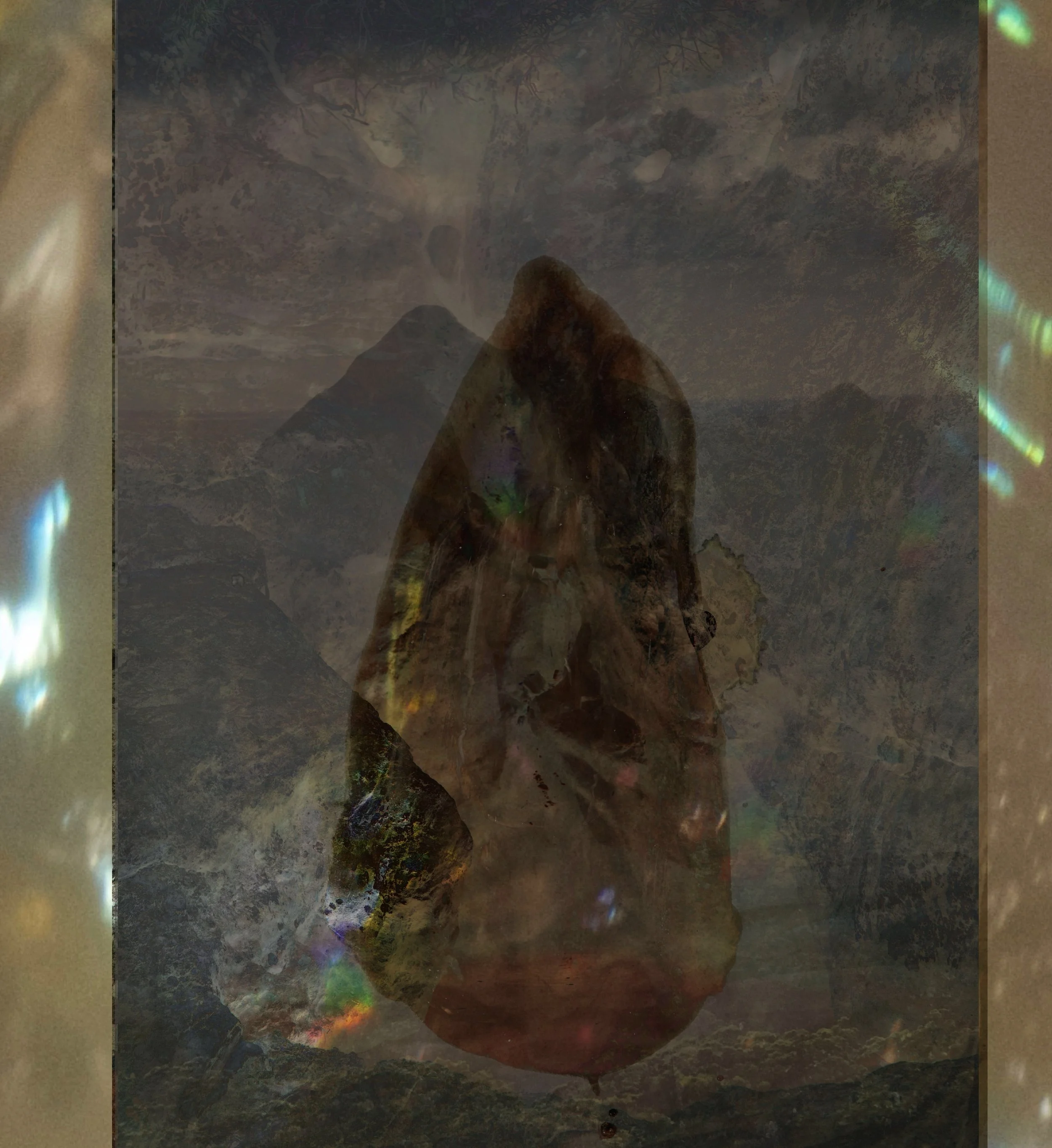
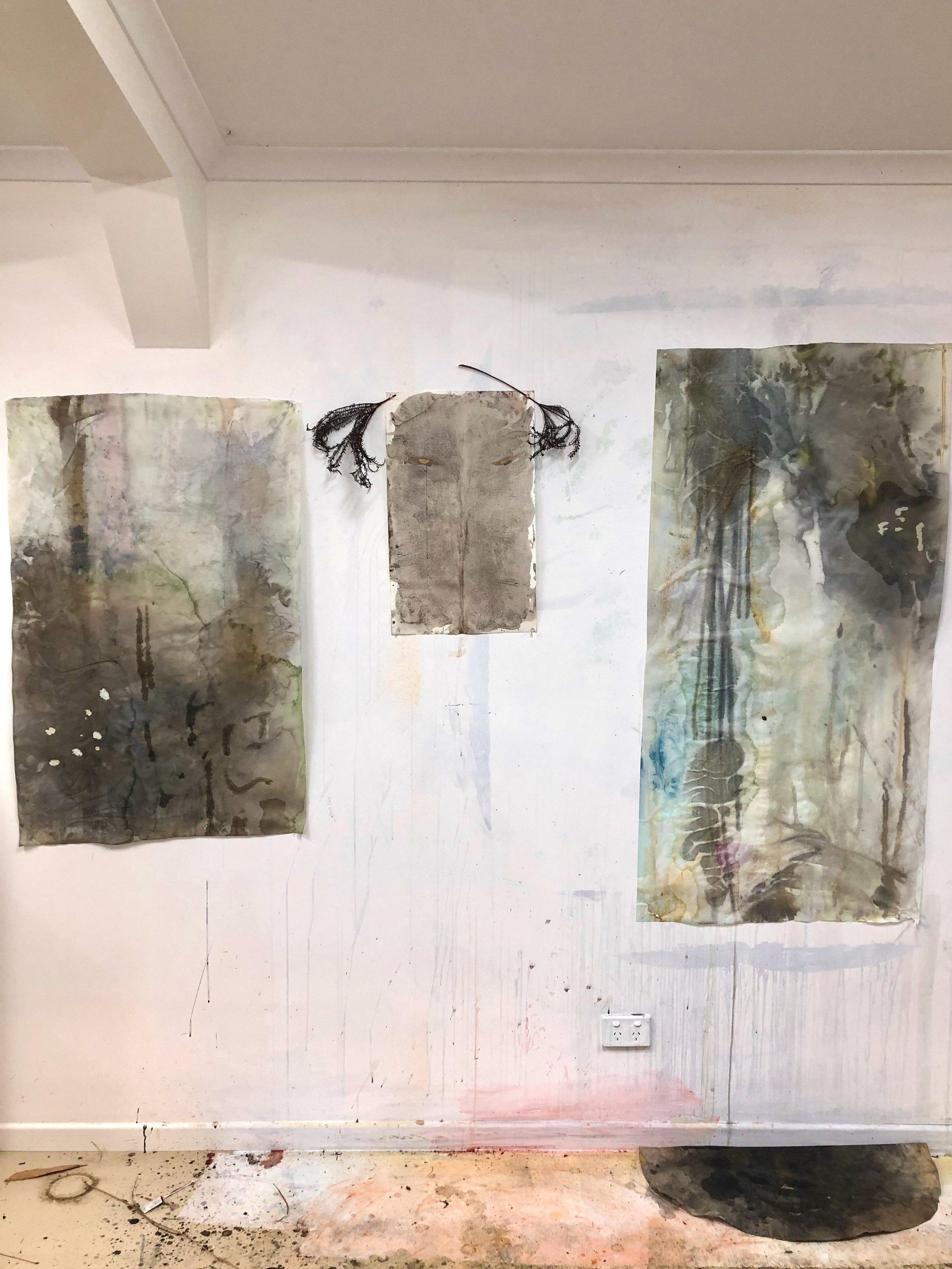
Microbial and Material Intelligences is an ongoing research method that works through collaboration with living matter. It considers multiple realms of intelligence, where memory and agency operate through microbial life, materials and bodies as negotiated systems.
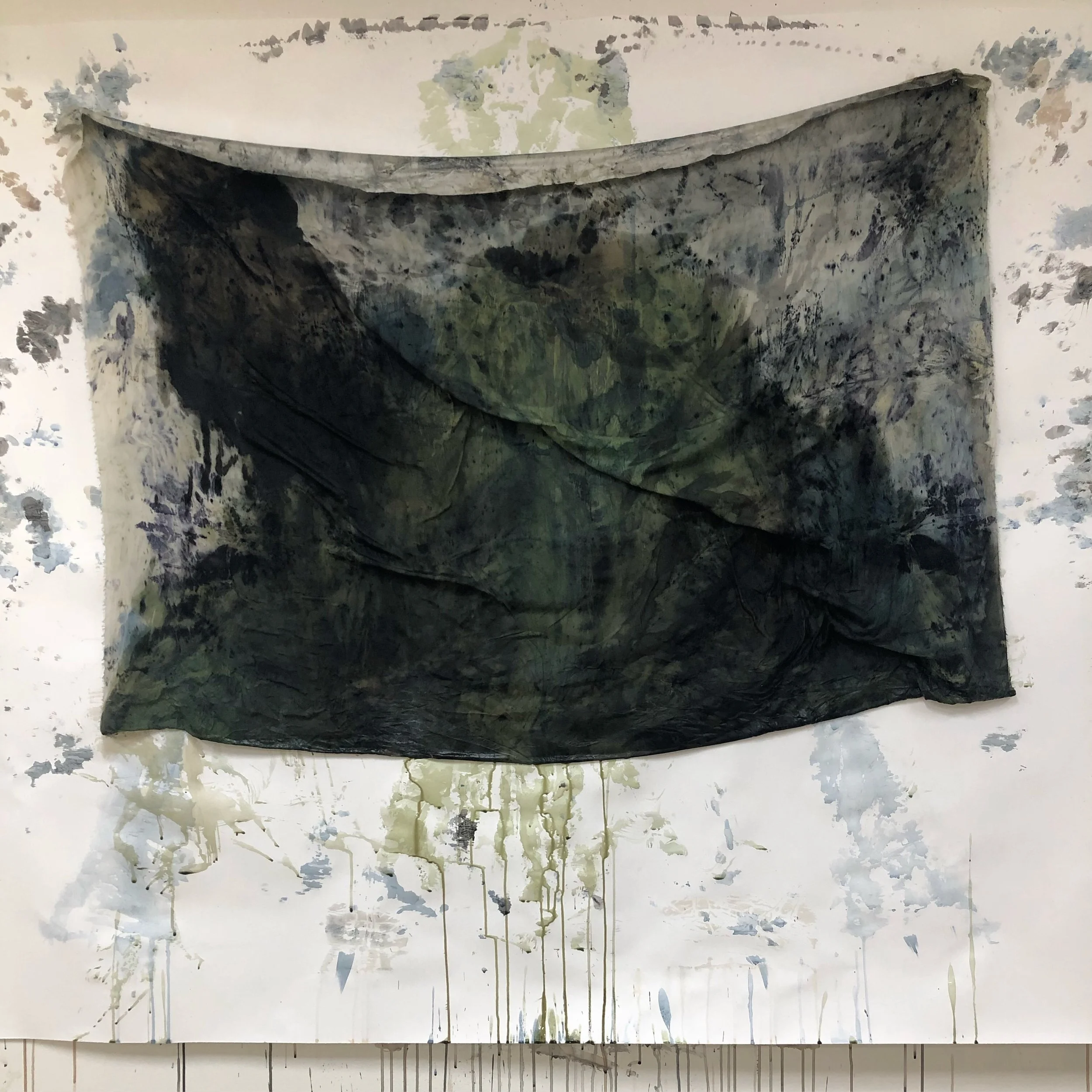
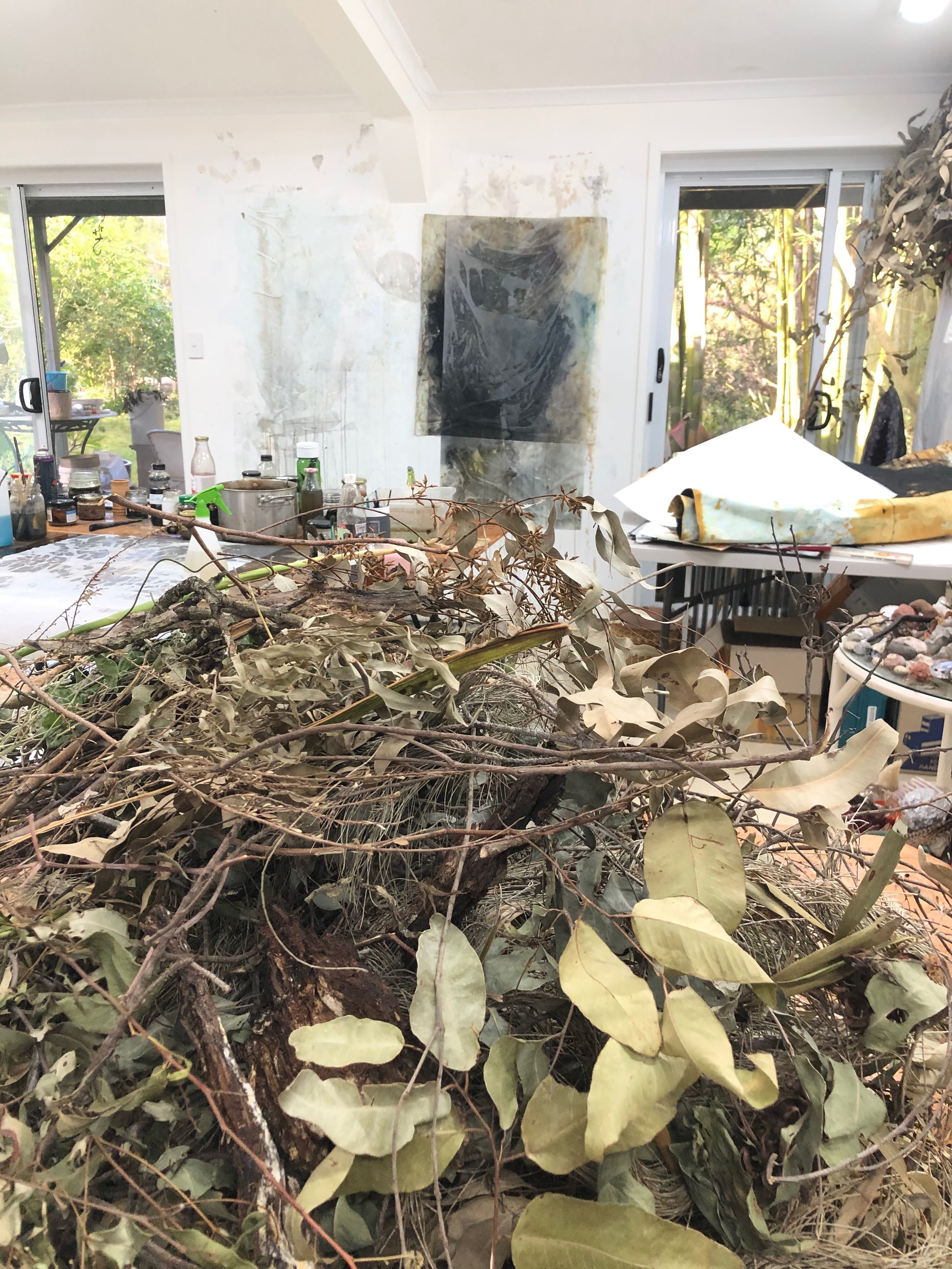
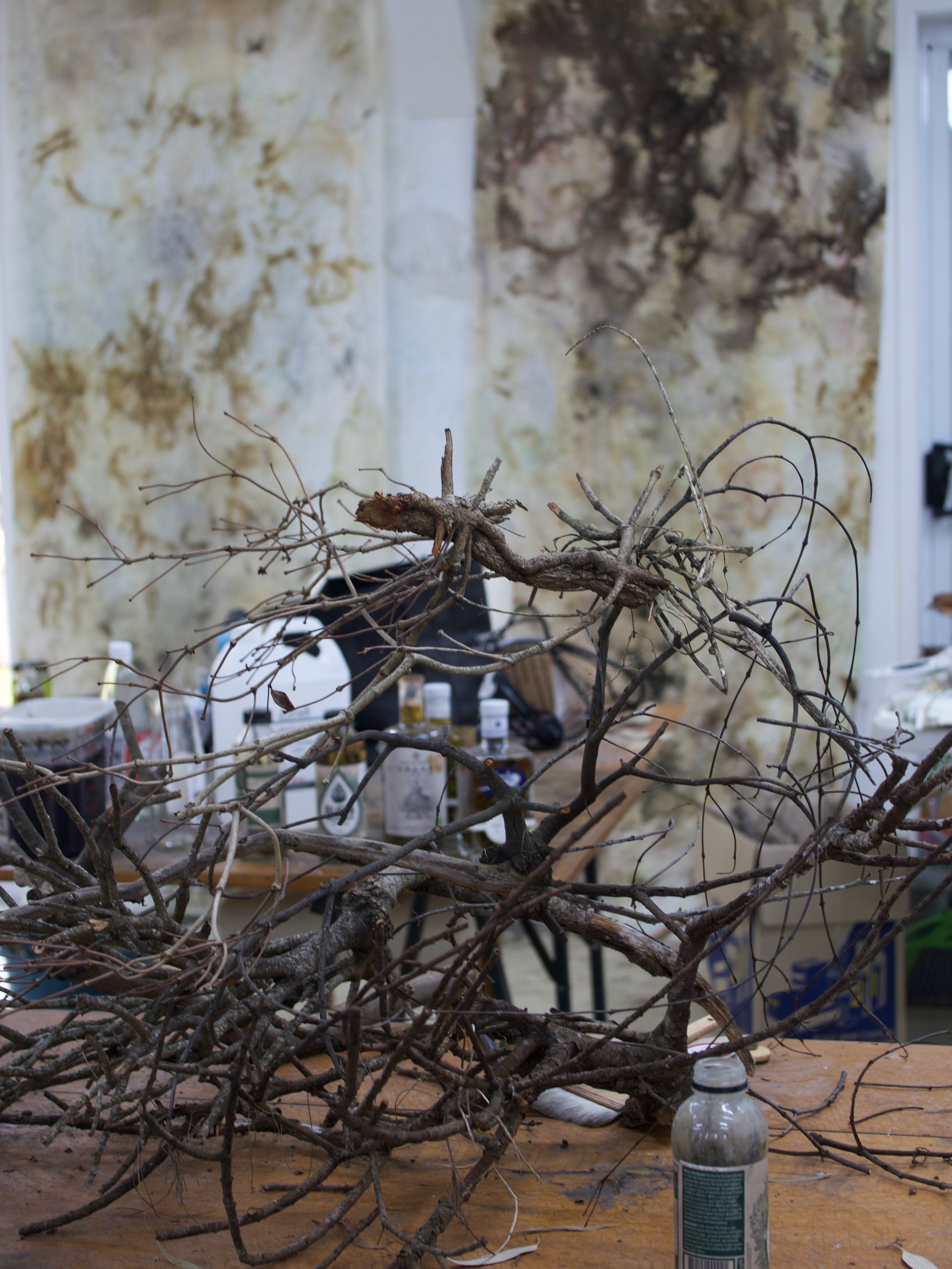
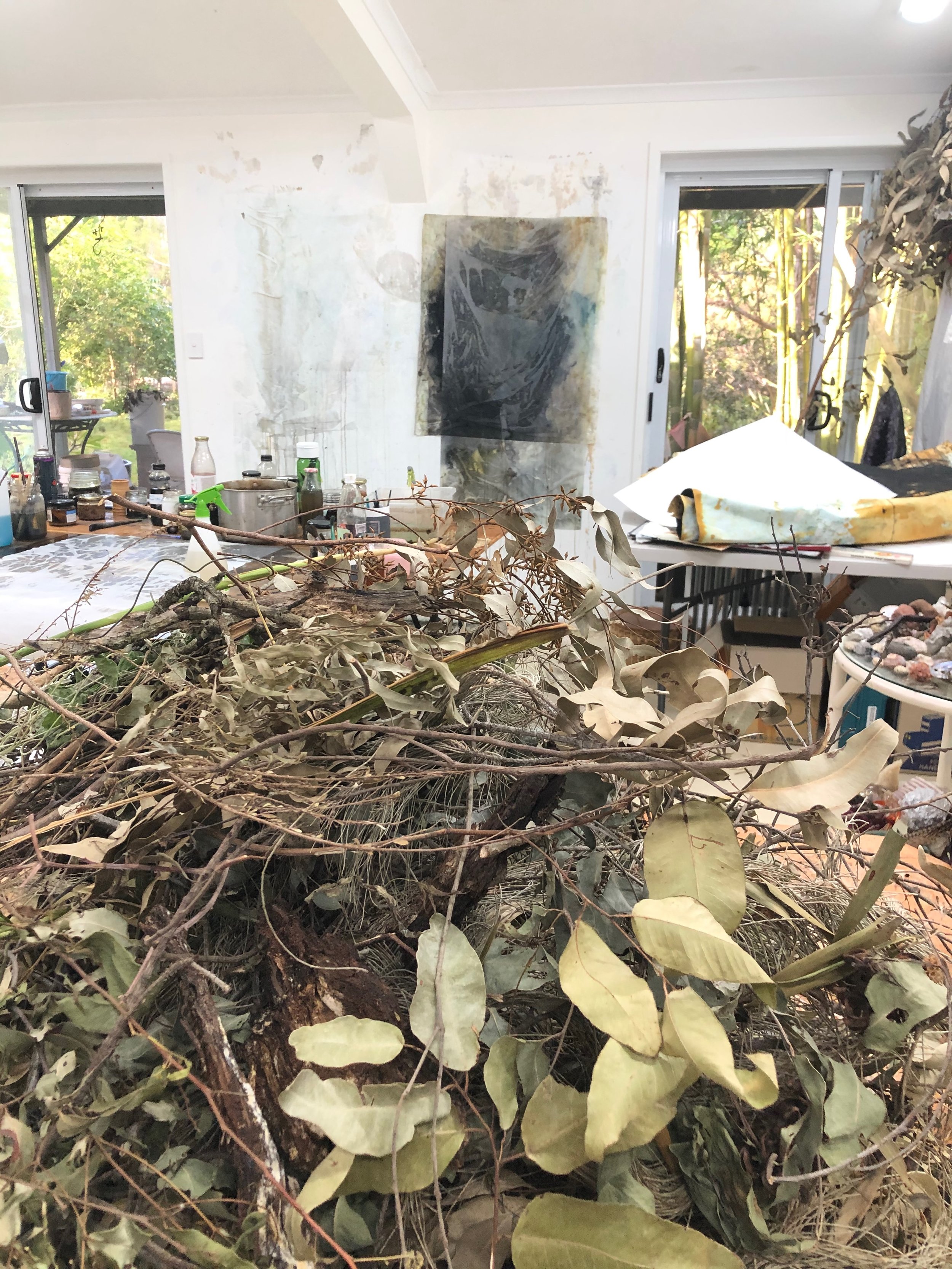
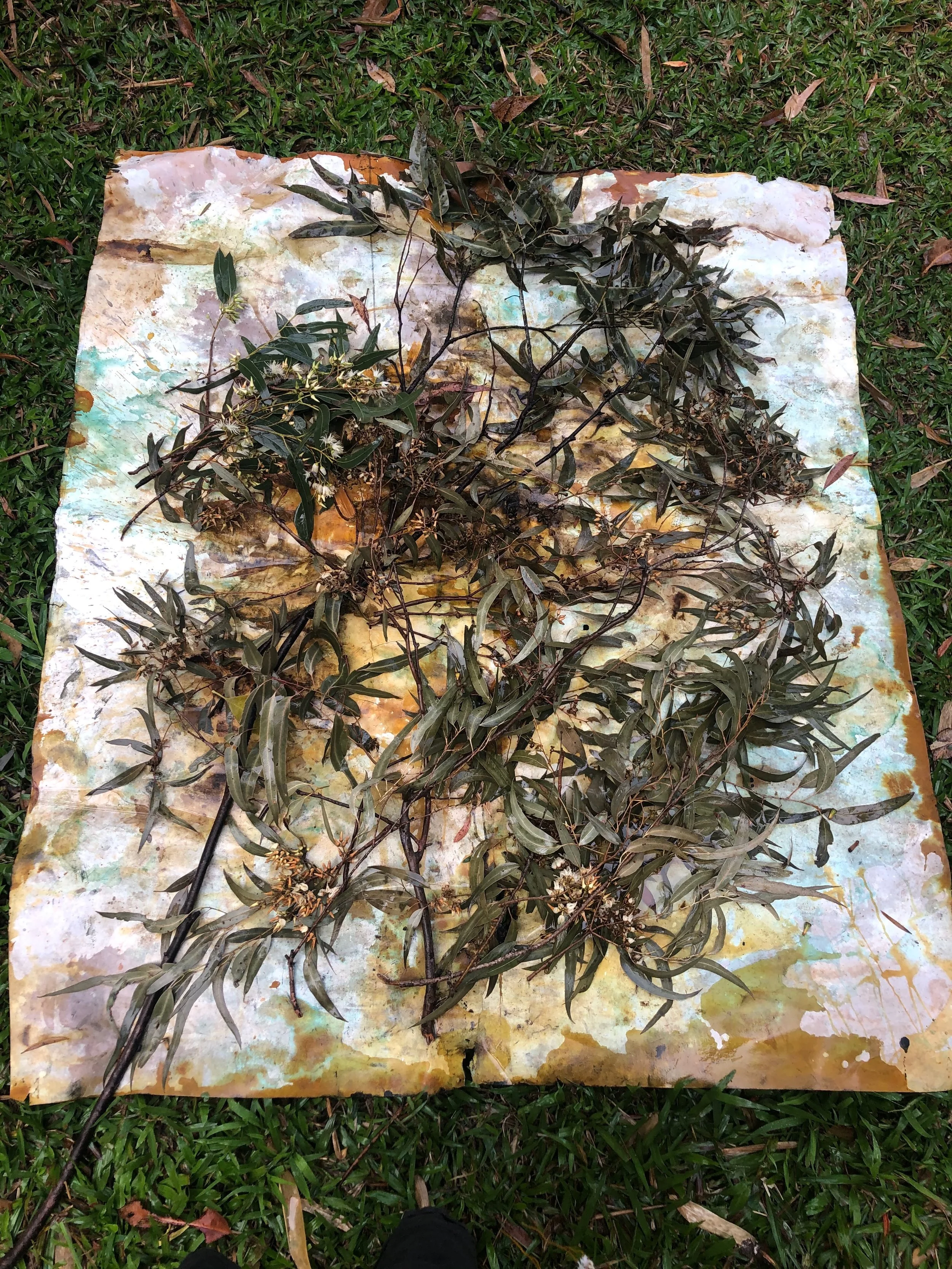
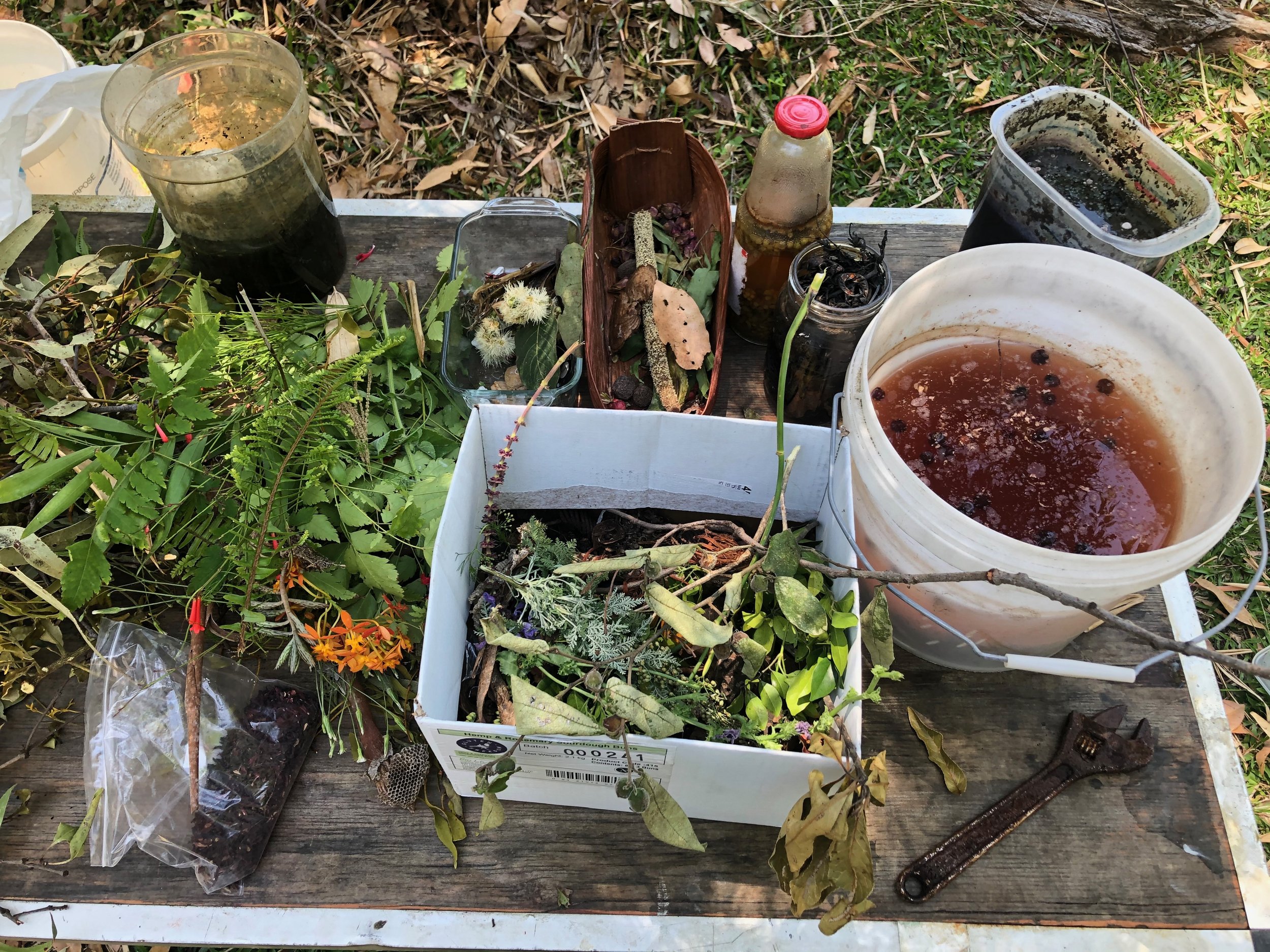
This work developed through sustained engagement with plants, minerals, waters and microbial life on Kabi Kabi Country. It grows from an effort to re-pair my body’s relationship with this place through psycho-geographic response, bodily sensing and unconscious symbiotic relations between my biome and surrounding micro-fauna. Making becomes a way of rebuilding rapport through acts.
This attention to matter as a carrier of information did not begin here. Repeatedly through earlier works, I’d shuffle inferred meanings of matter with their material weight, familiarity, and the allusions of their hierarchies. I communed with the dead through domestic detritus, considered scale and absence with light, followed locations and history through water, and asked materials what they knew of transmission, erasure, permanence and ephemerality. Surfaces and unstable images became places for the weather to speak, for absence to leave its mark. Materials were never passive. They spilled, degraded, re-formed and collapsed. What failed to appear, or never arrived, carried information as importantly as what remained.
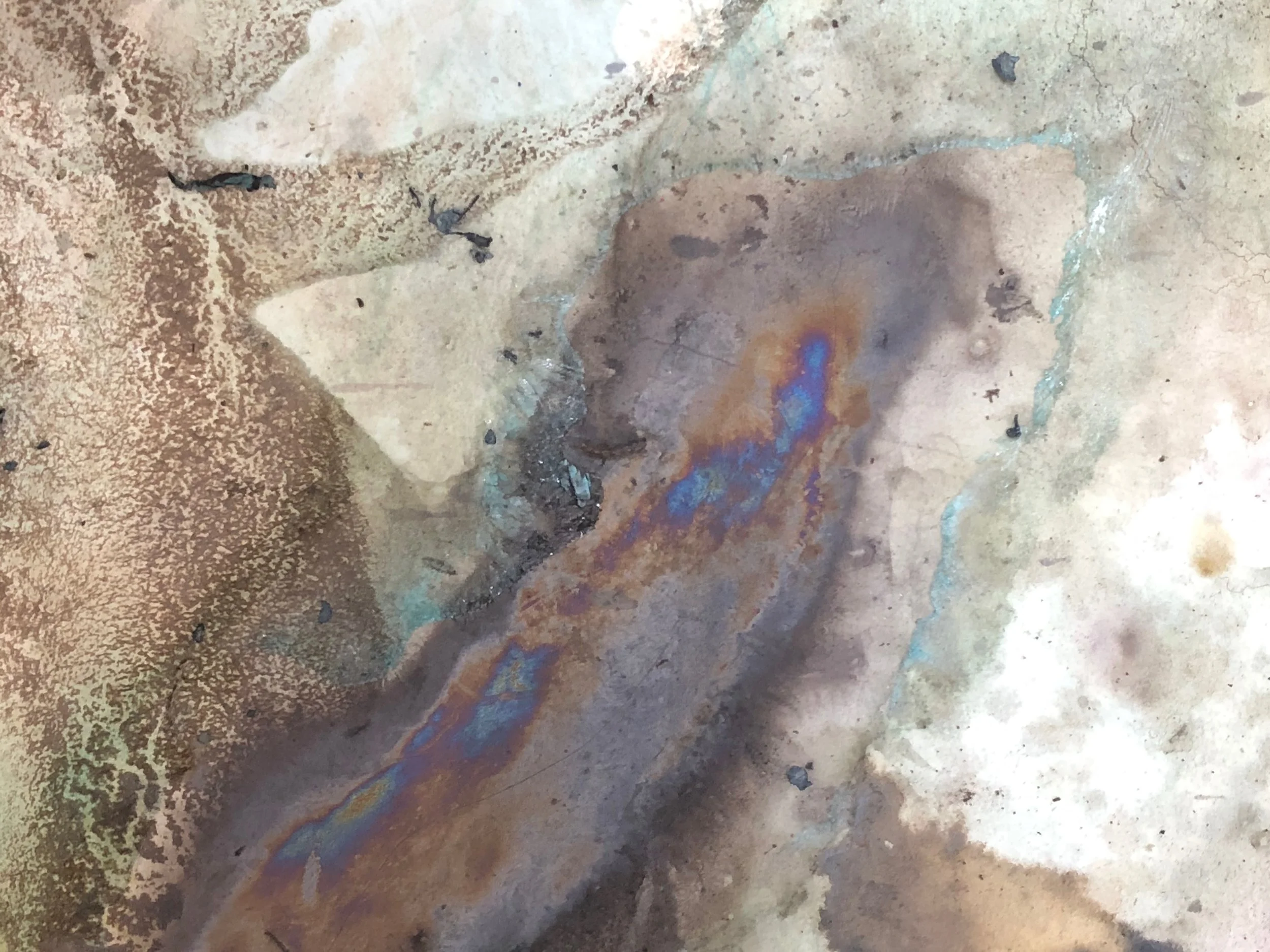
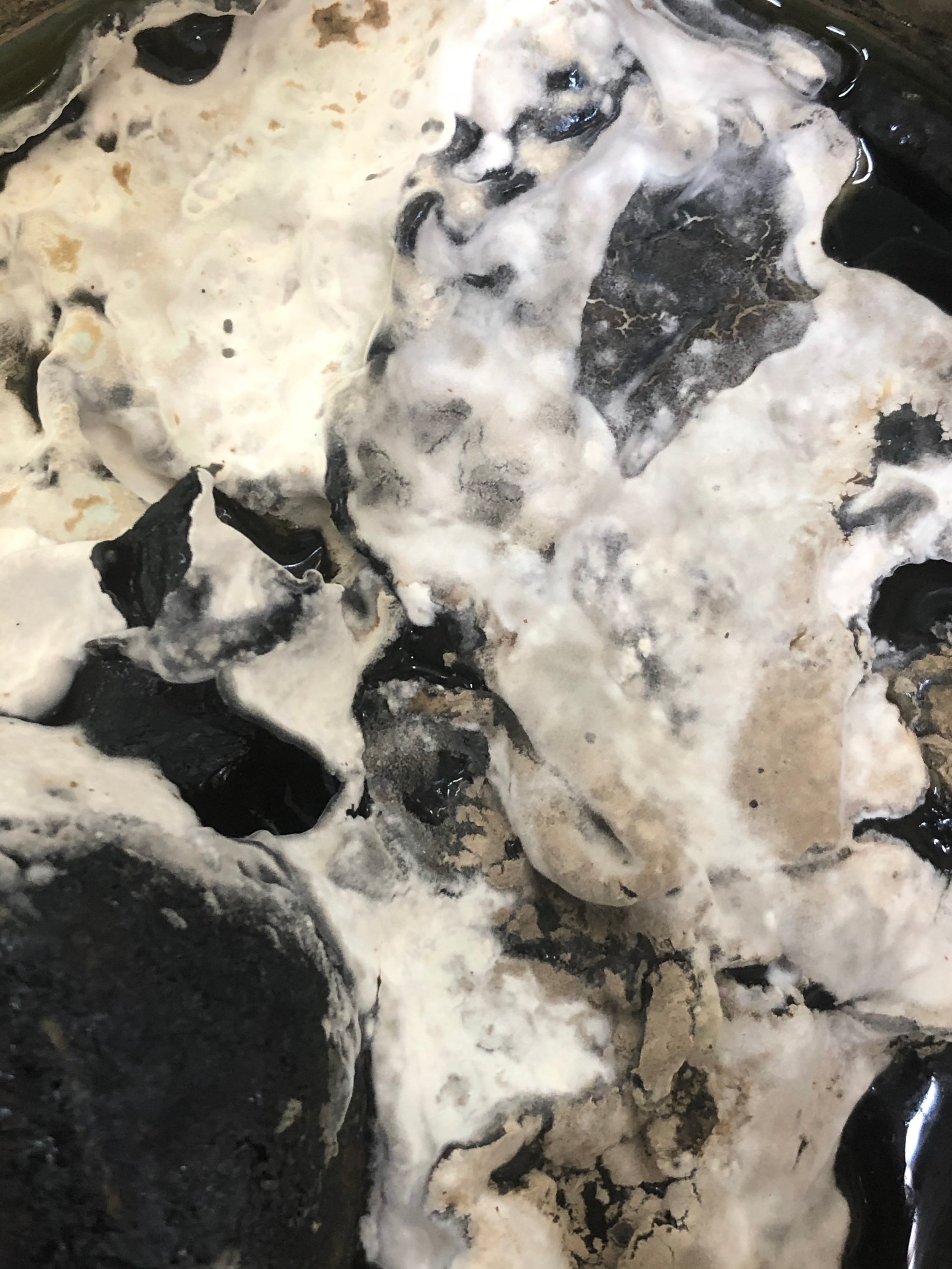
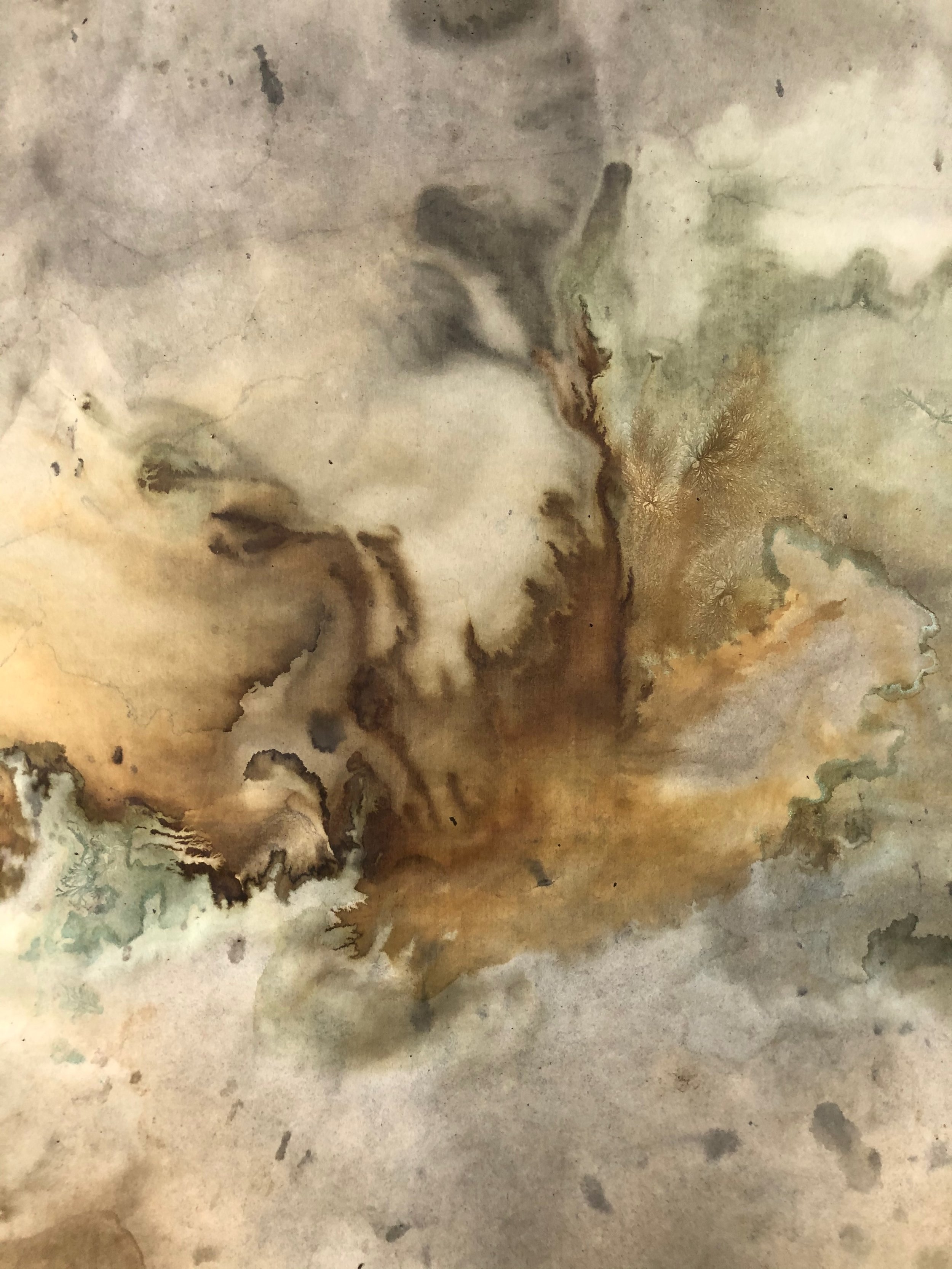
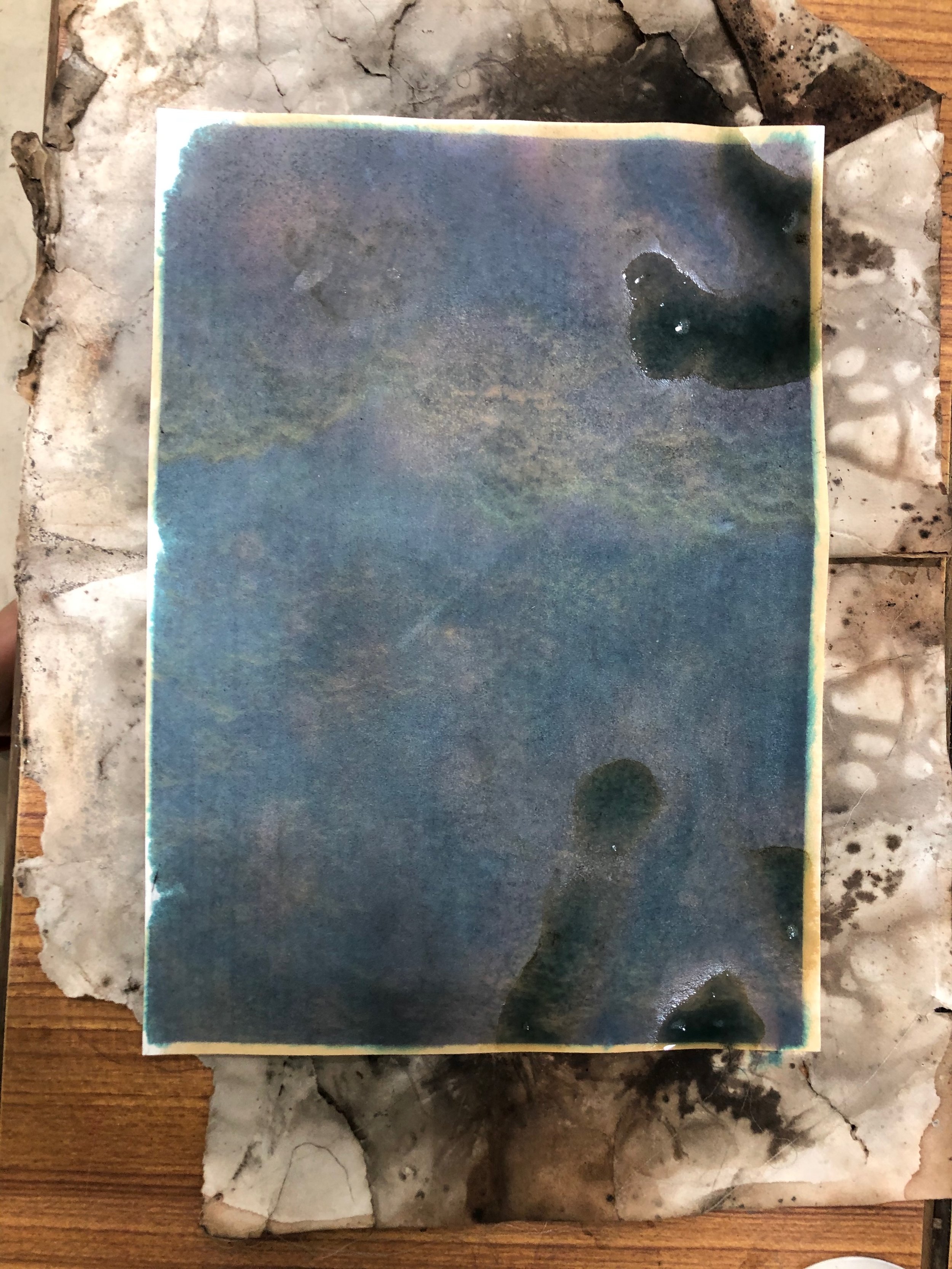
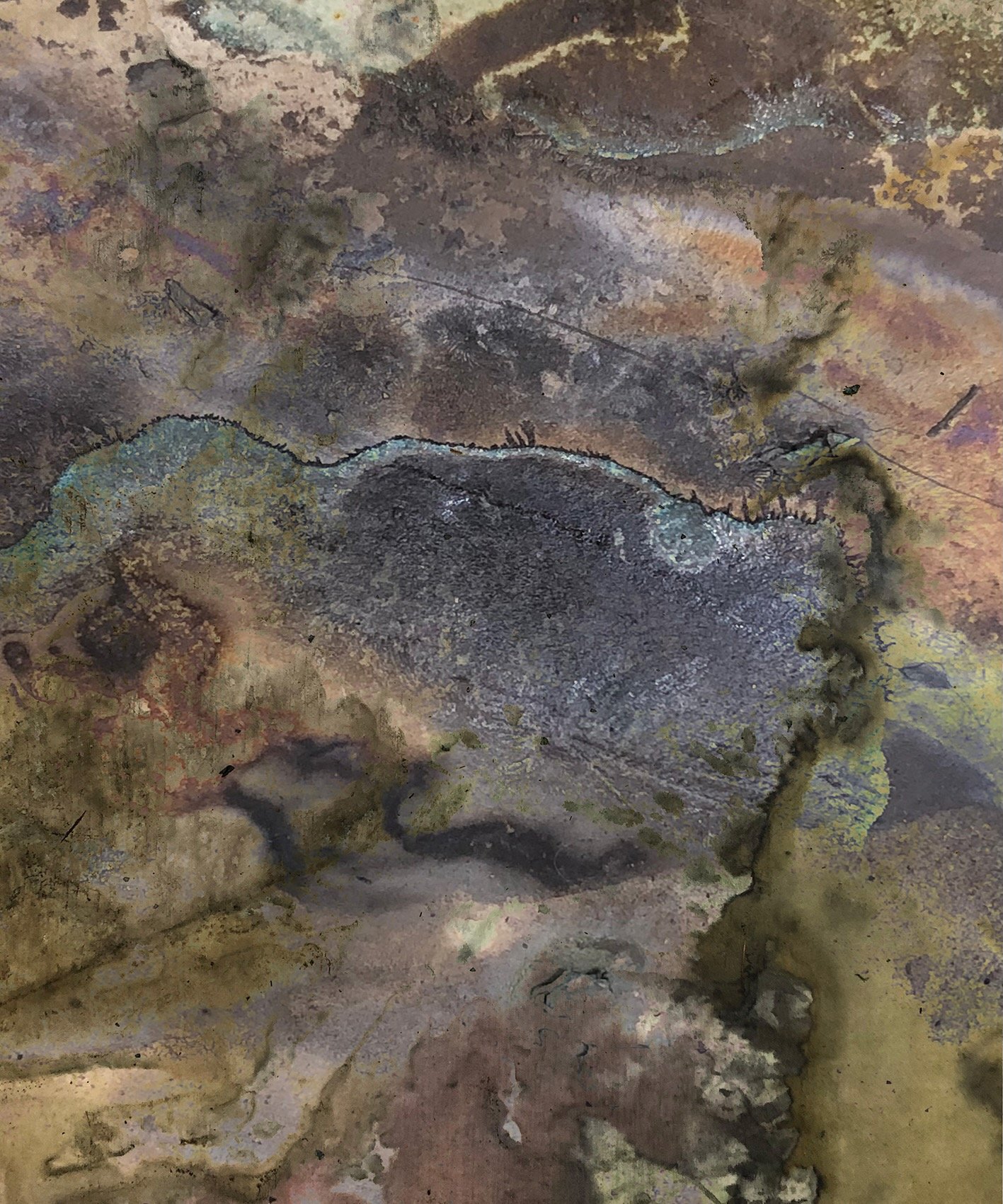
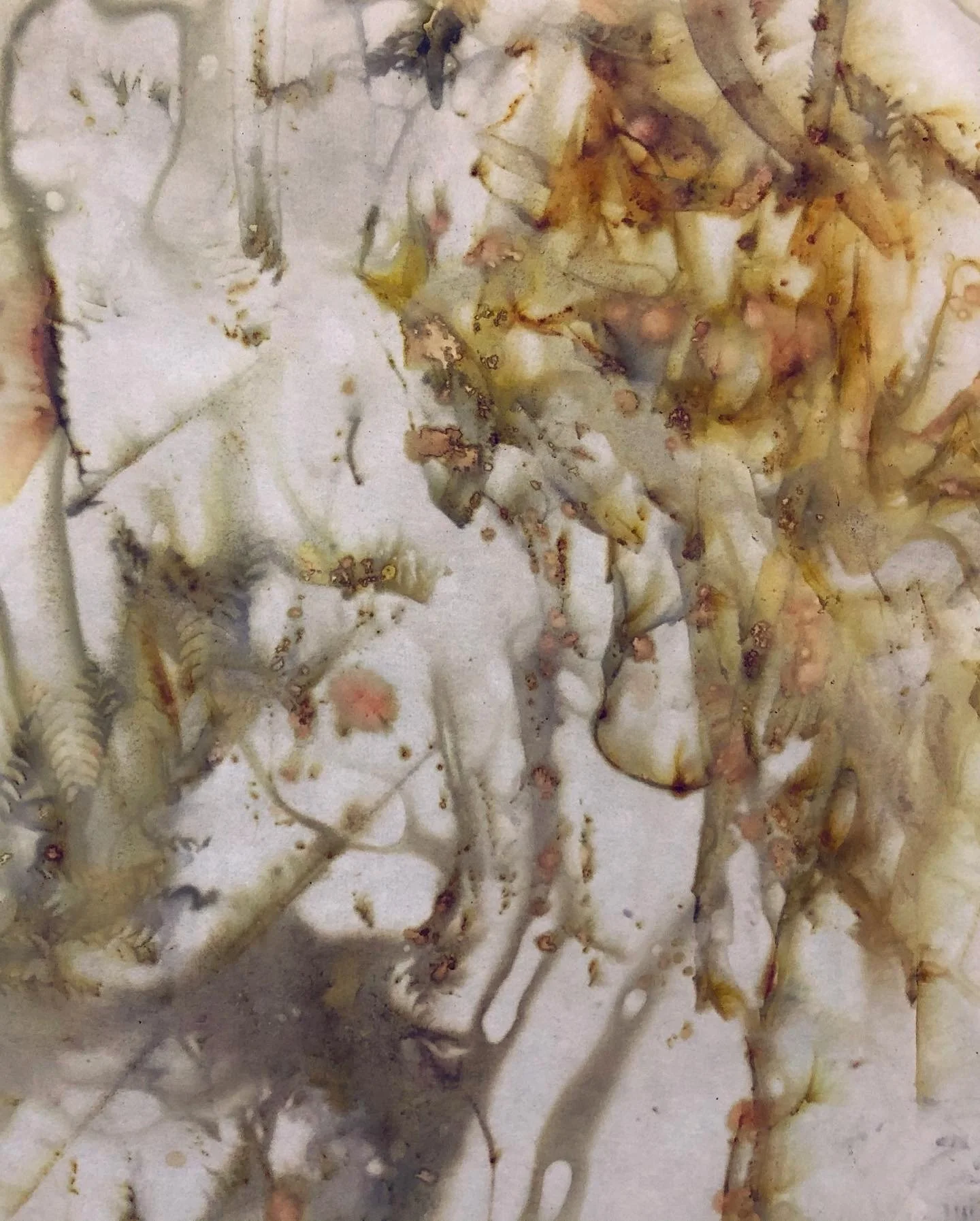
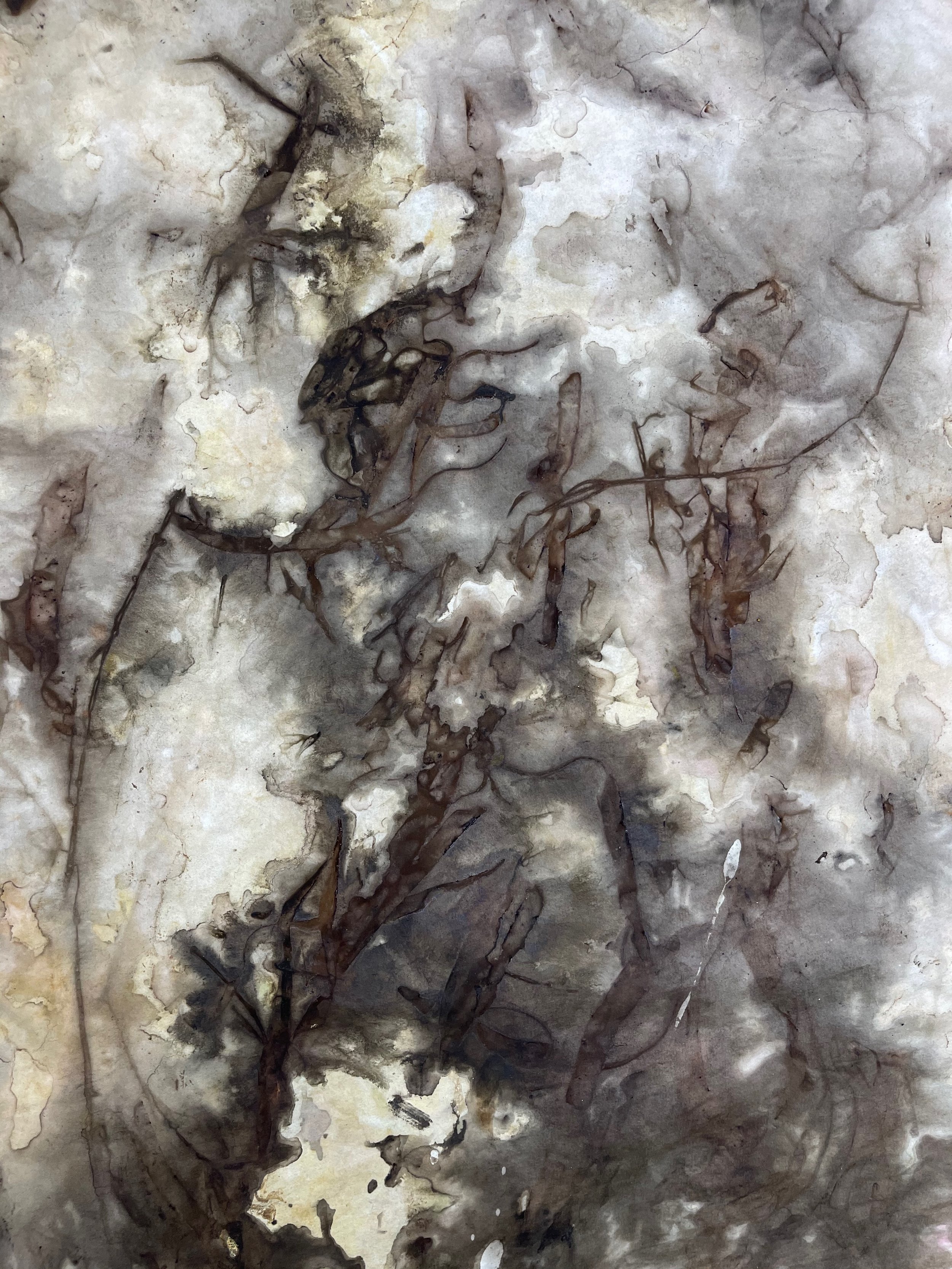
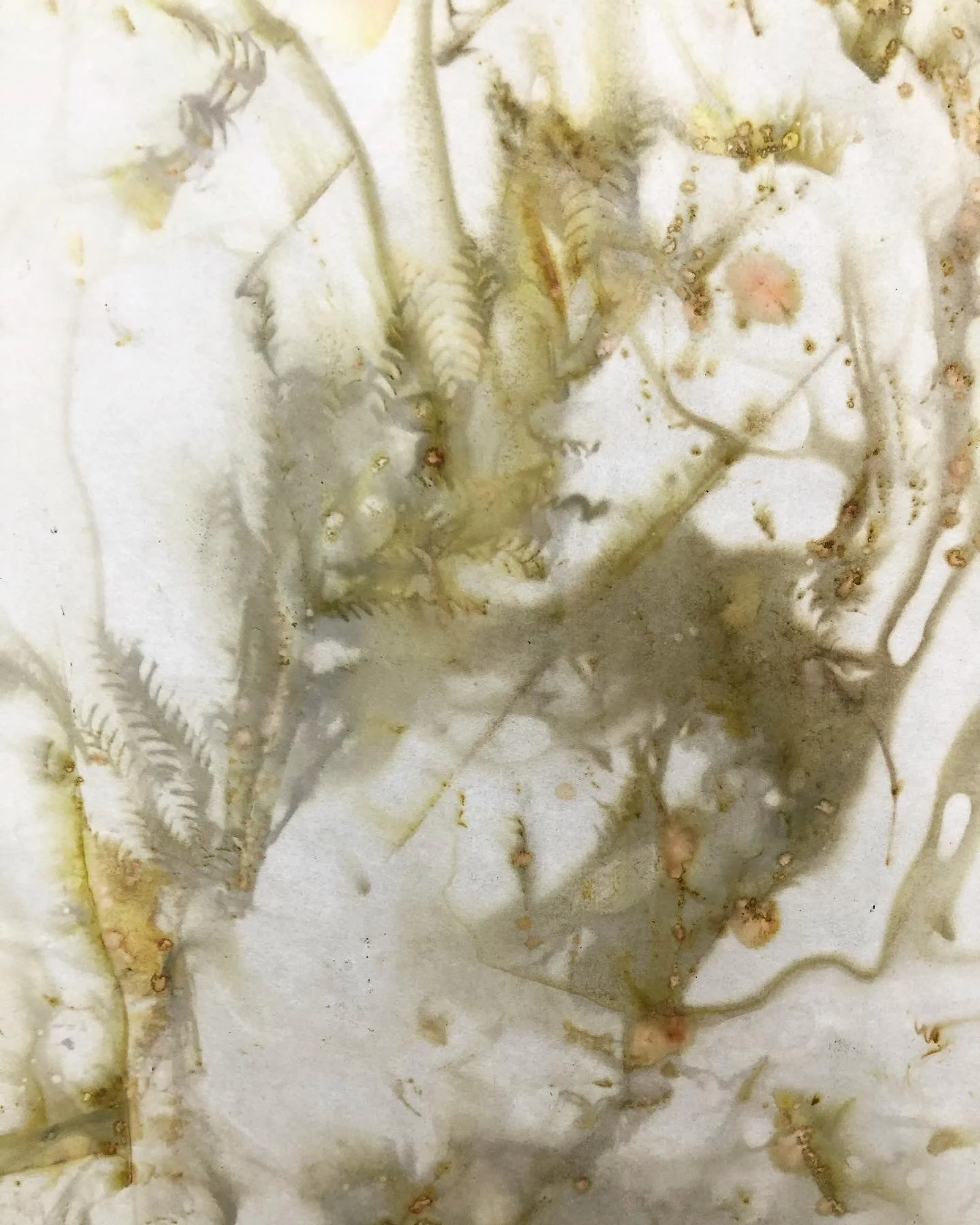
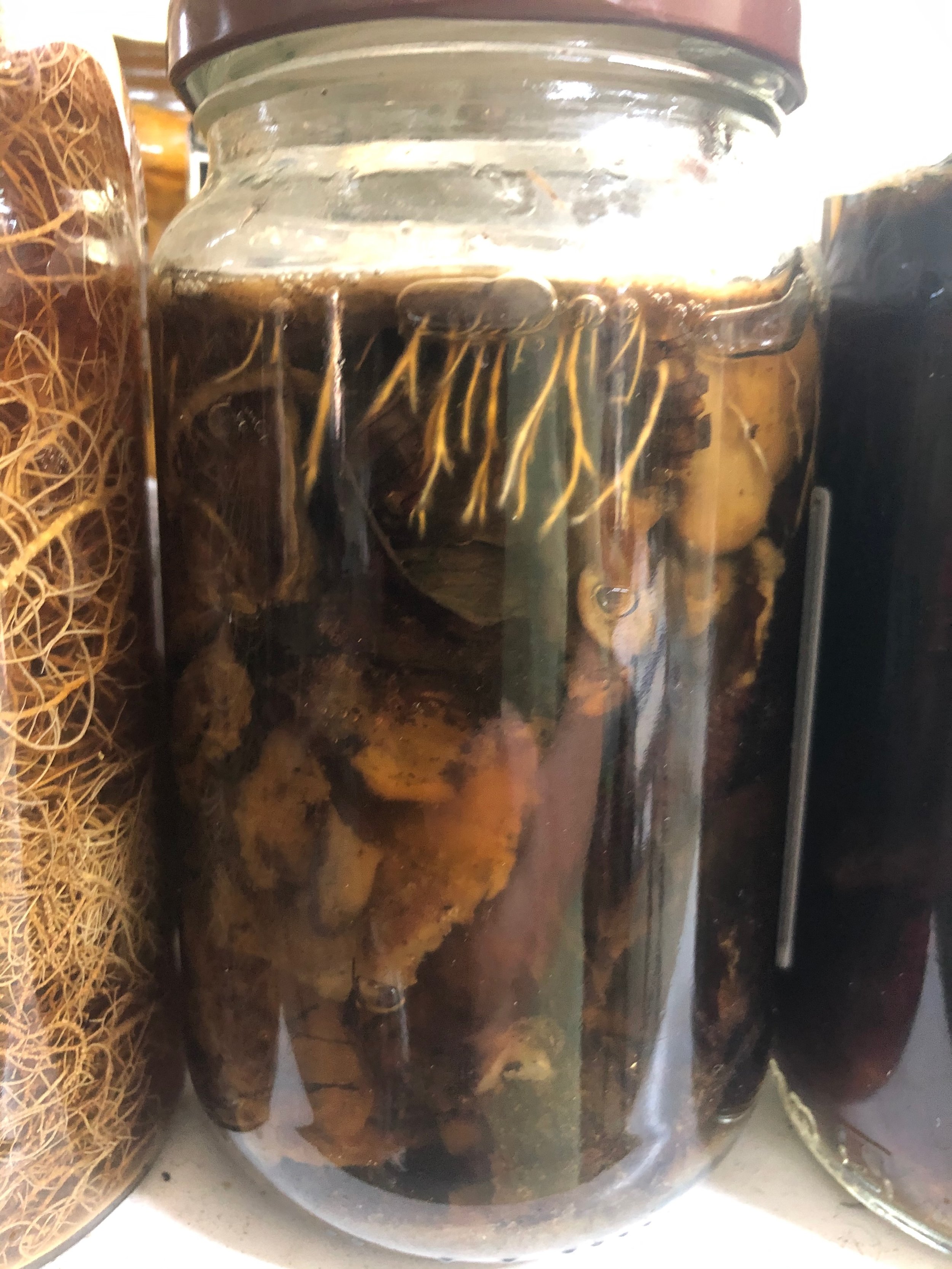
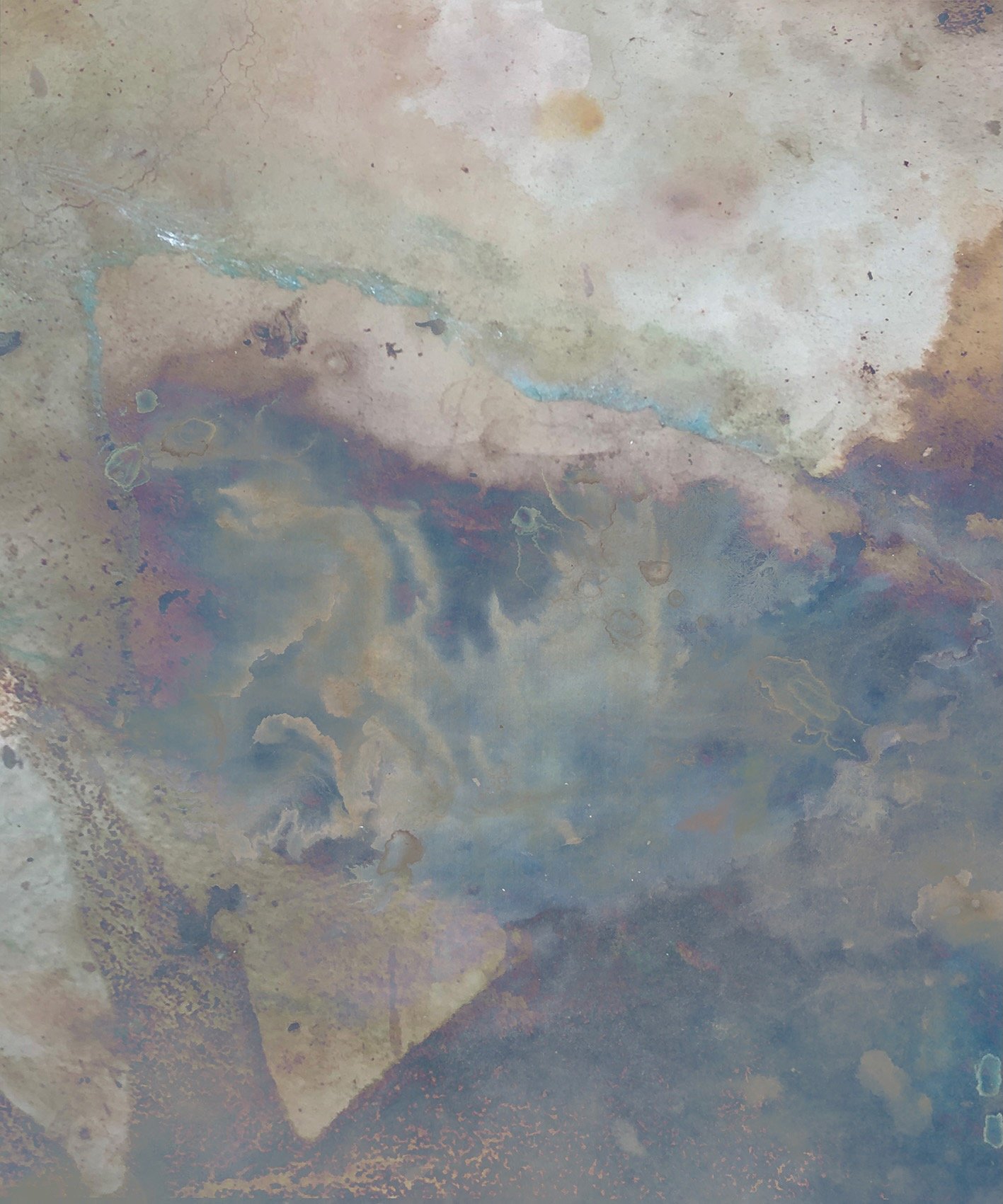
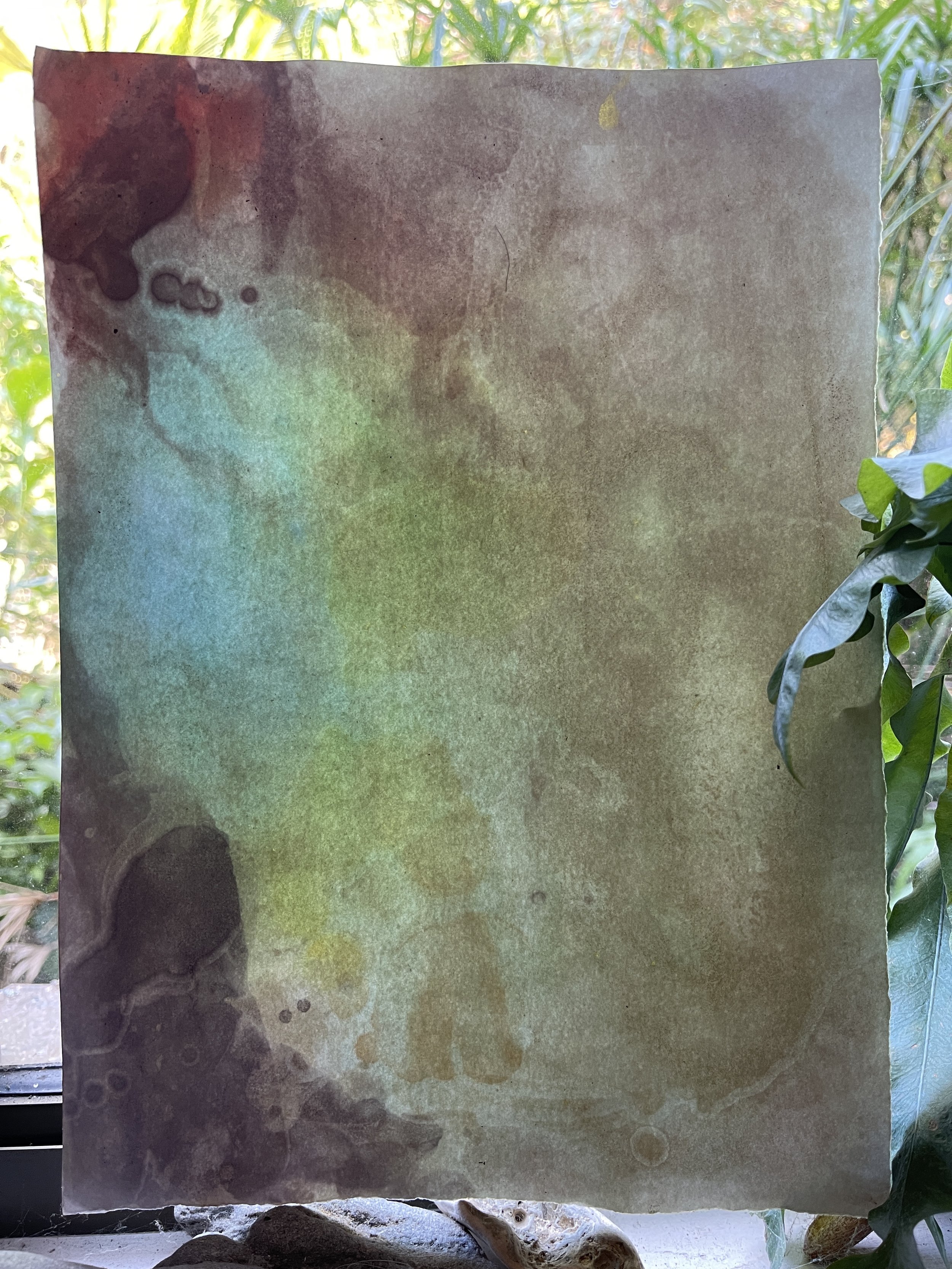
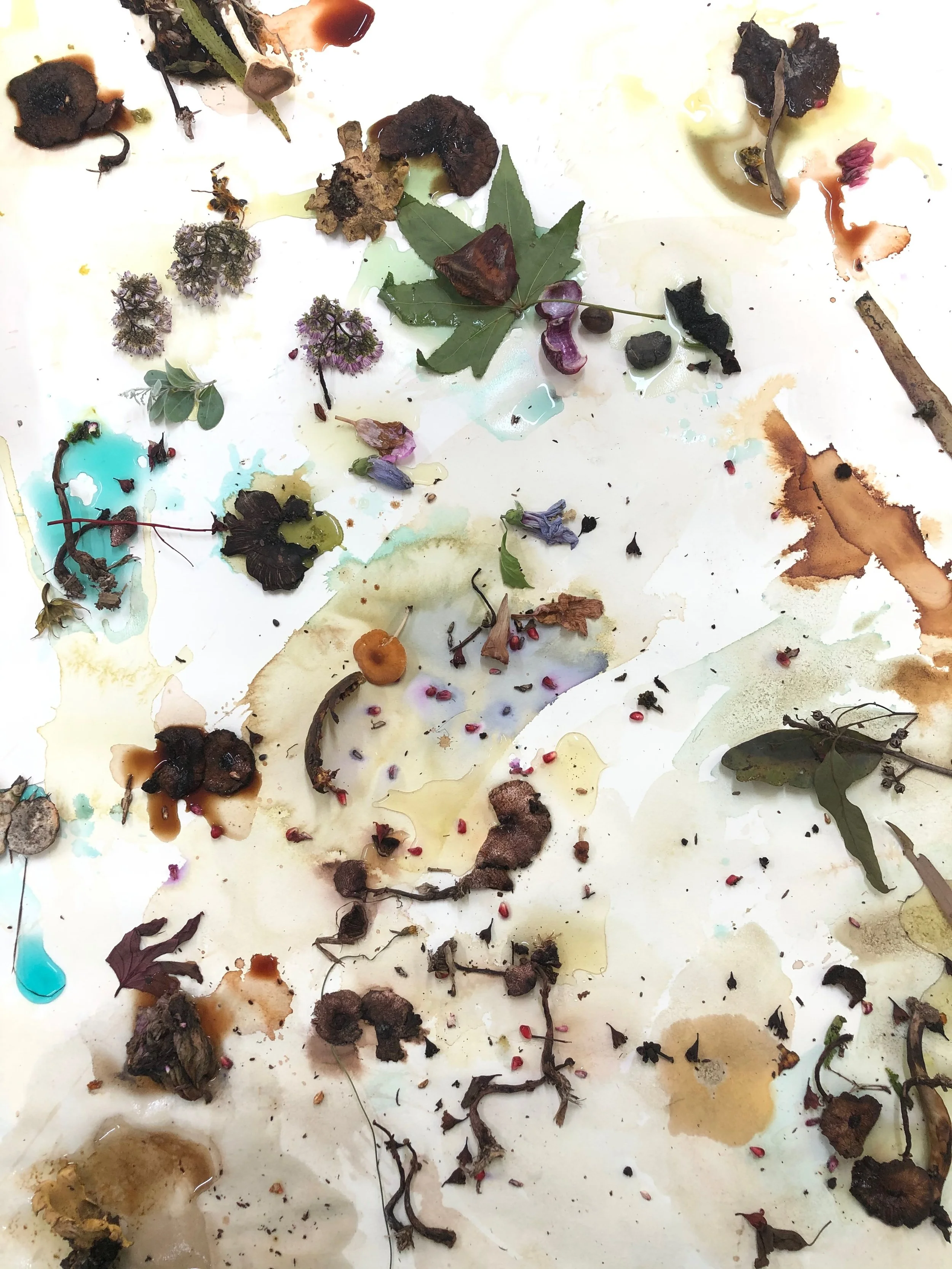
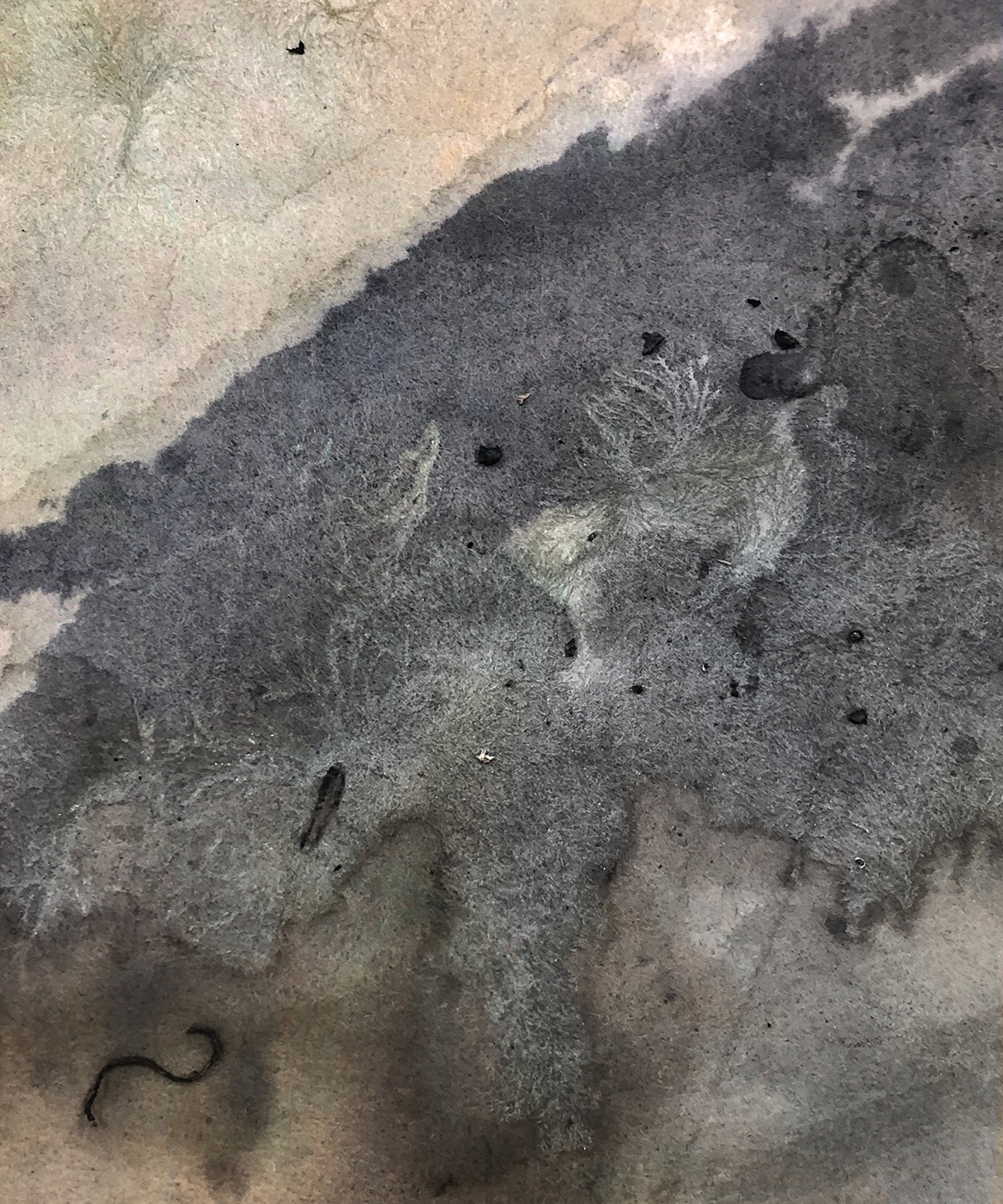
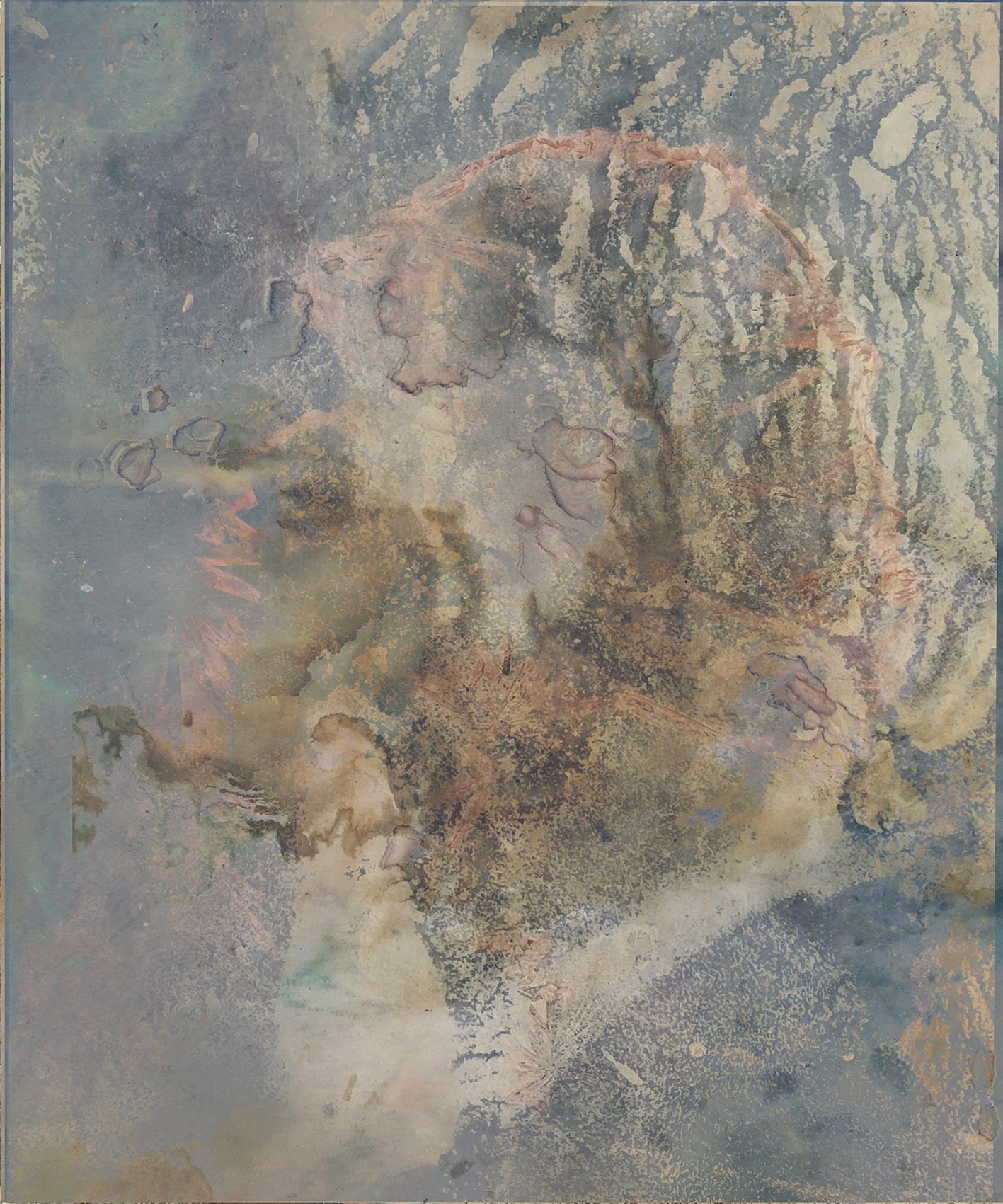
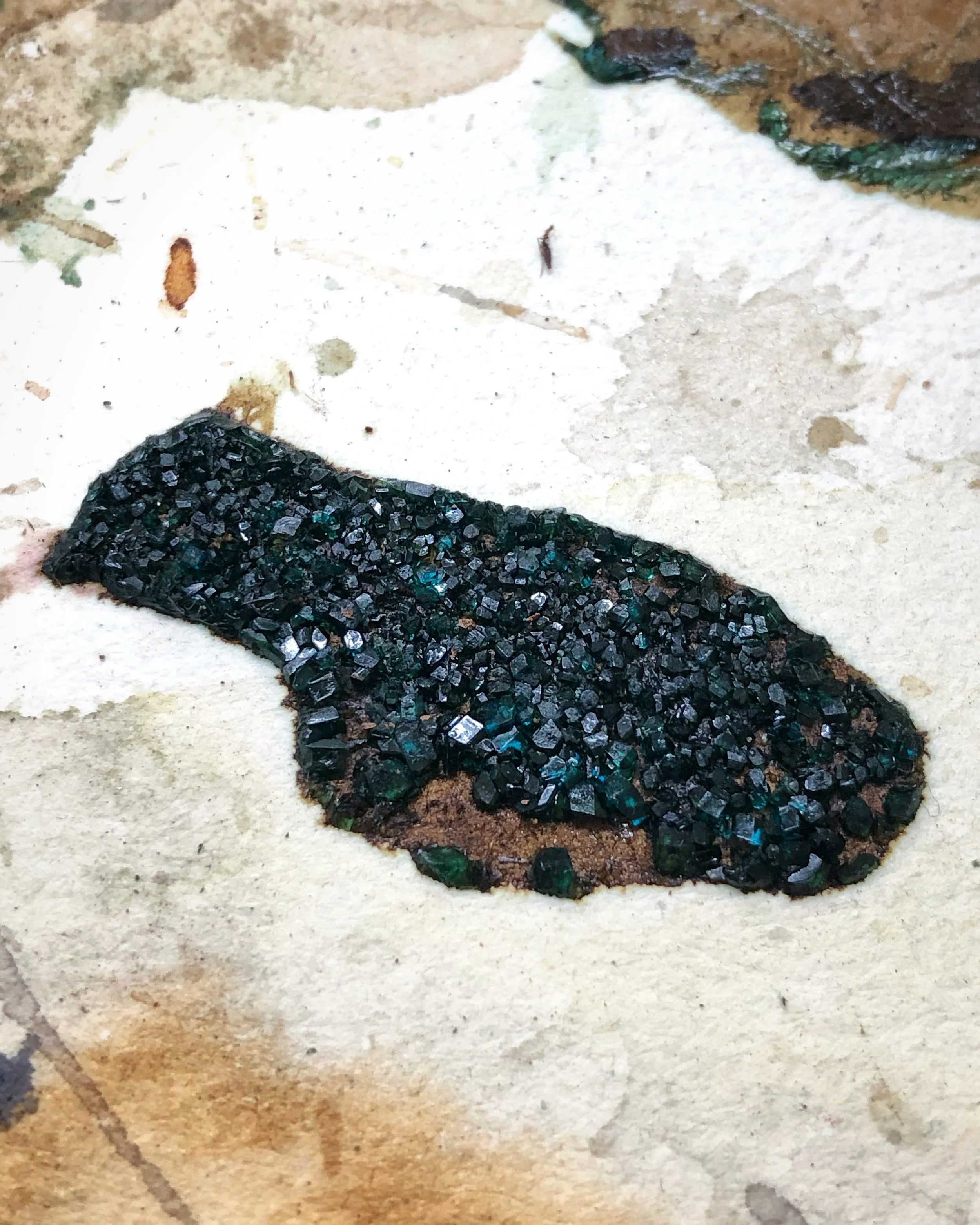
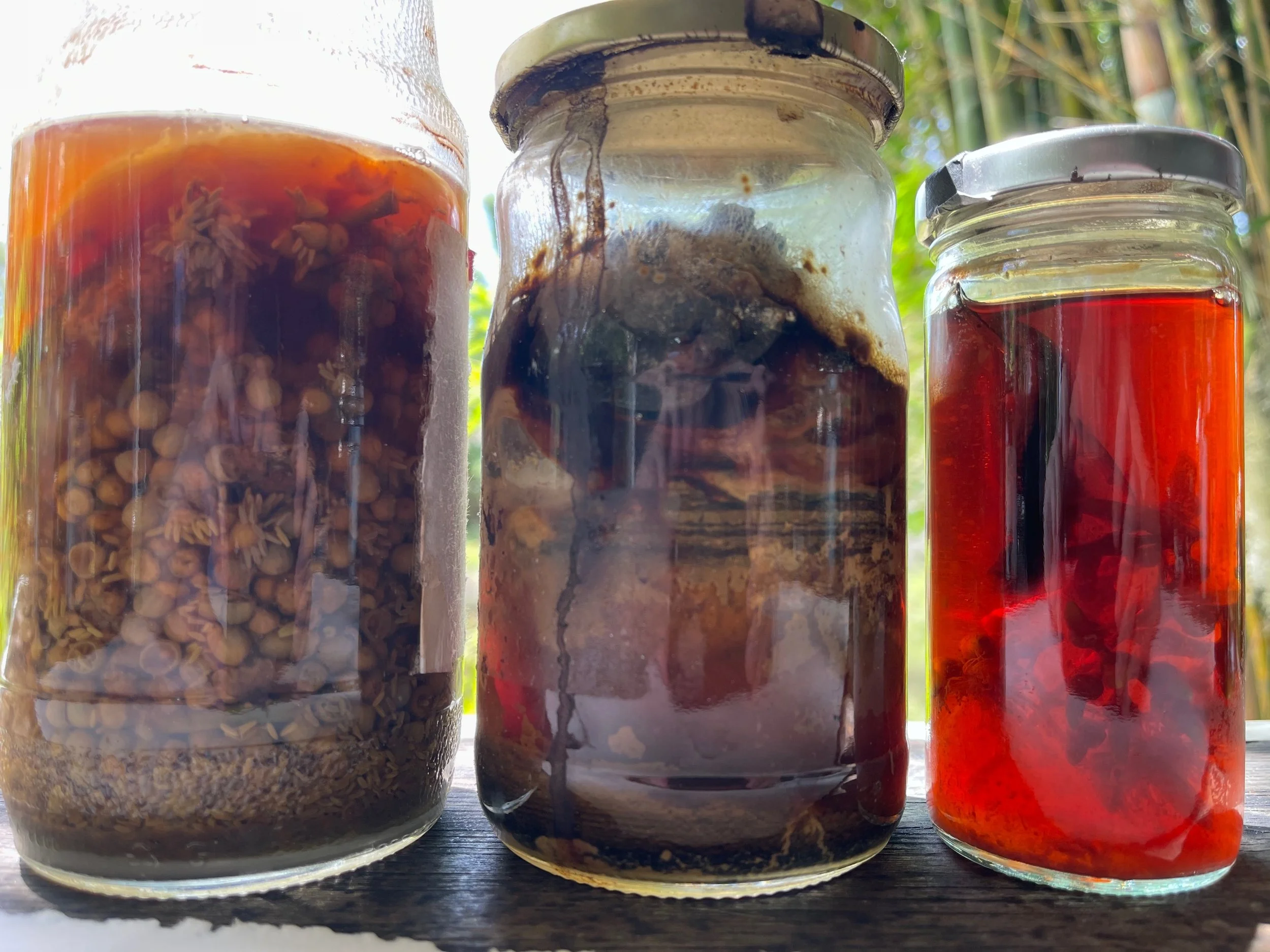
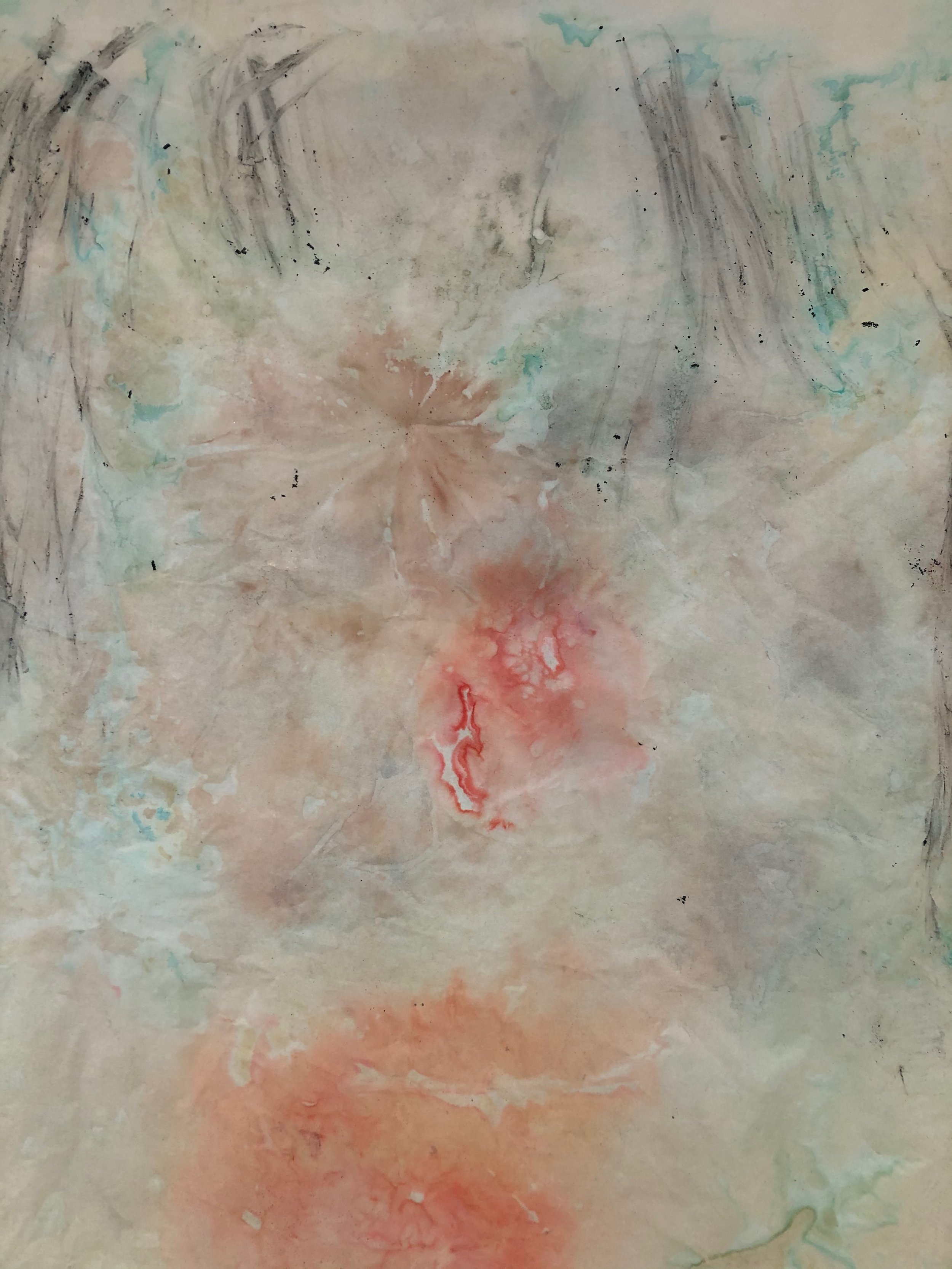
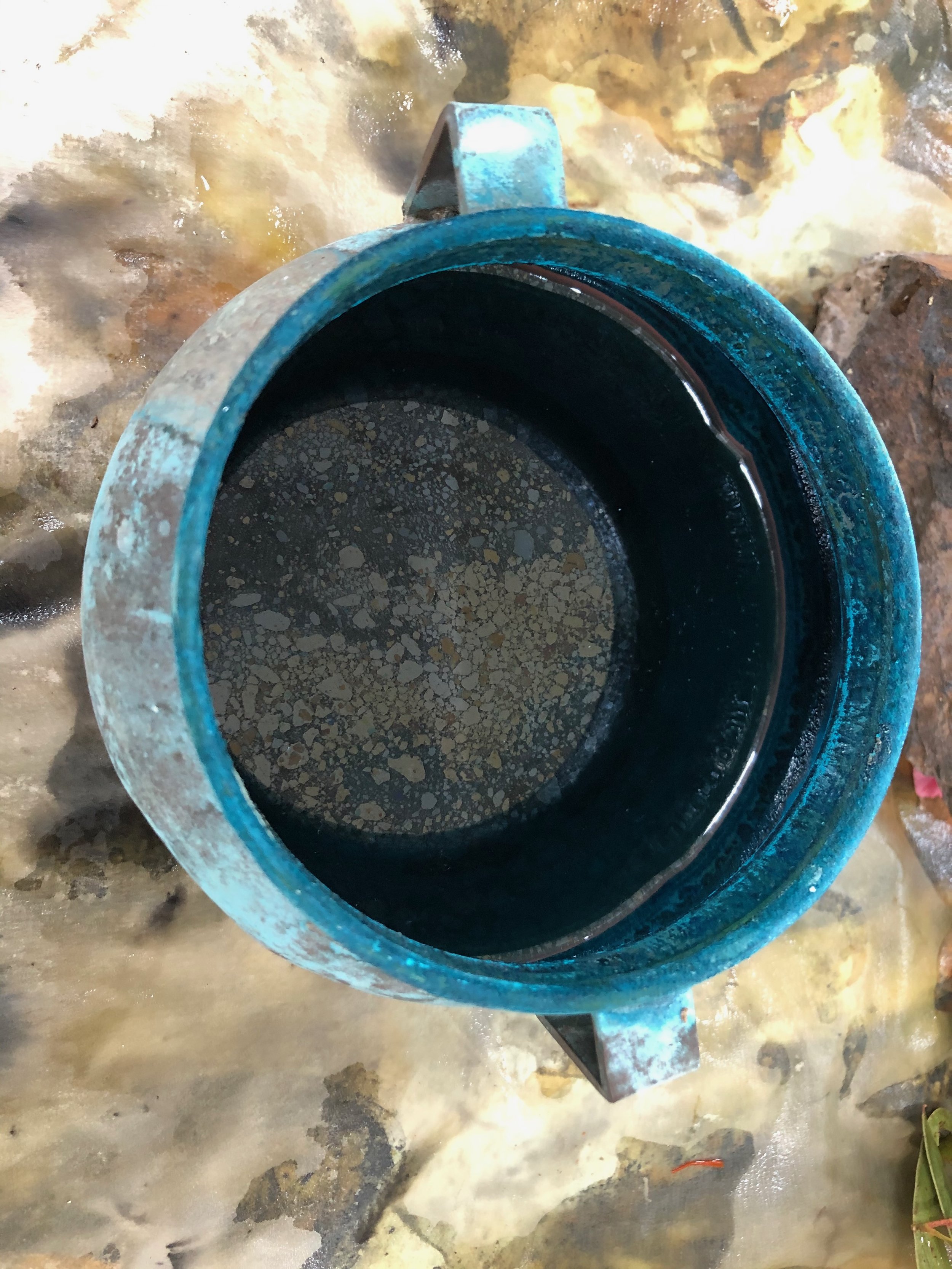
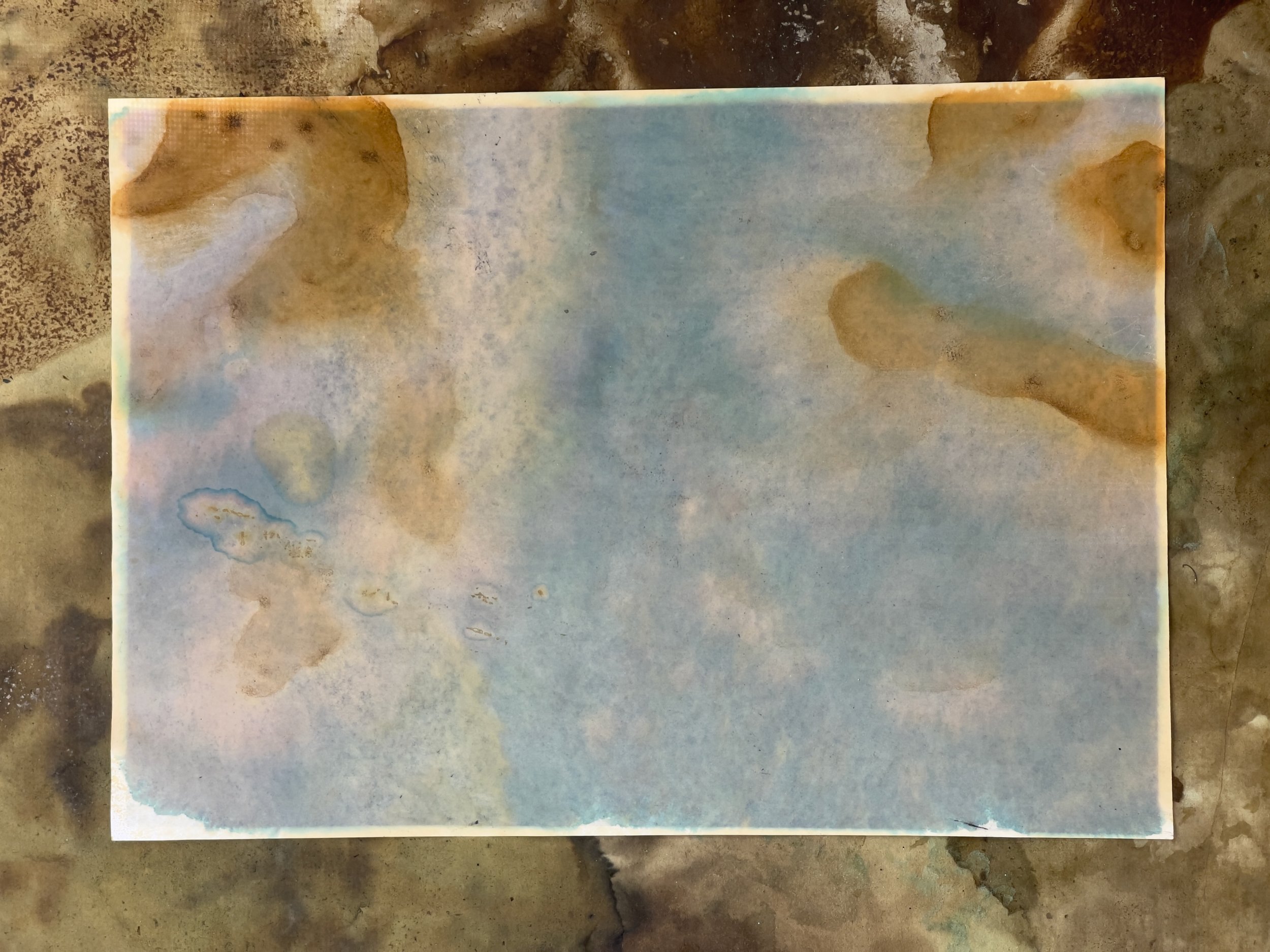
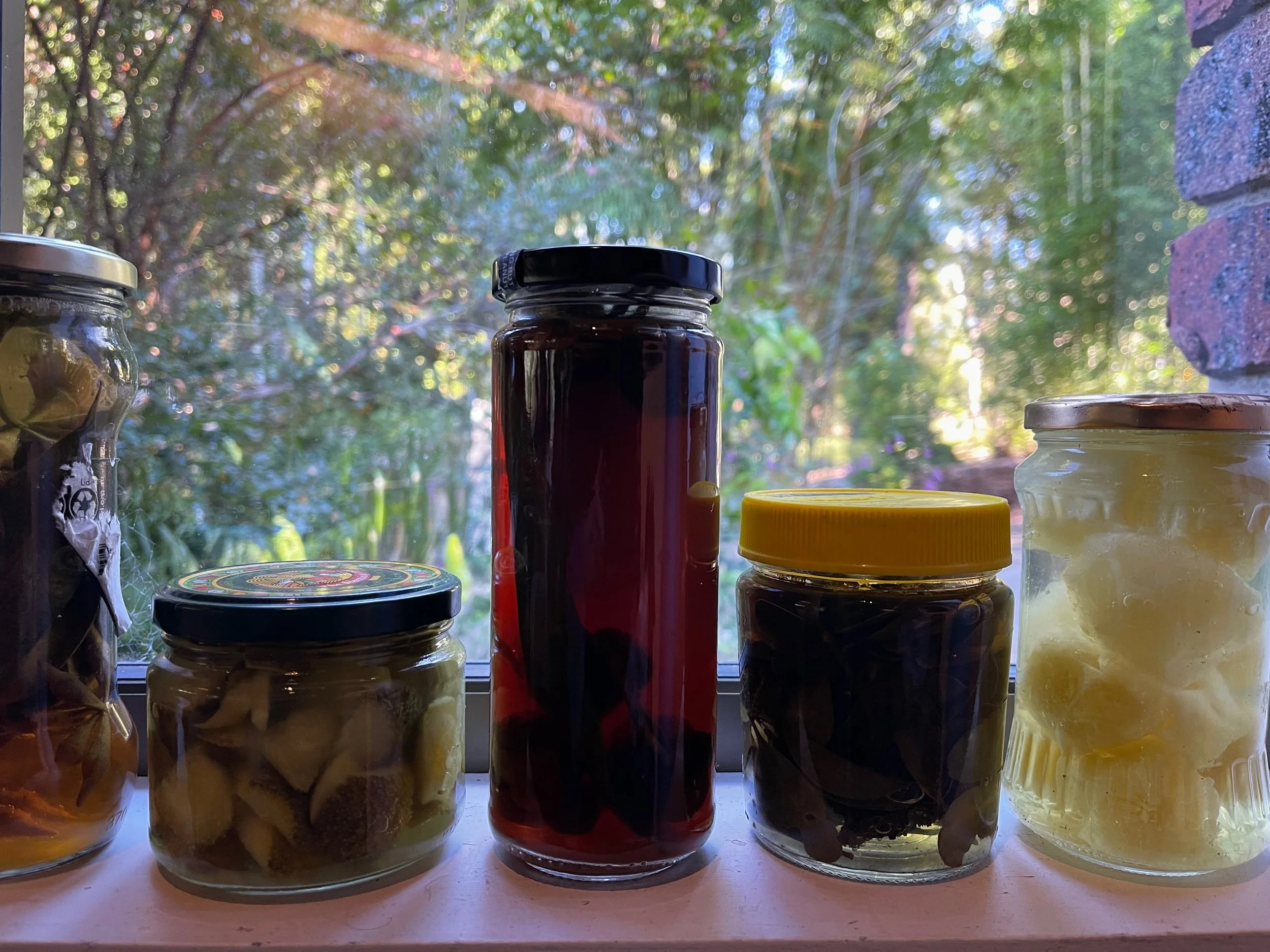
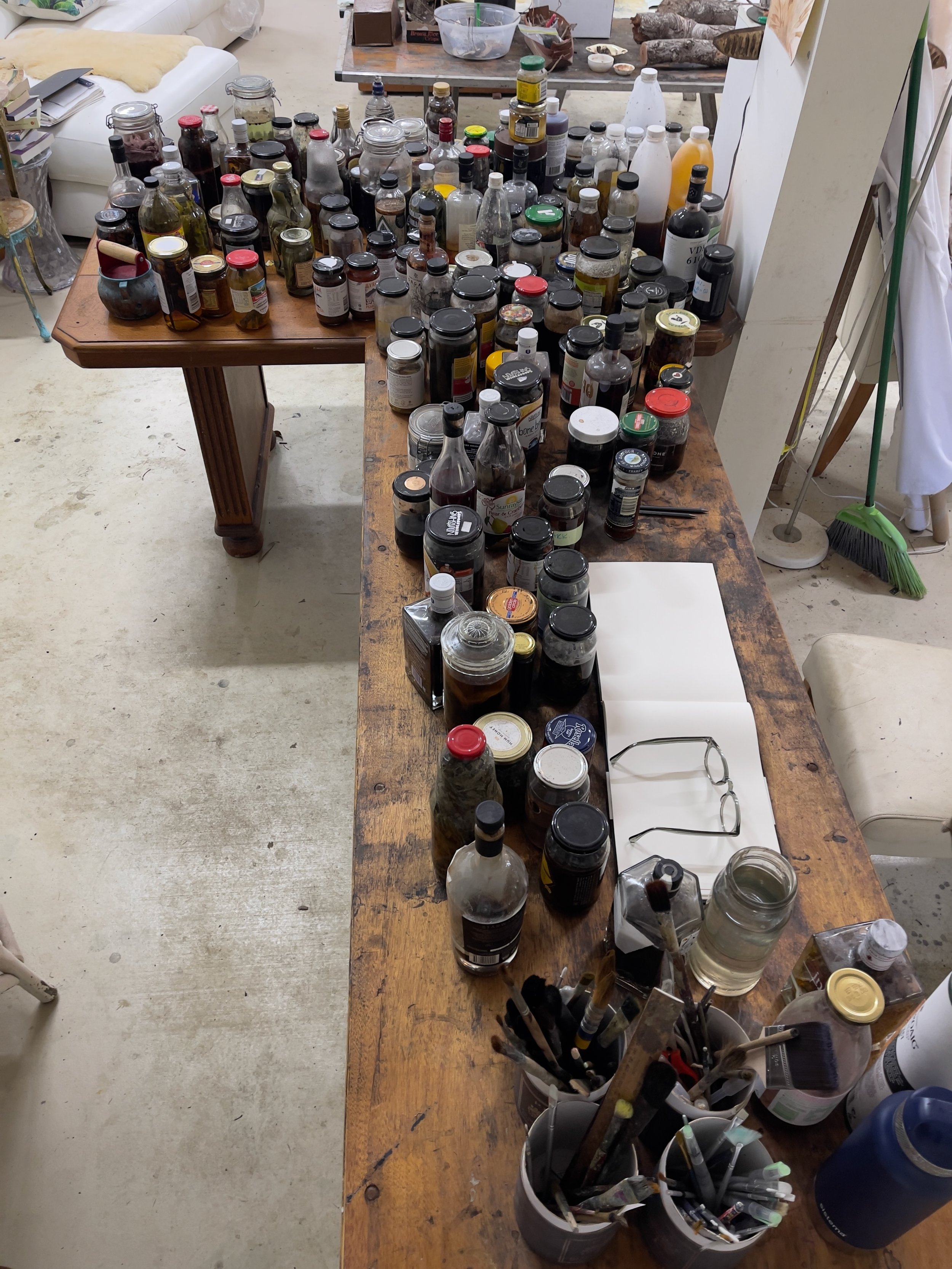
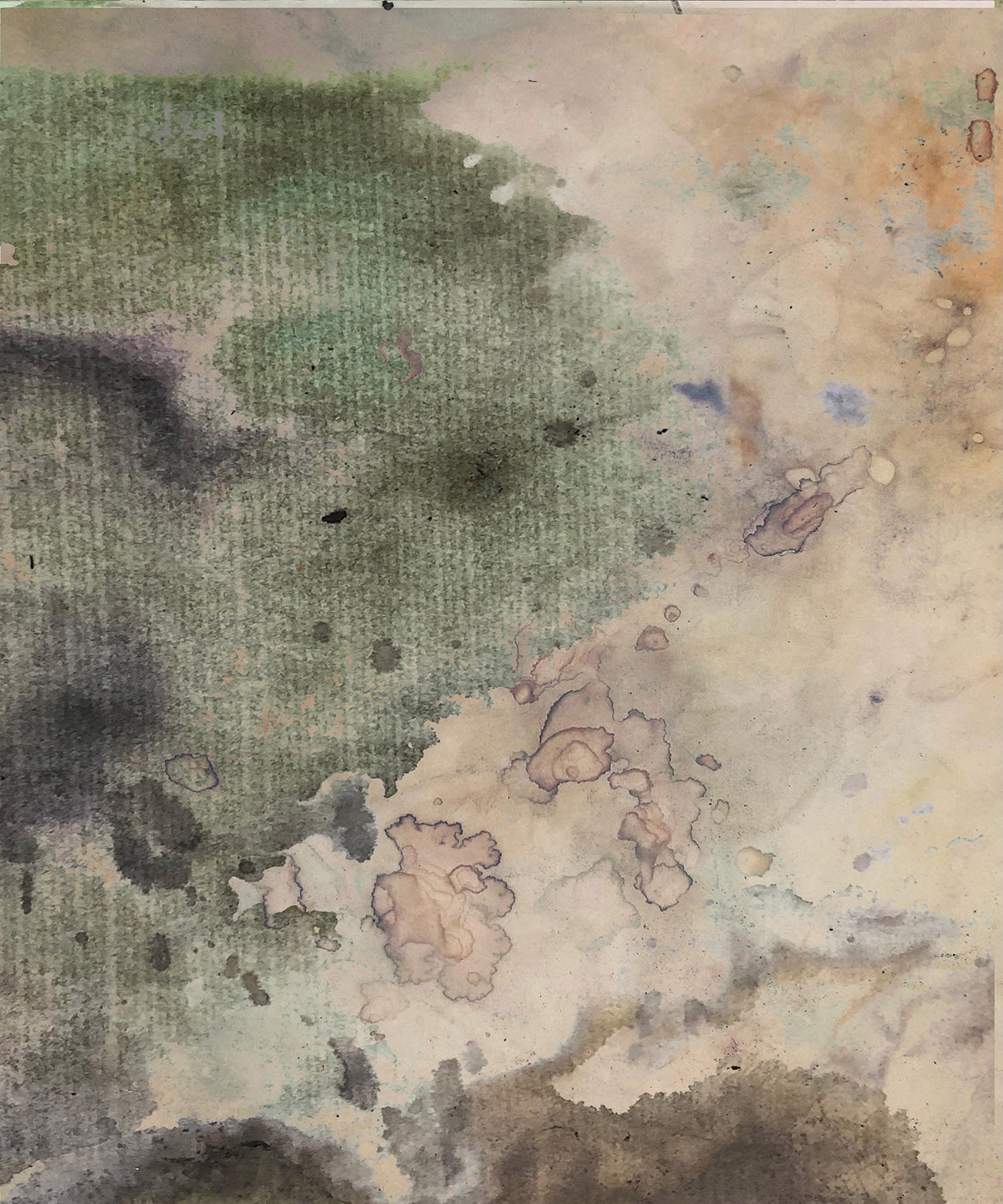
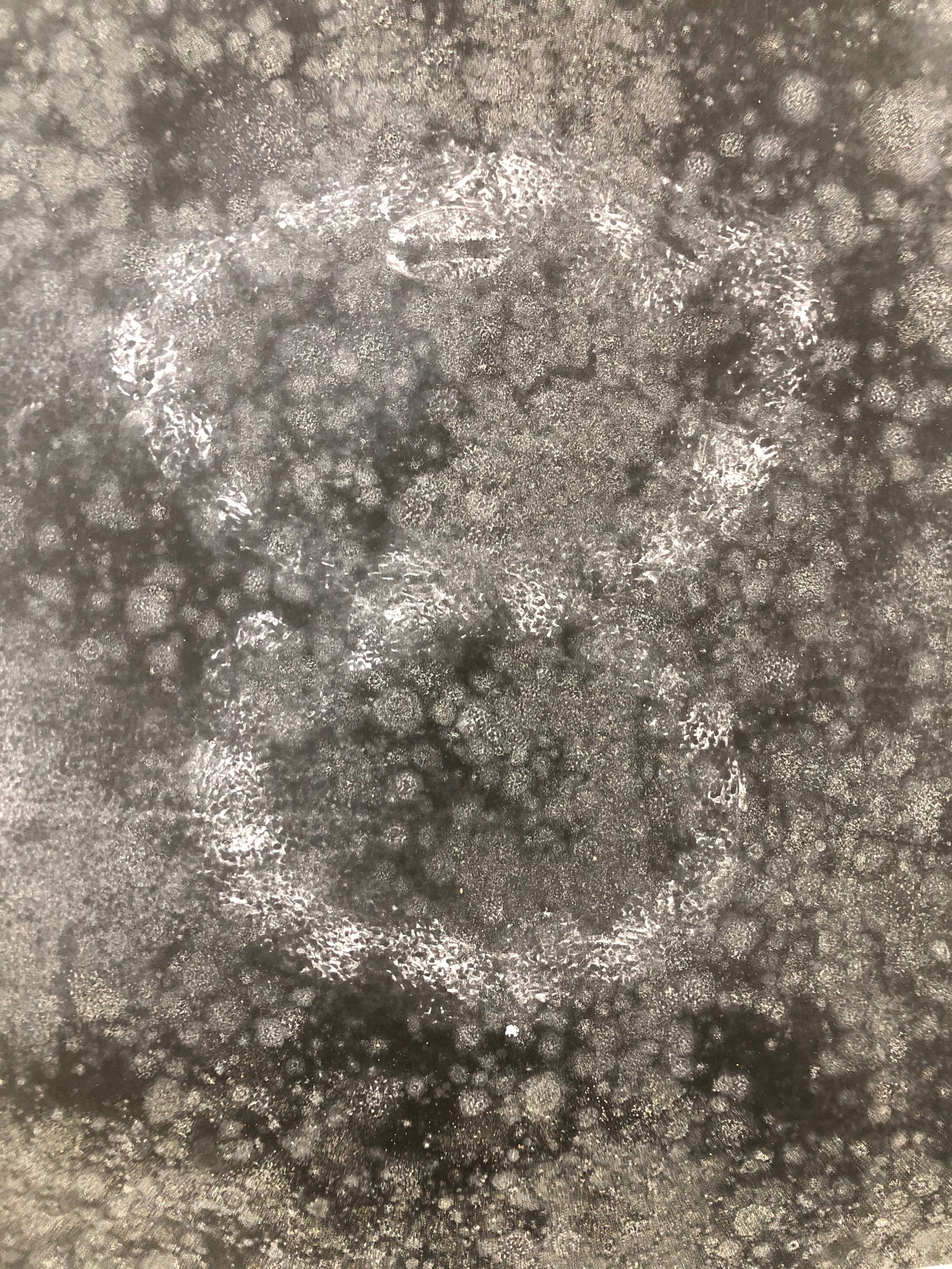
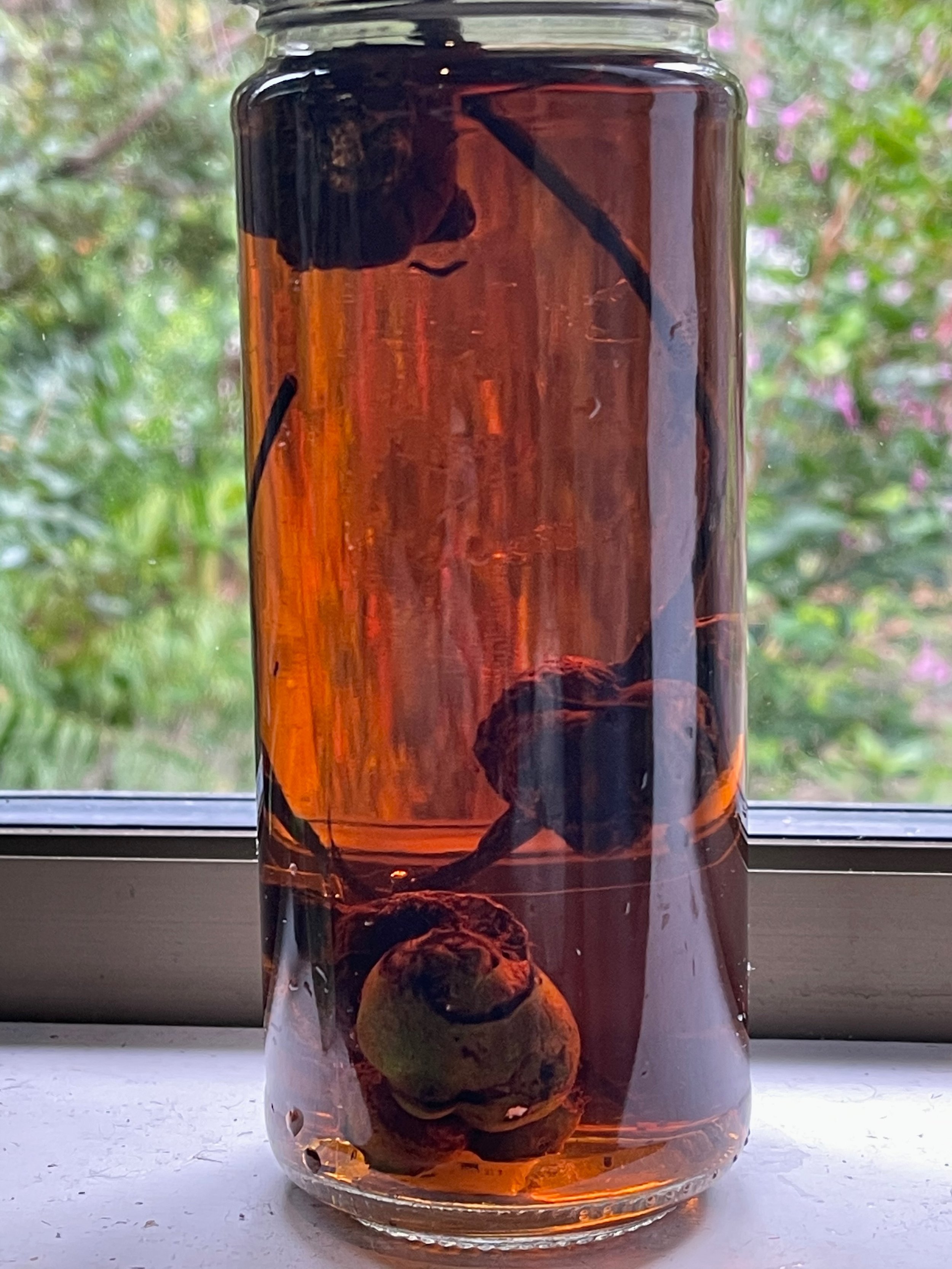
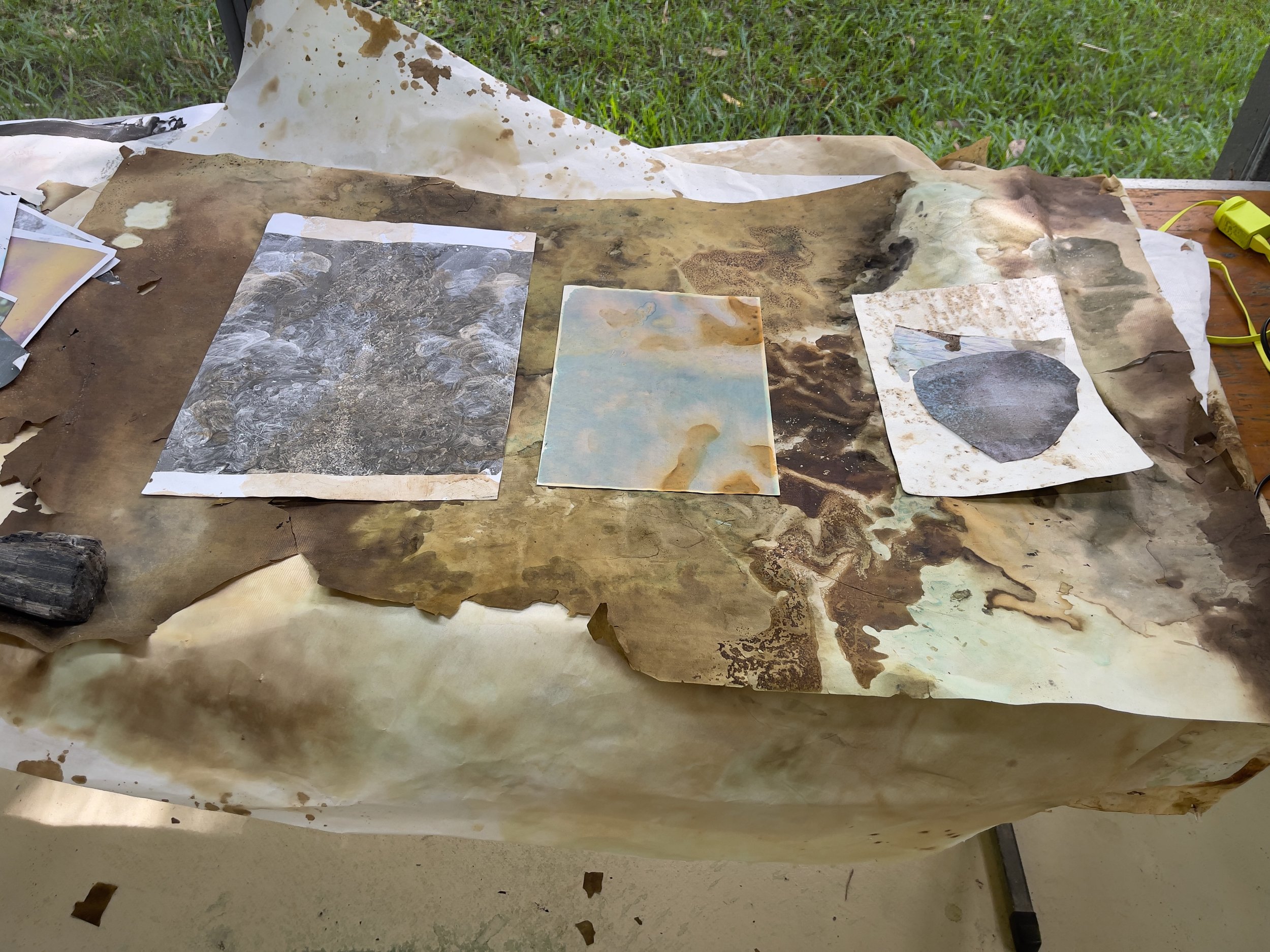
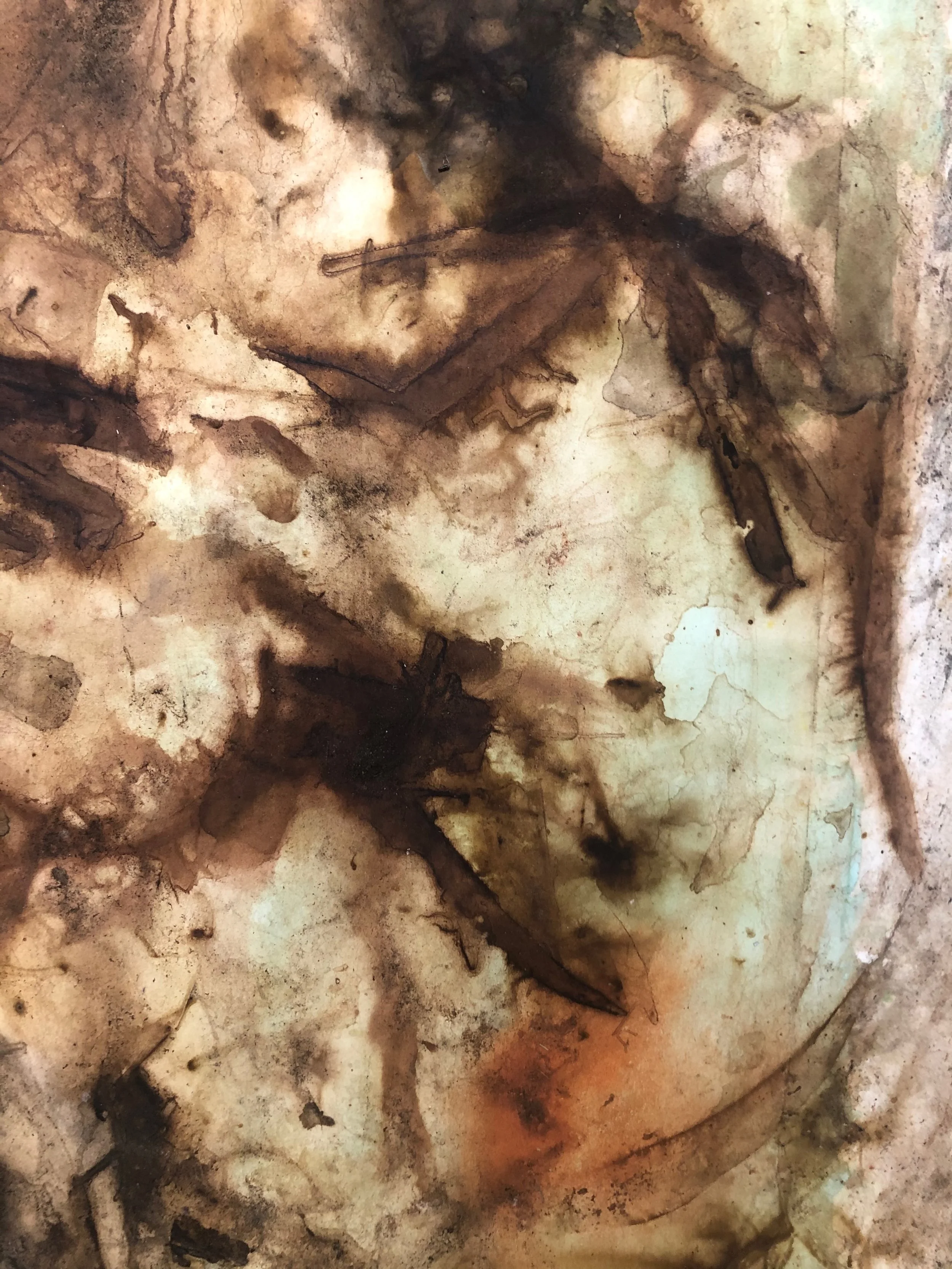
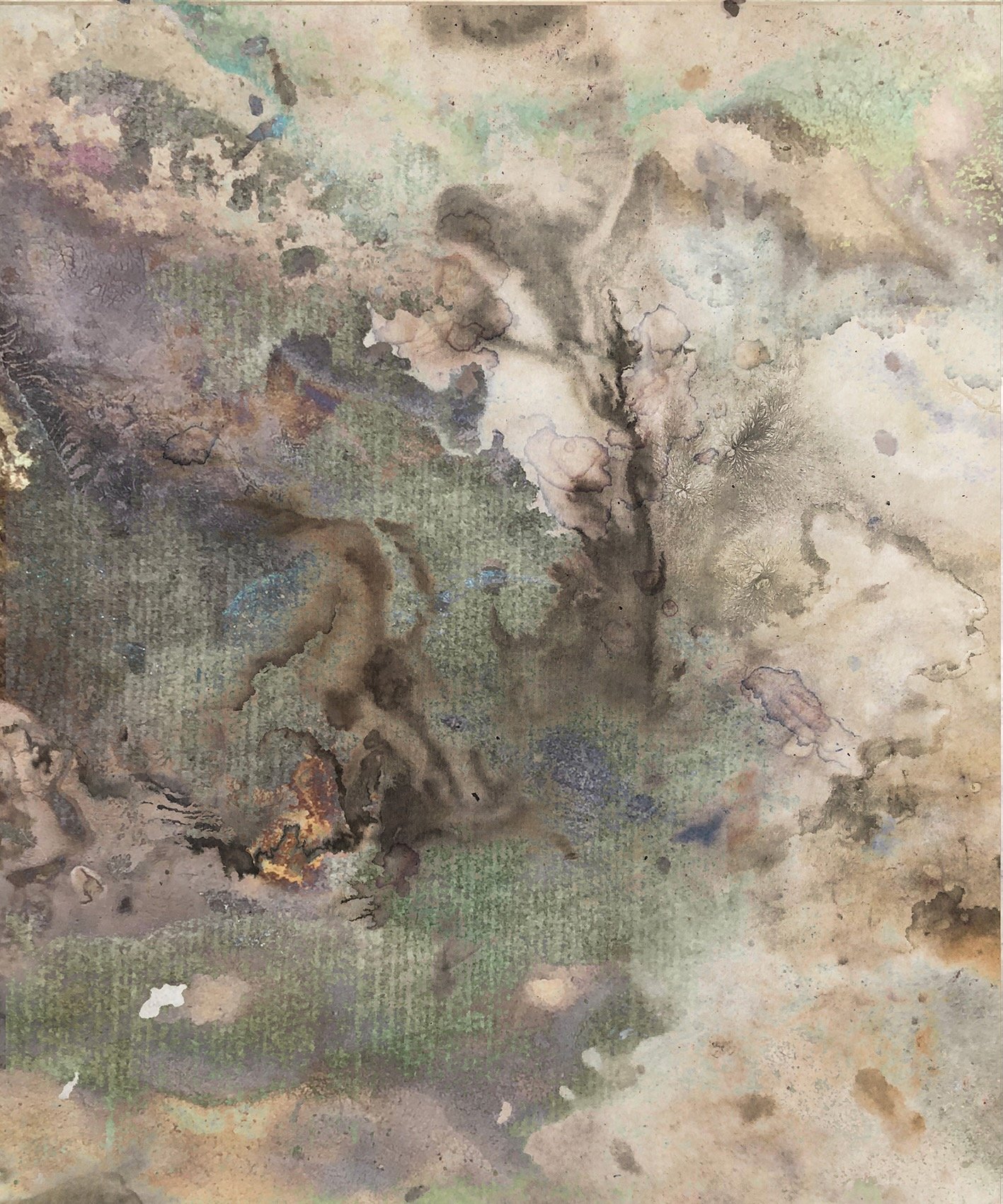
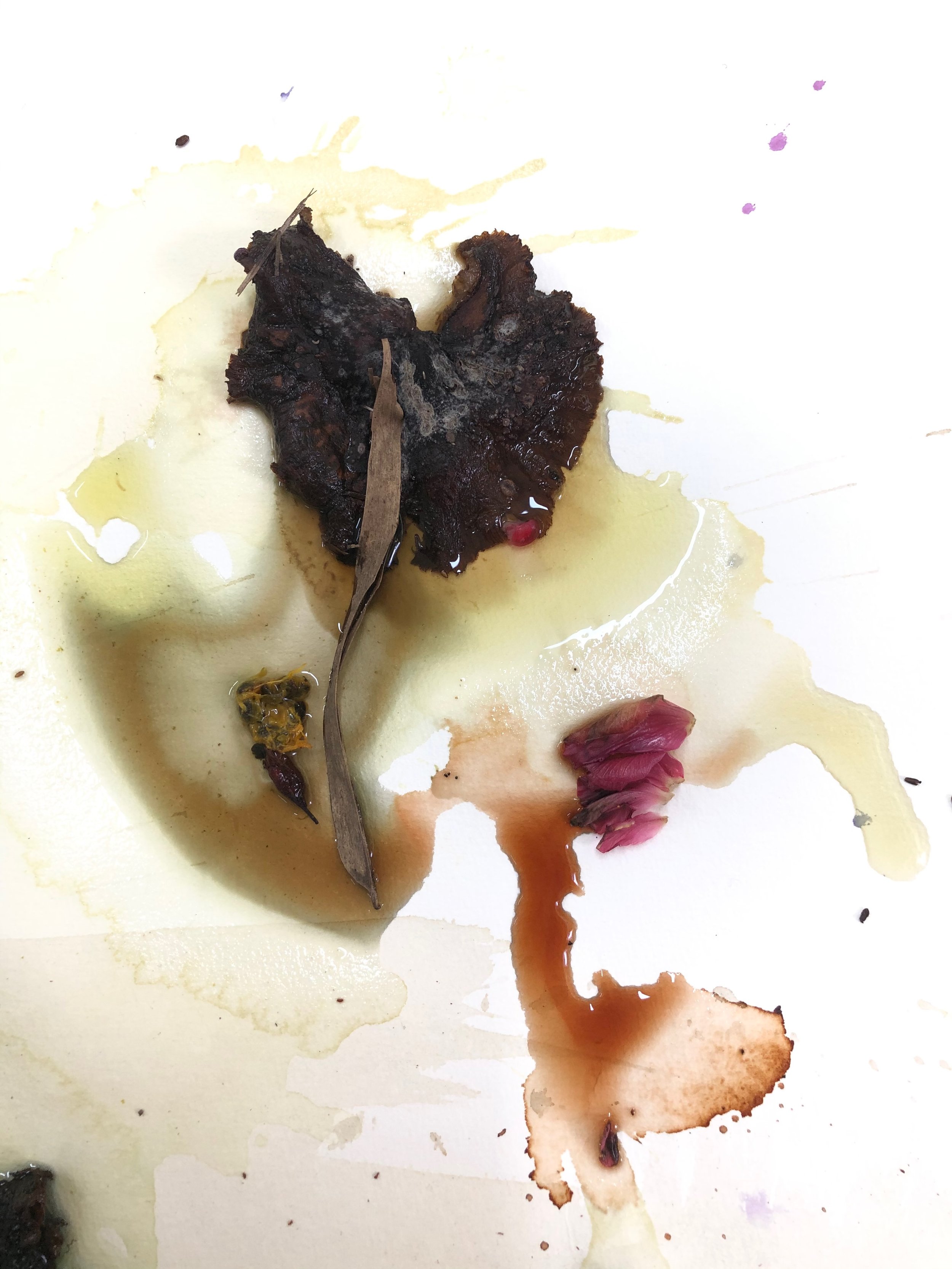
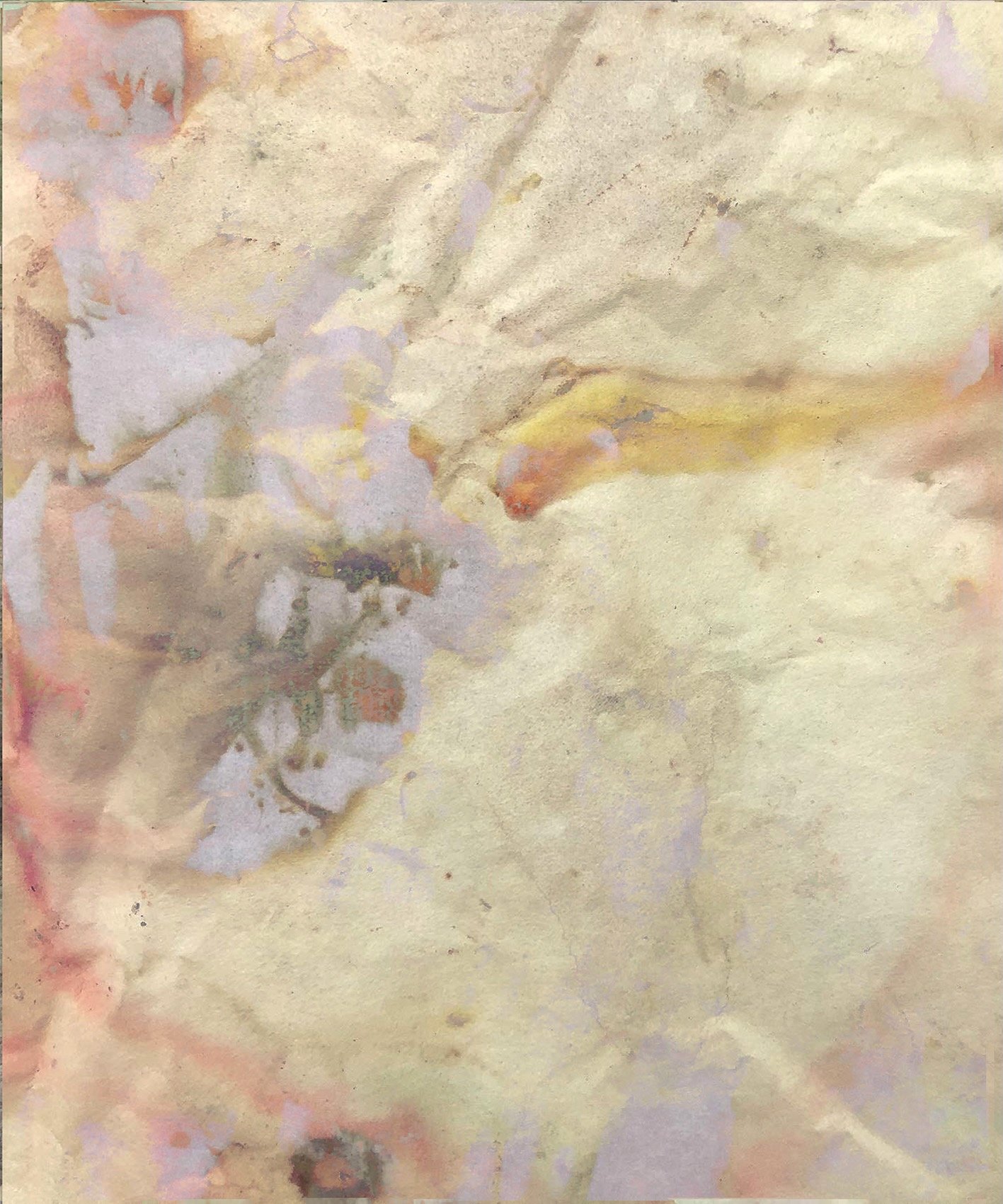
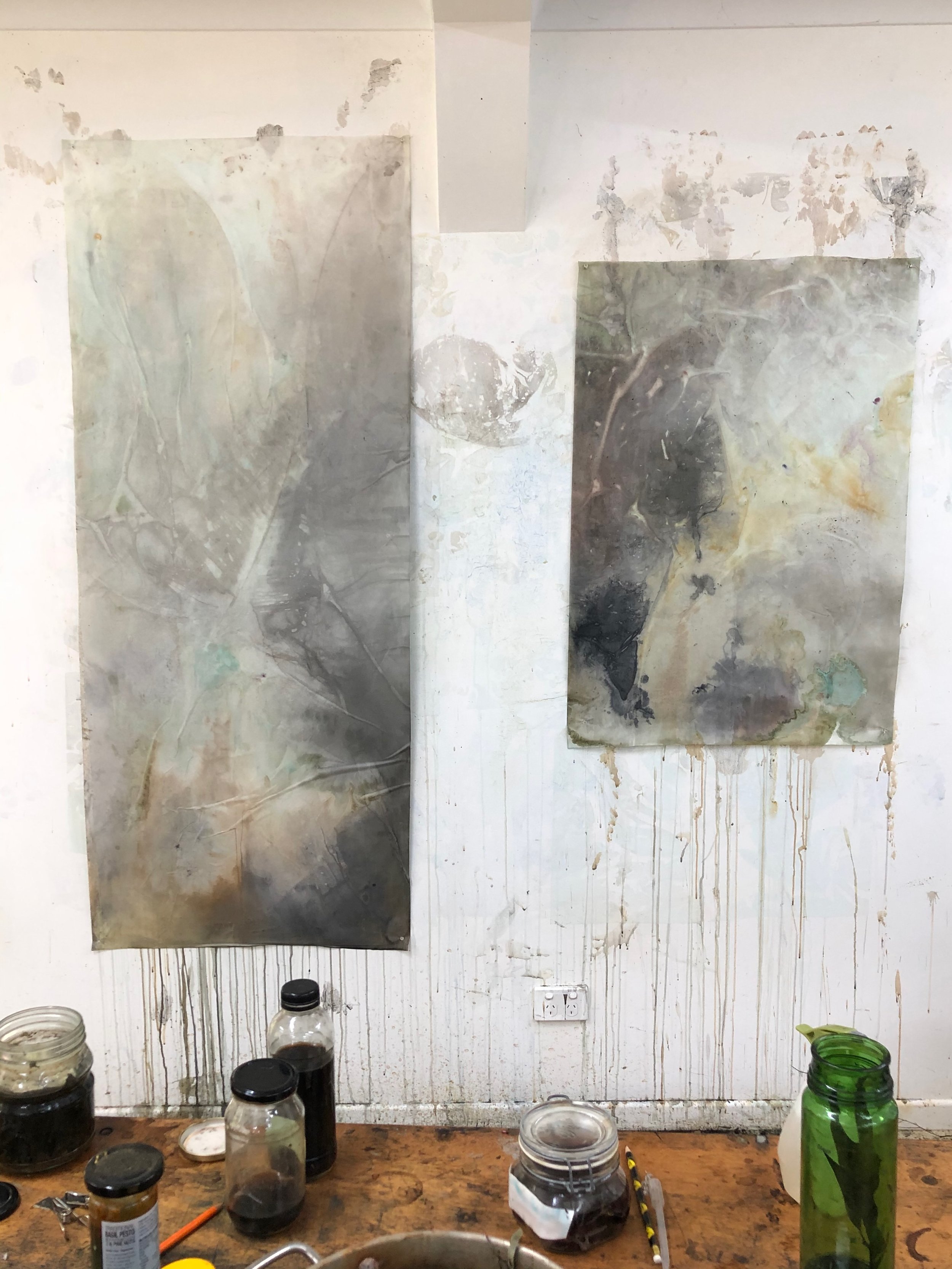
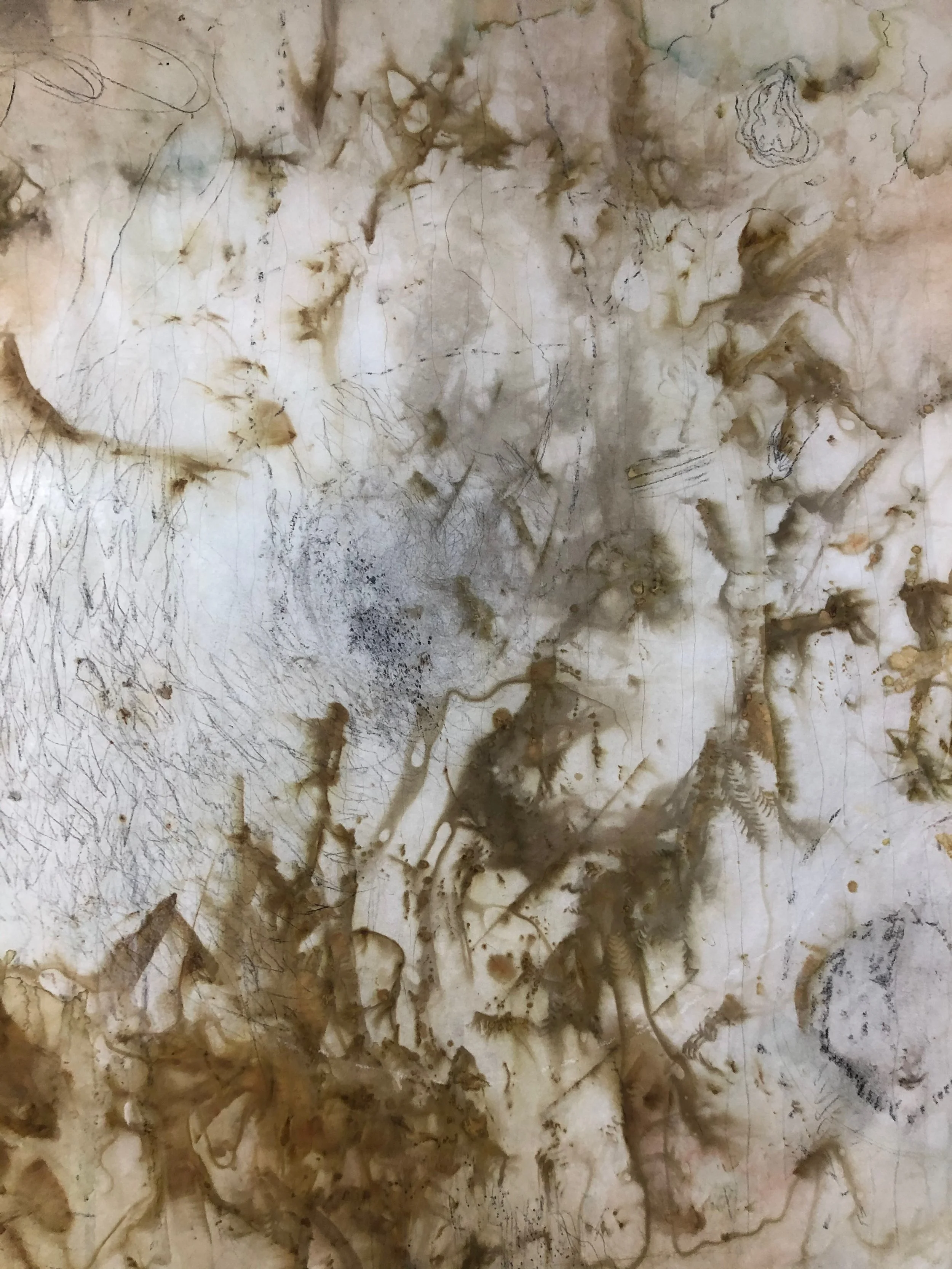
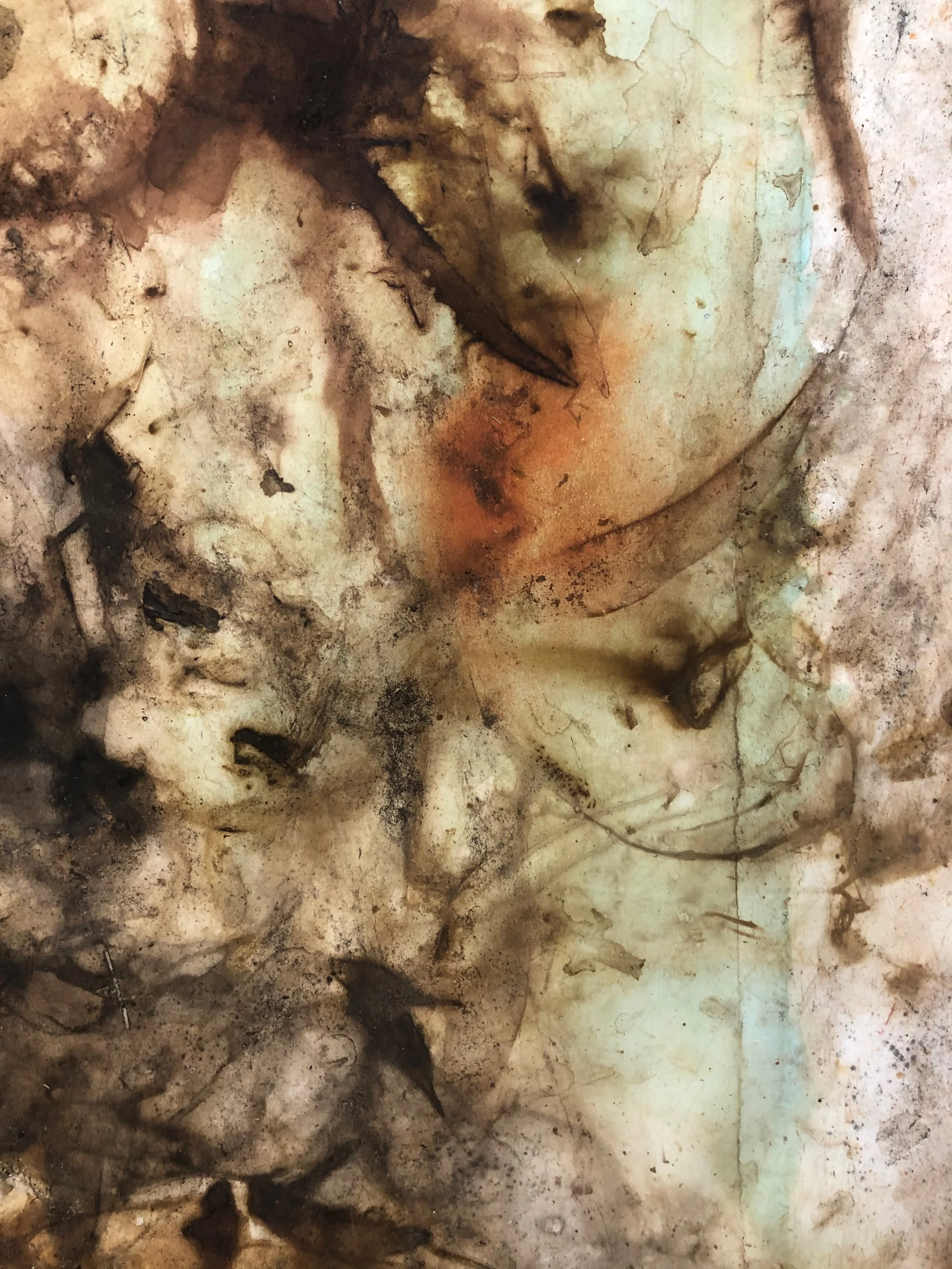
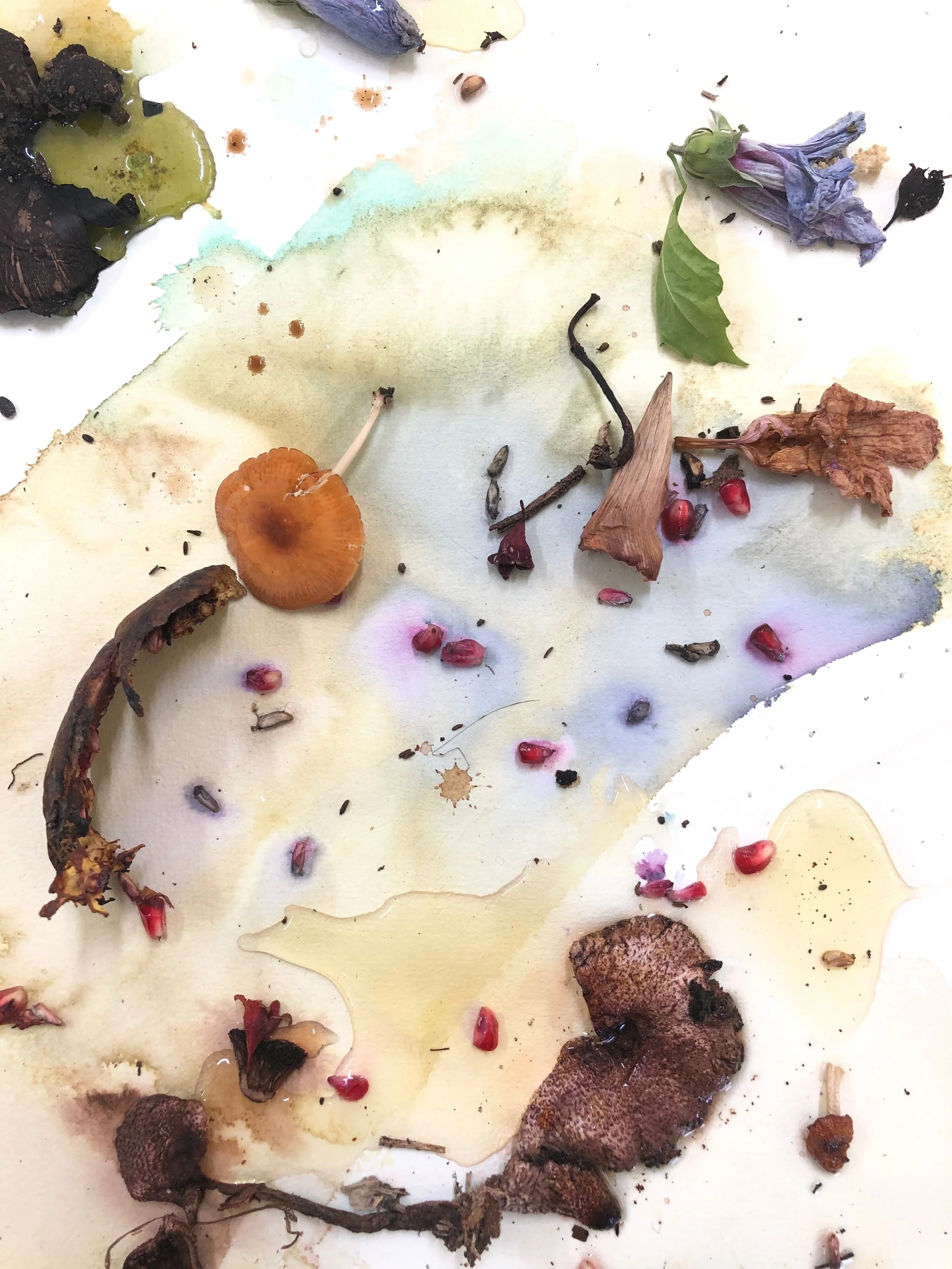
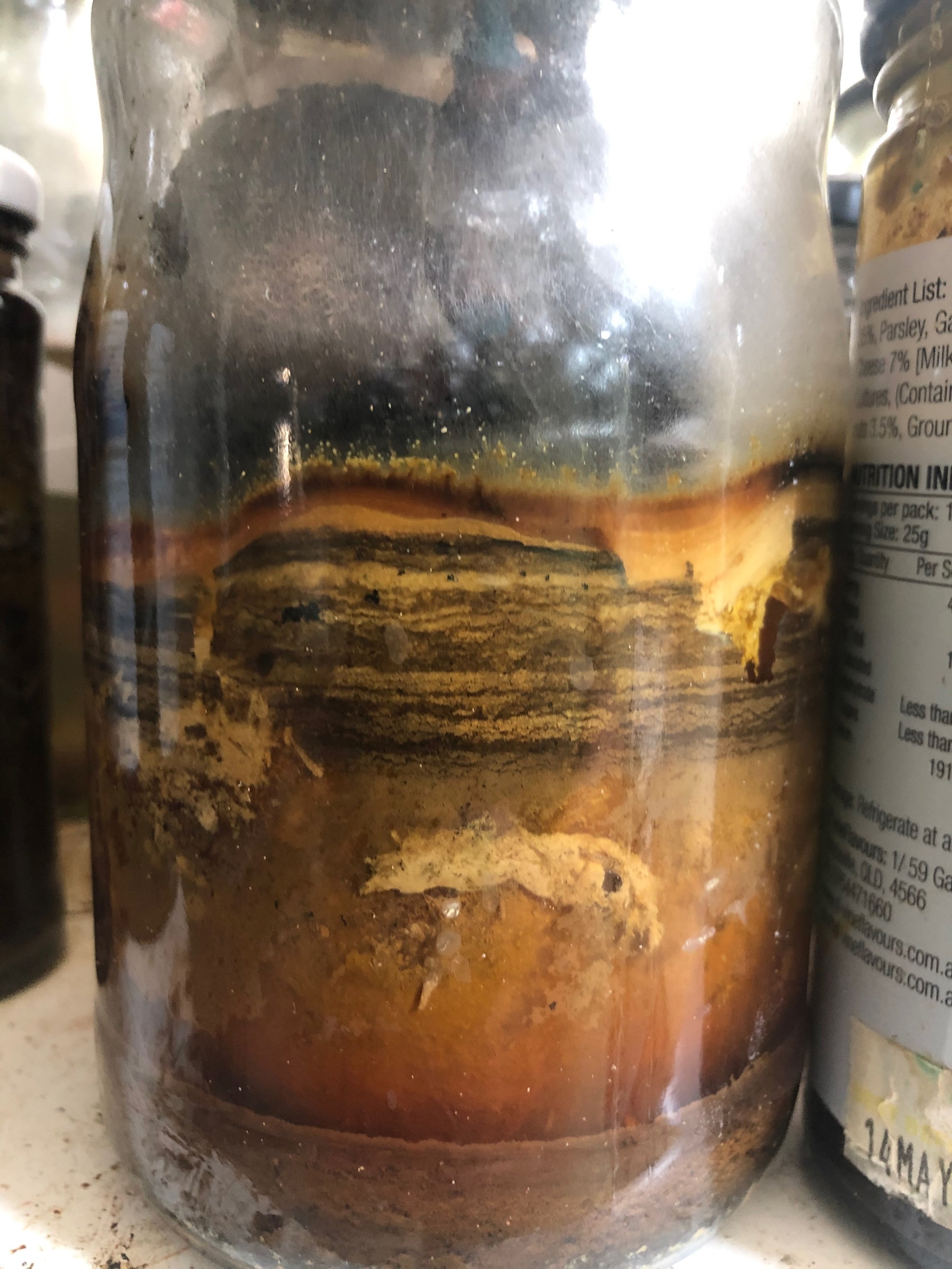
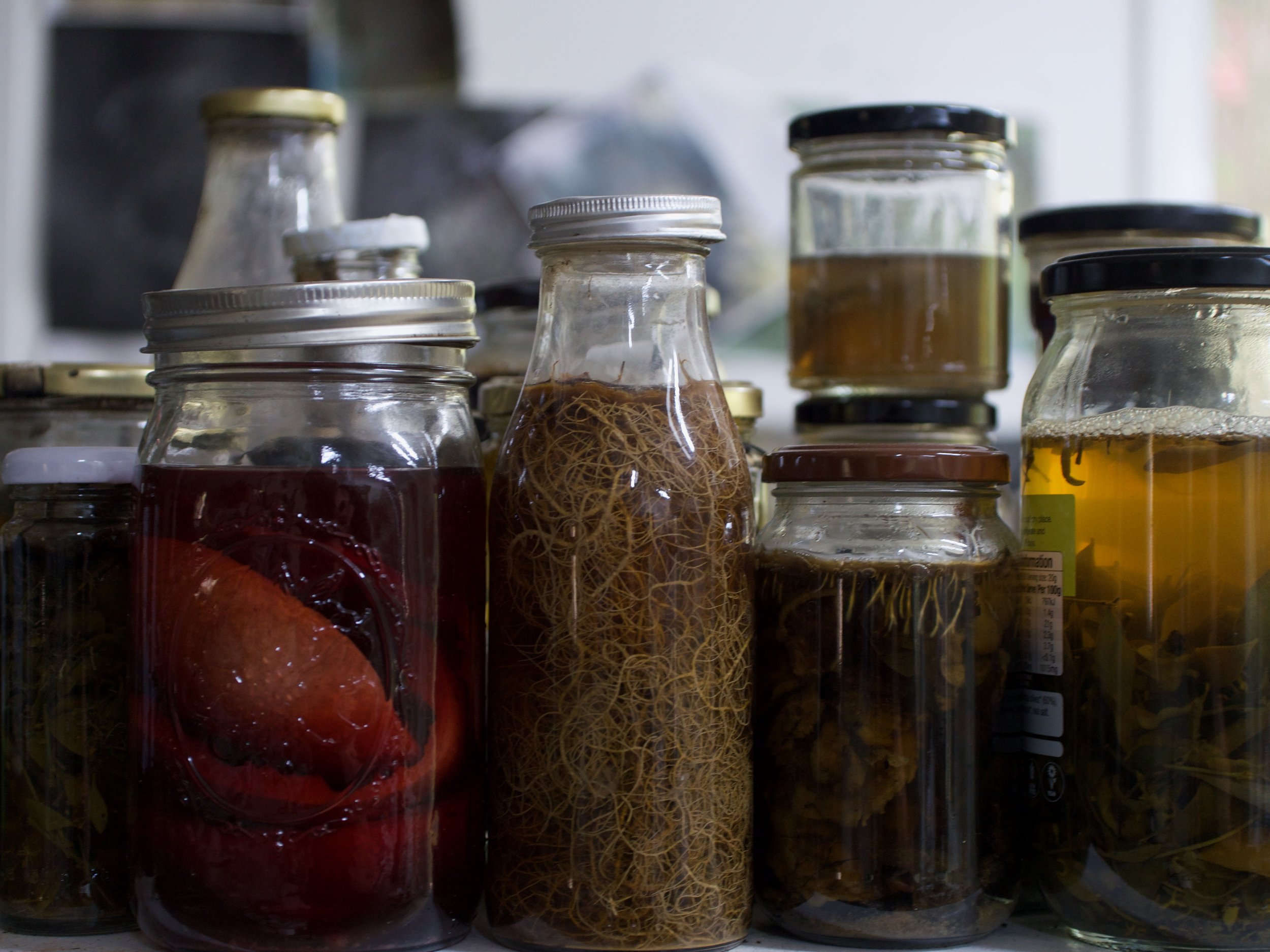
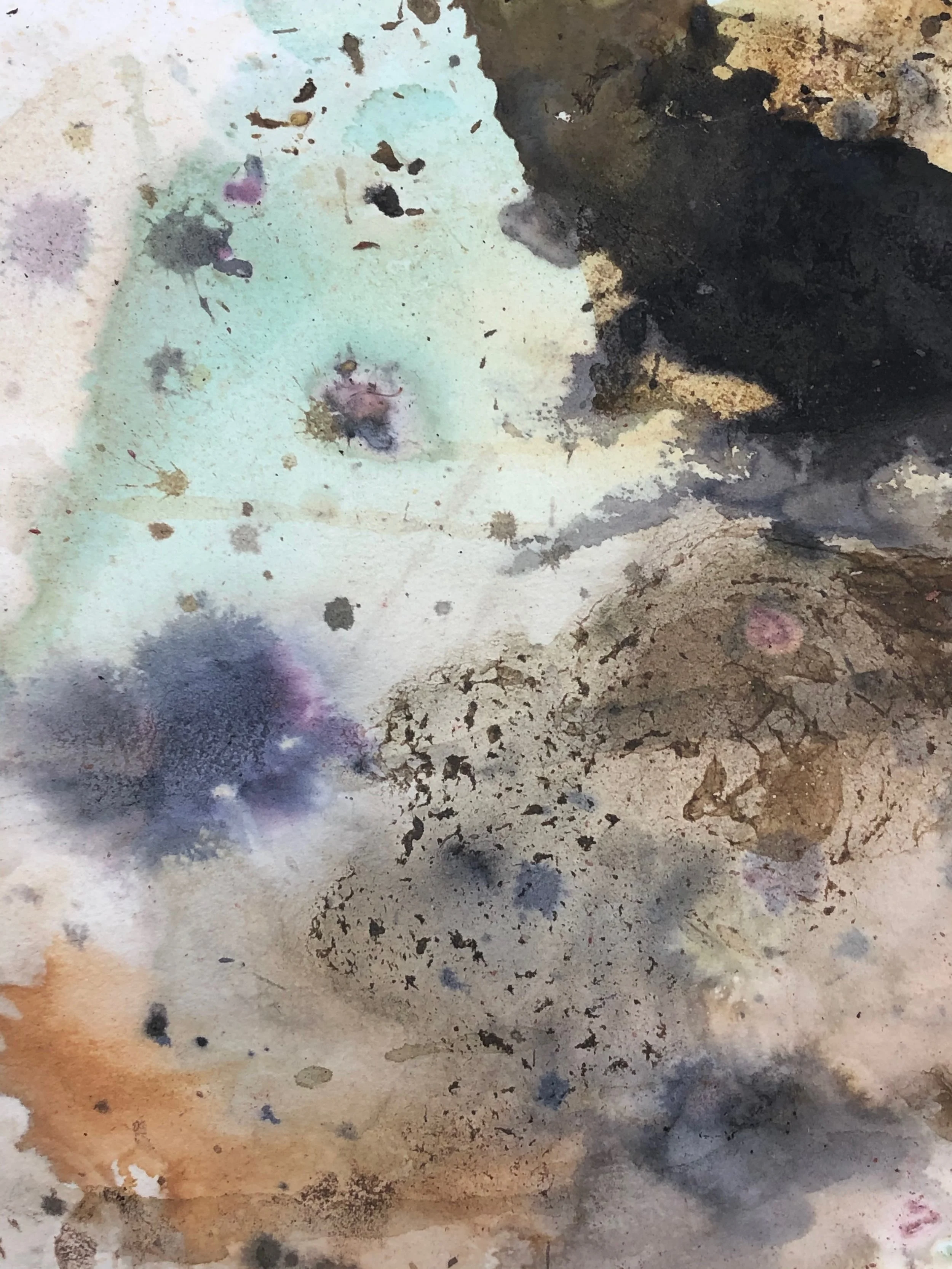
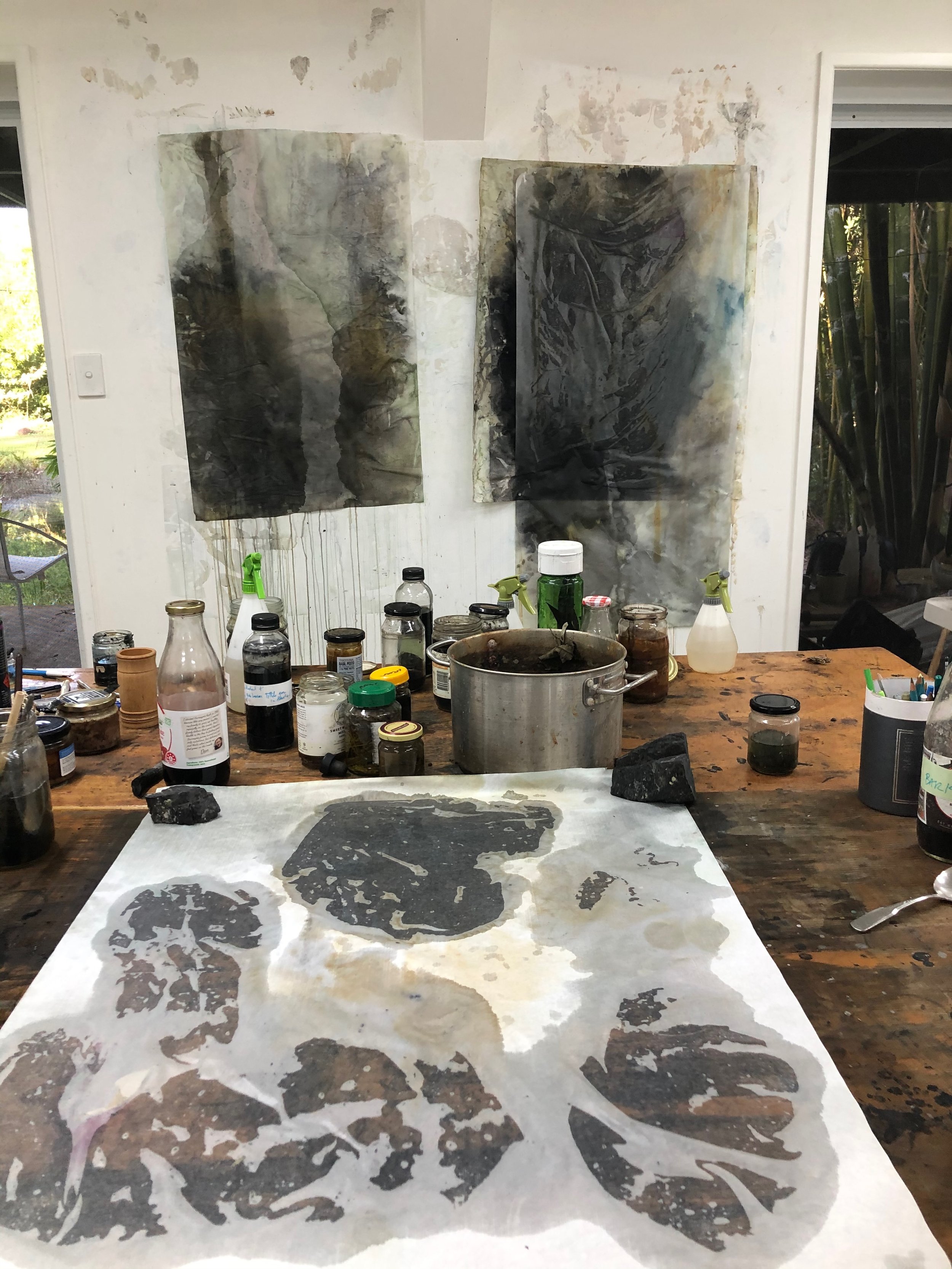
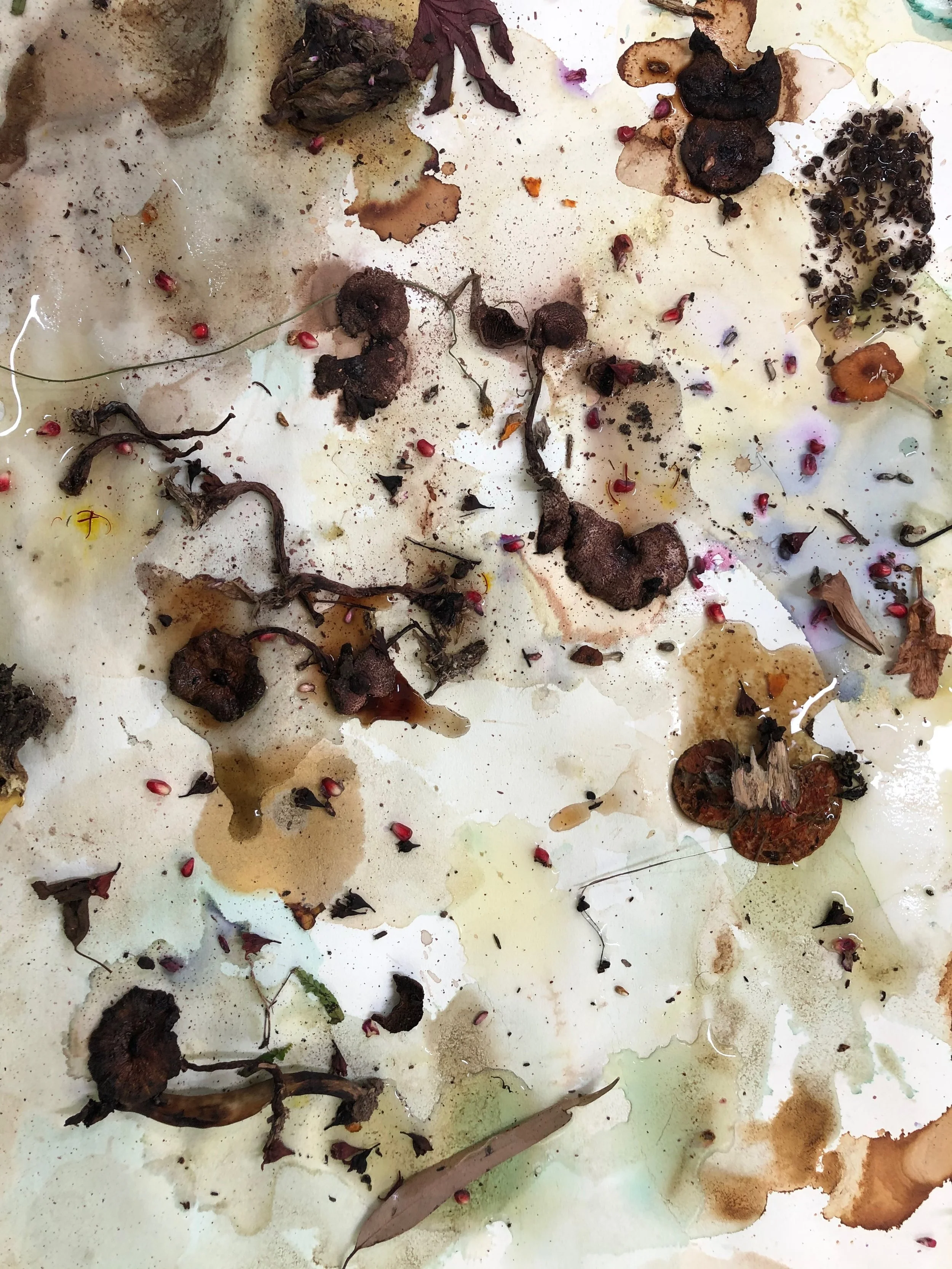
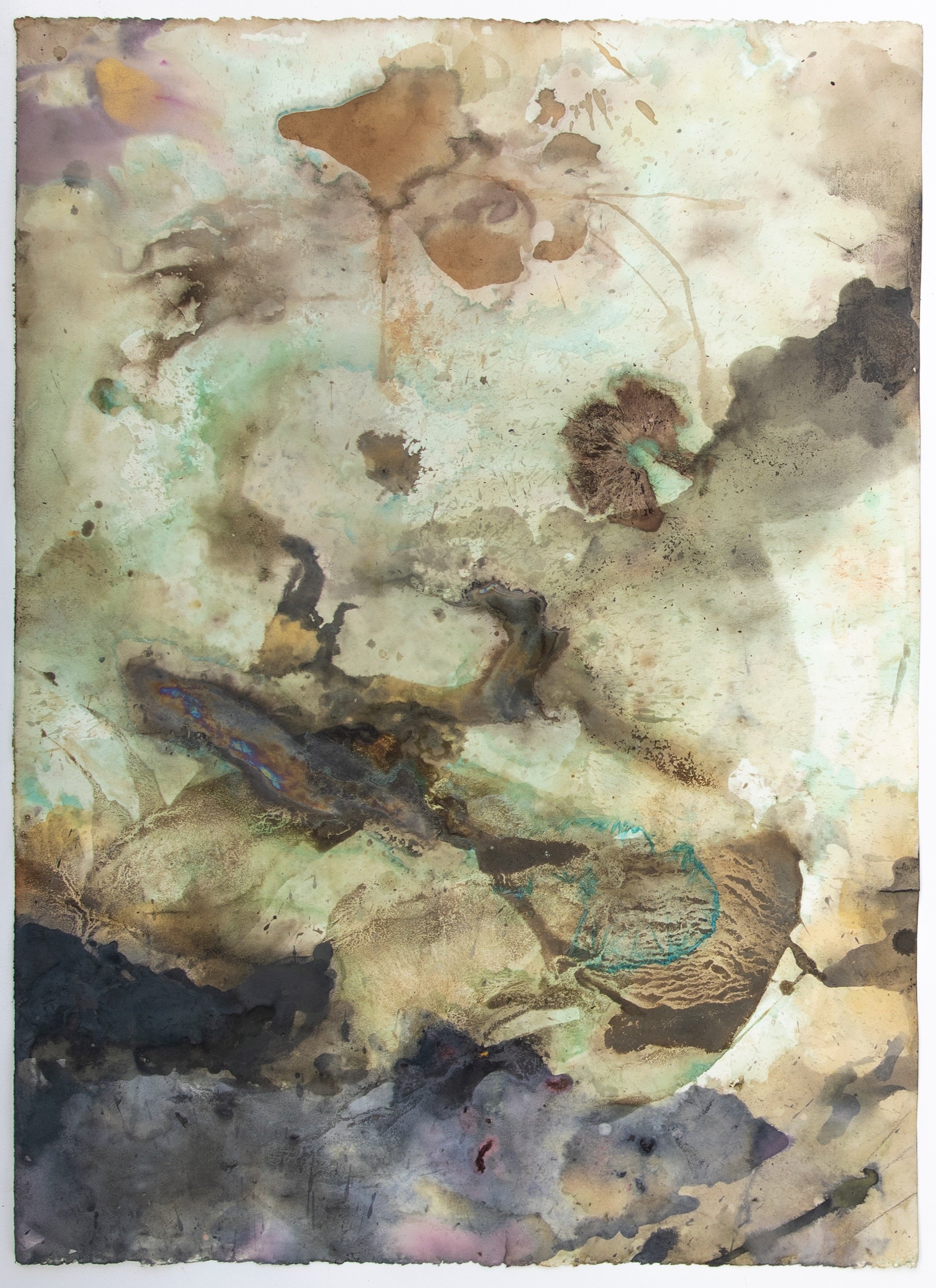
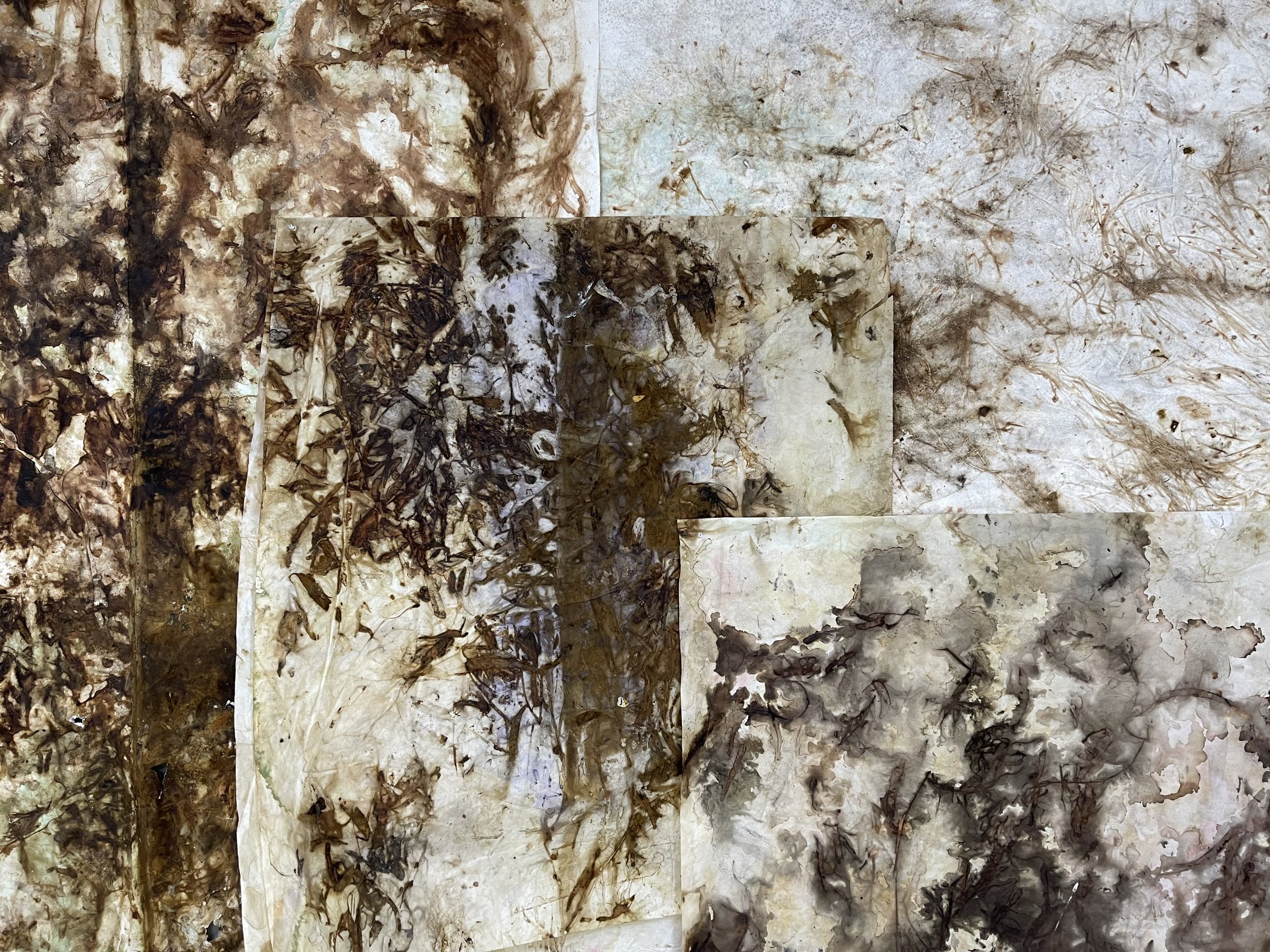
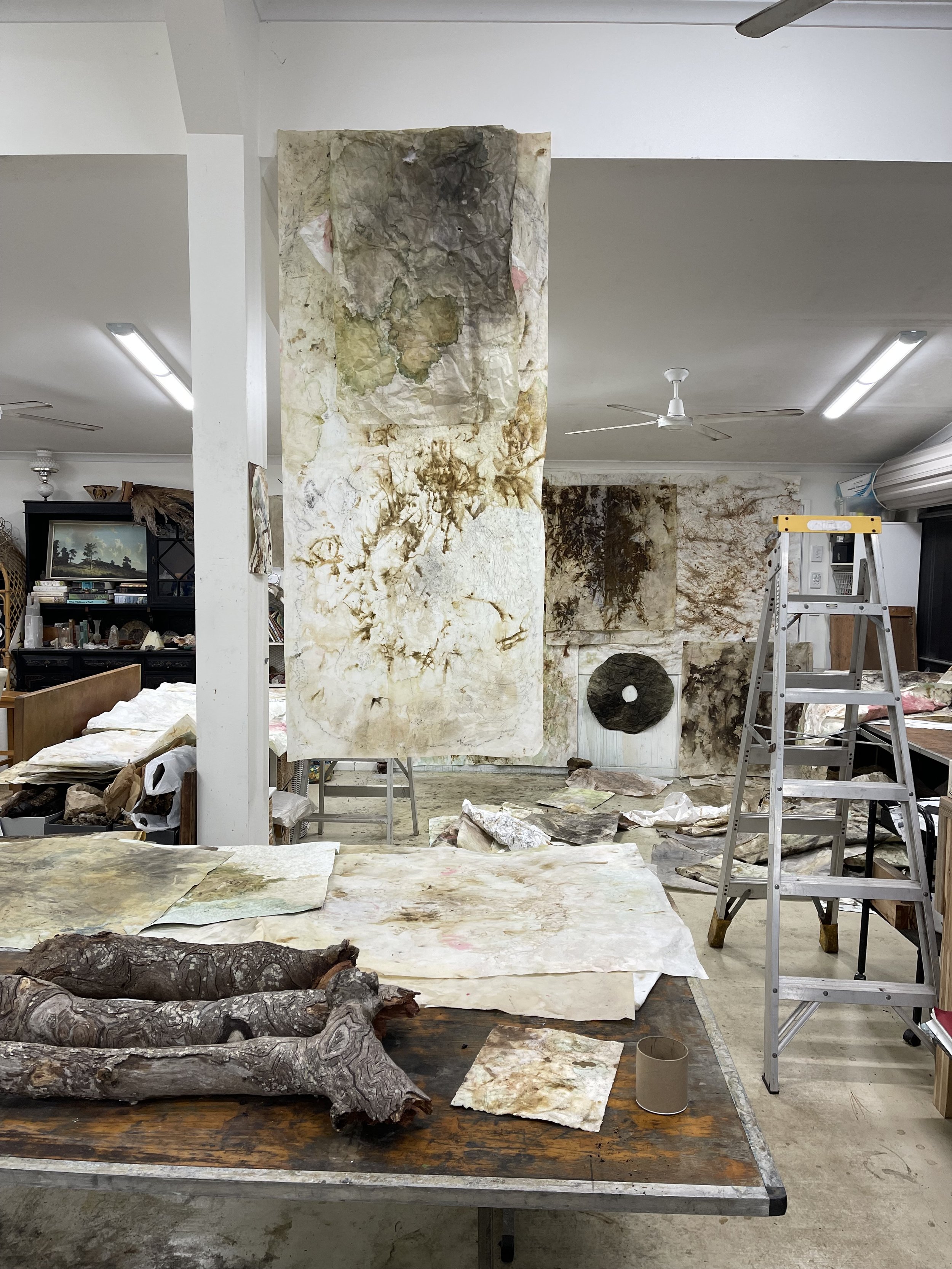
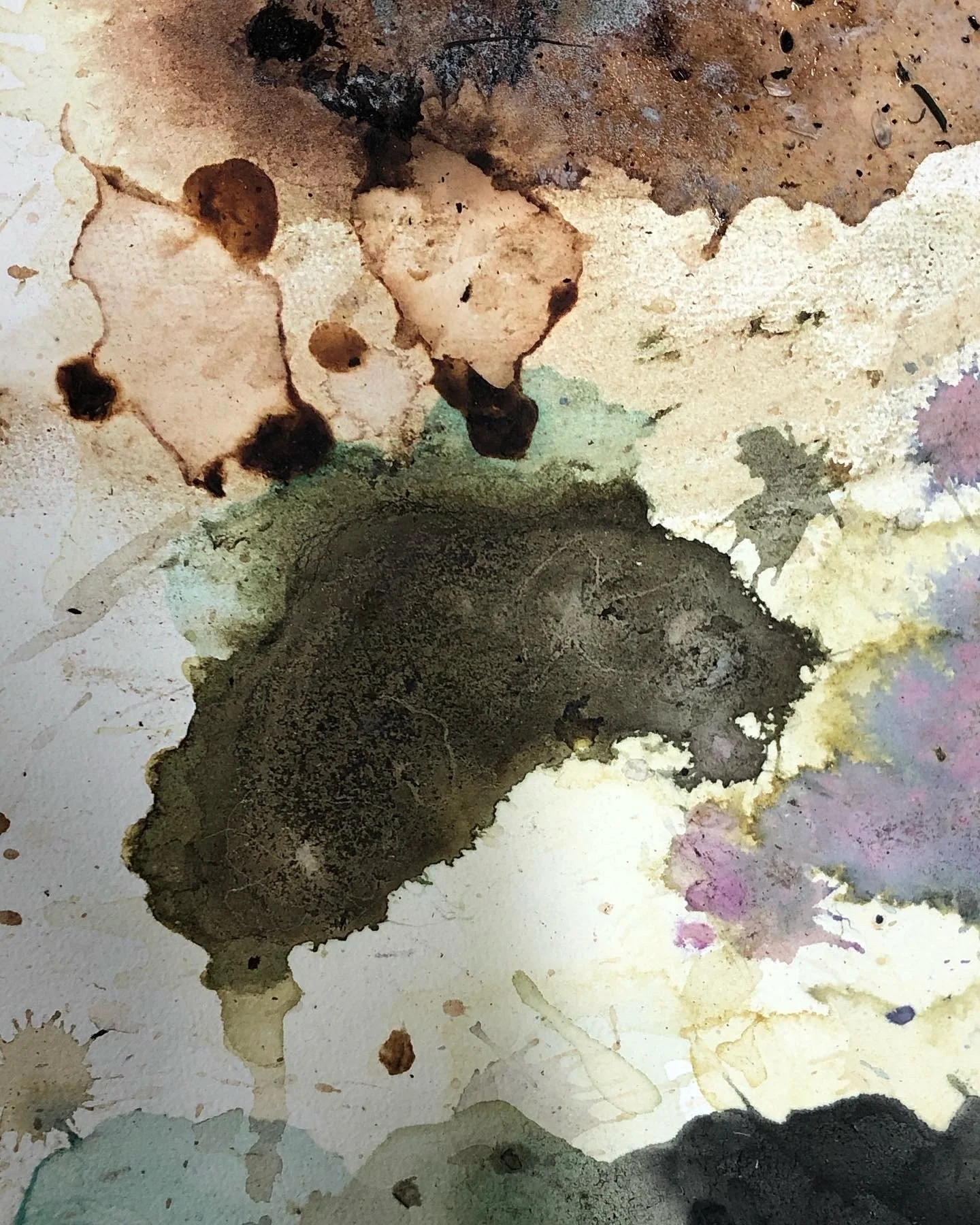
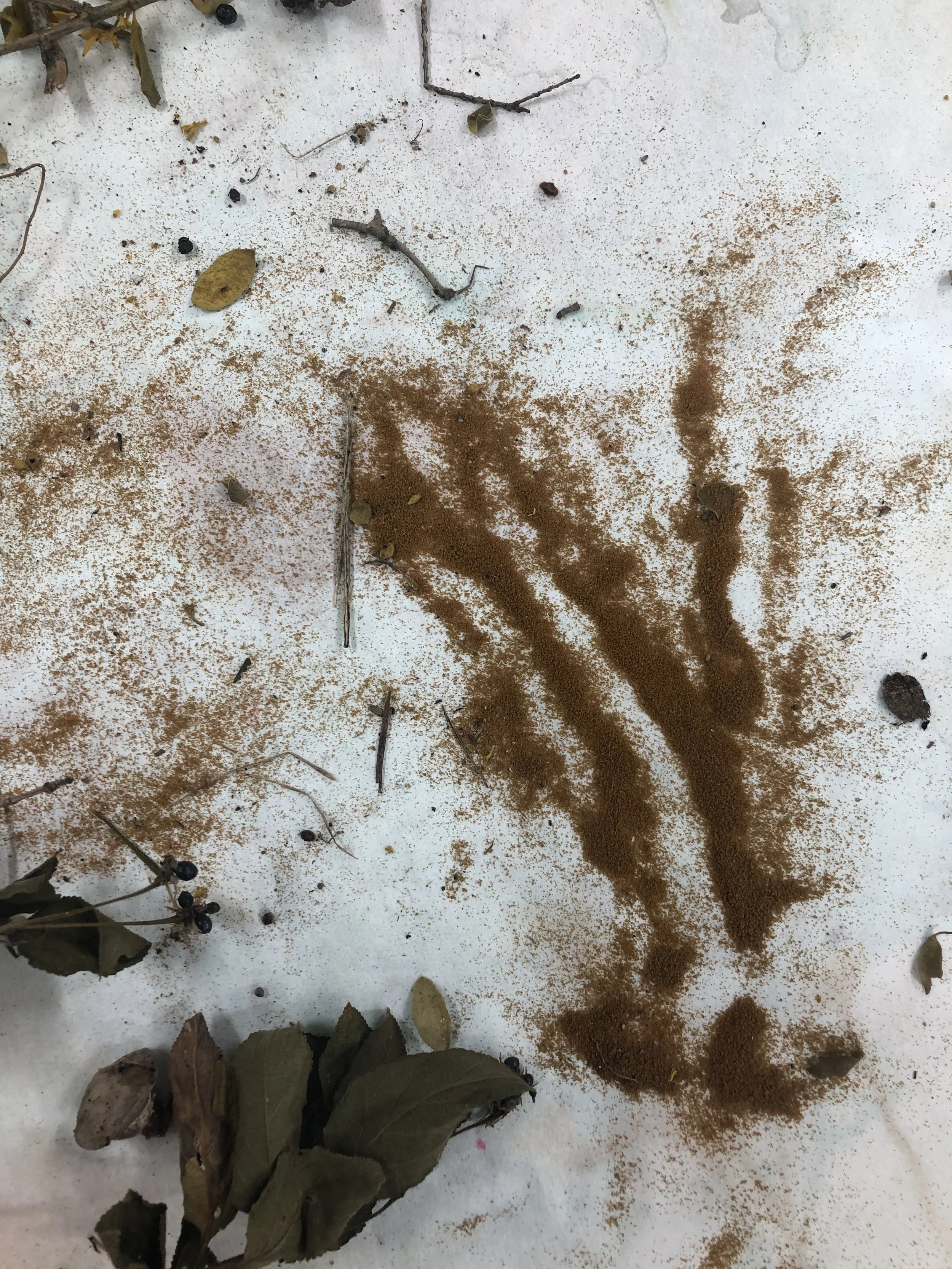
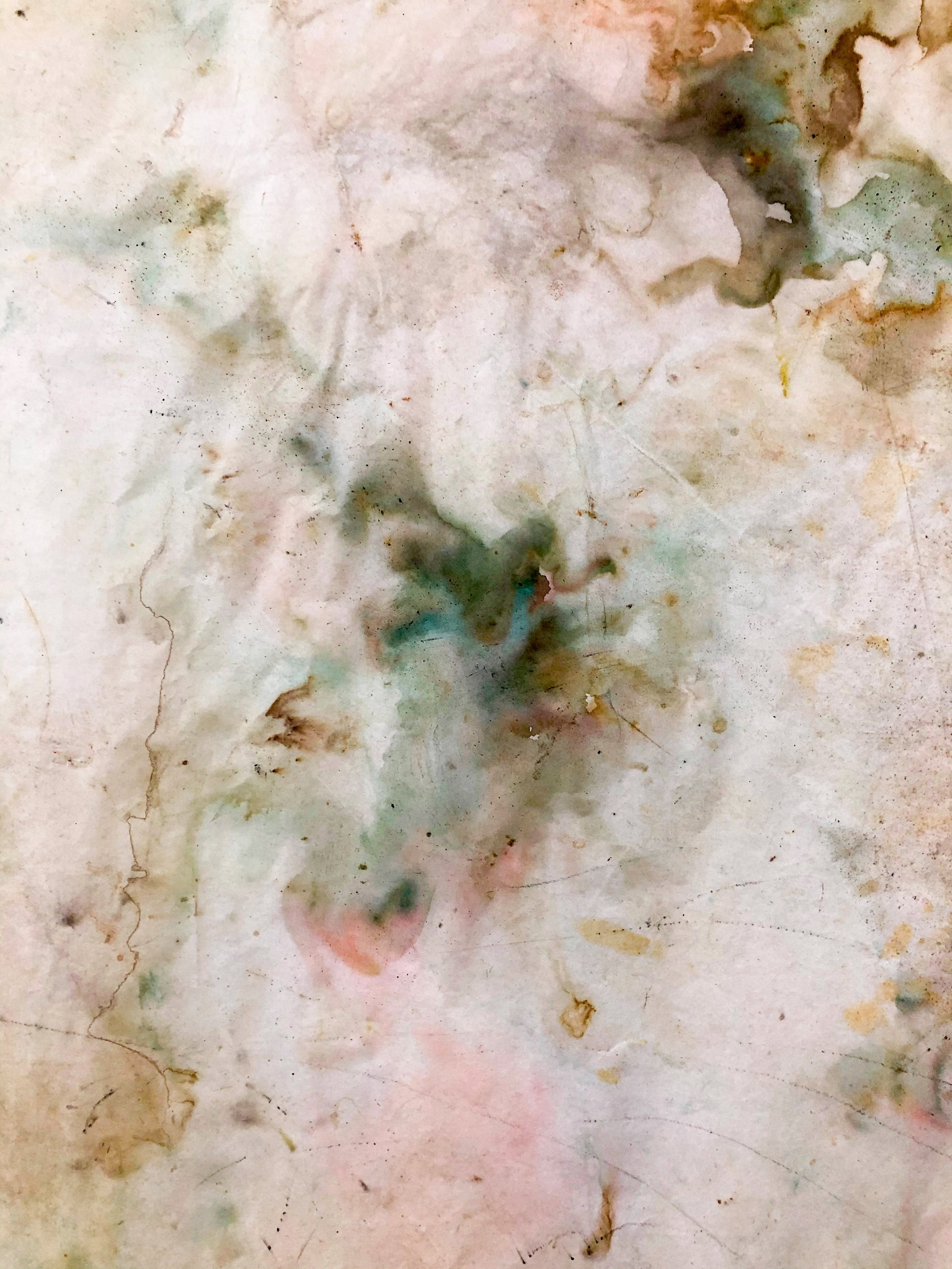
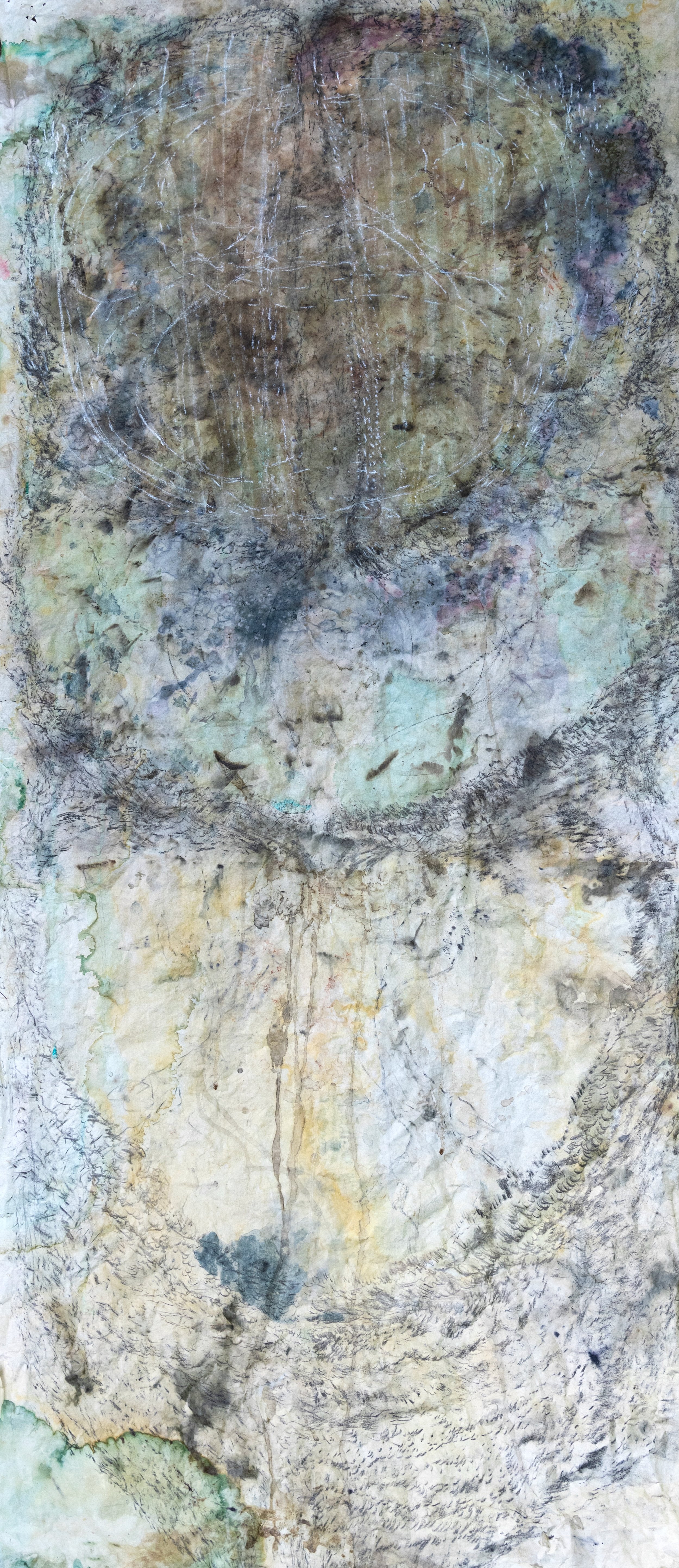
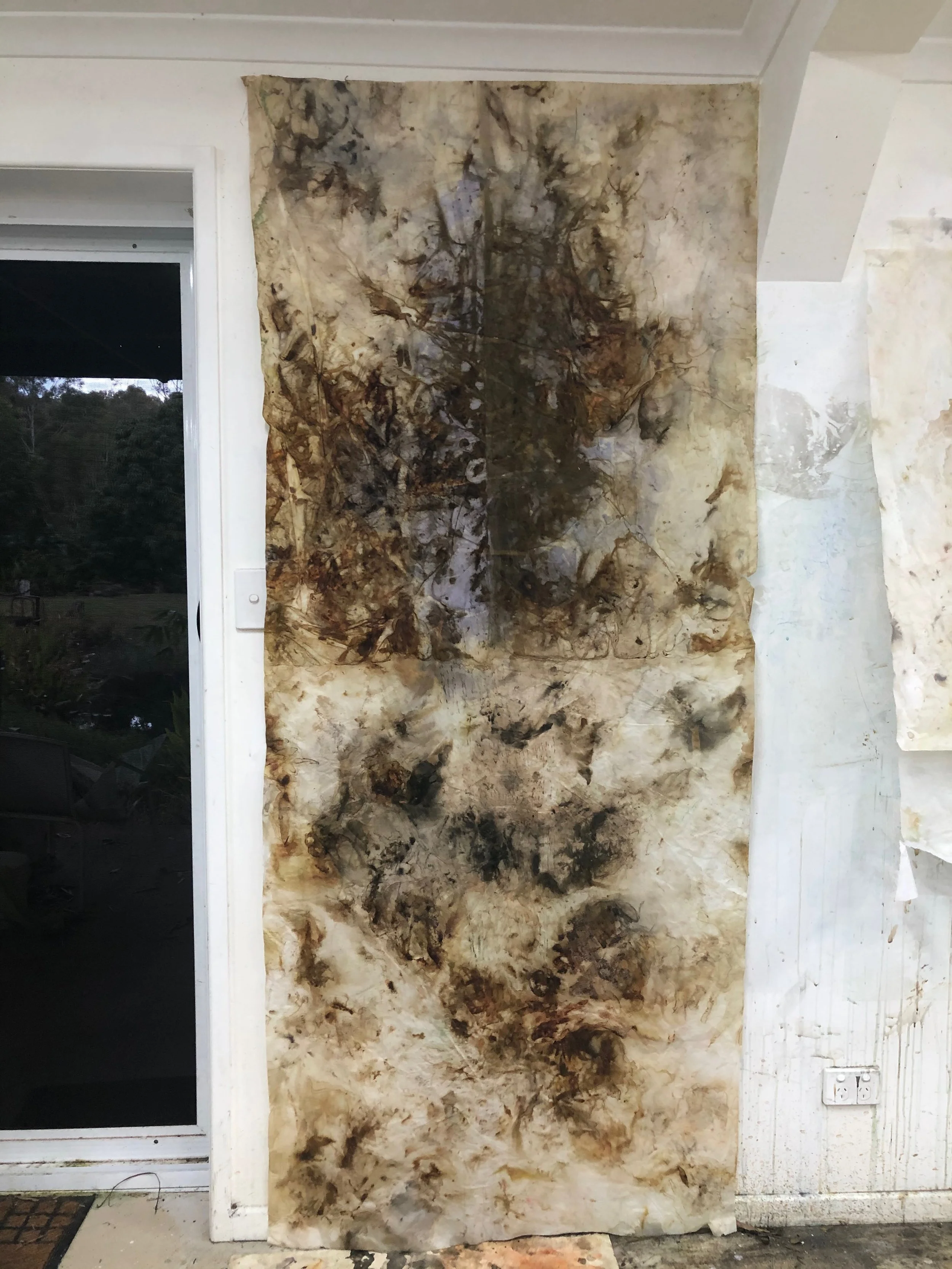
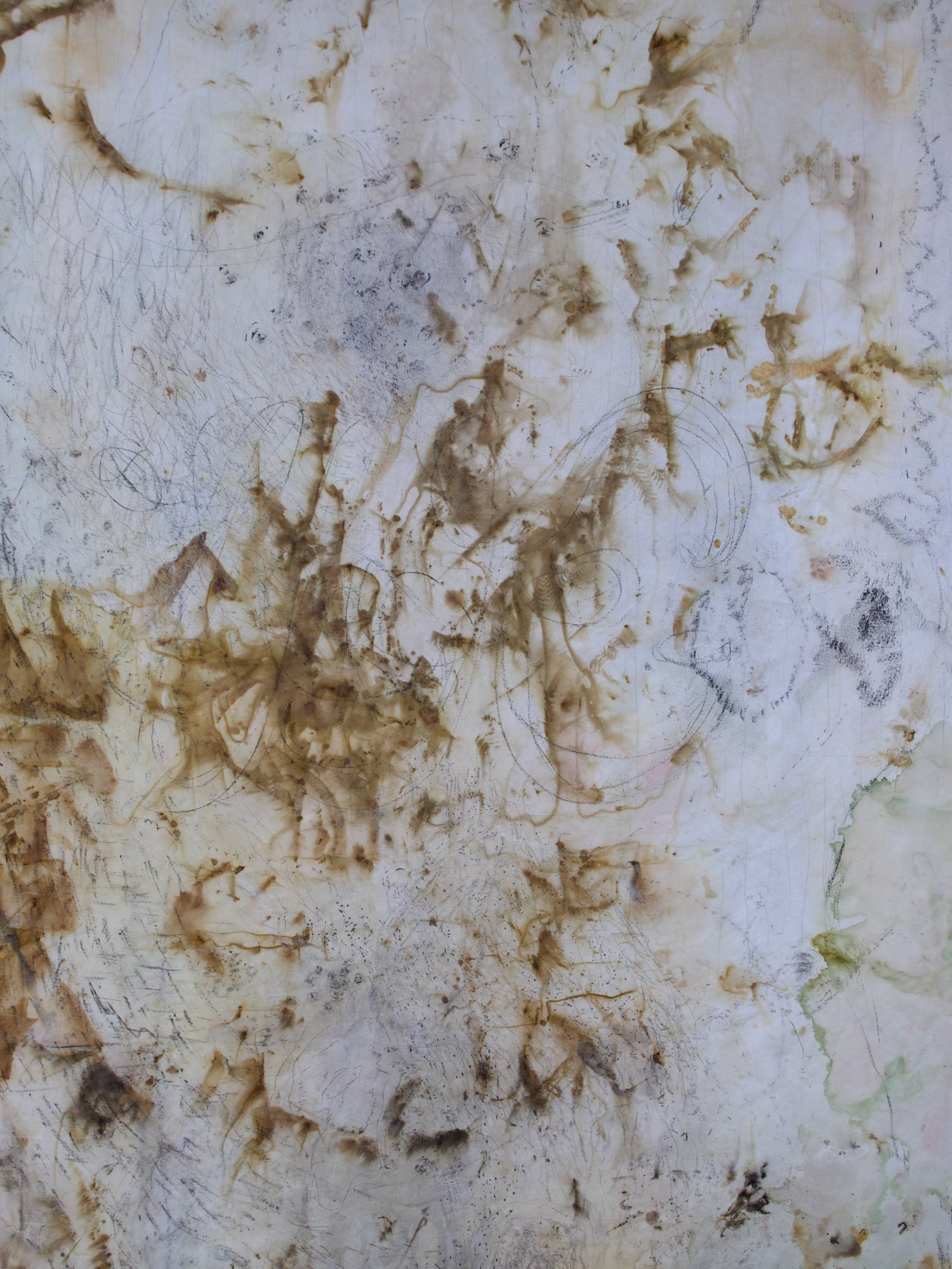
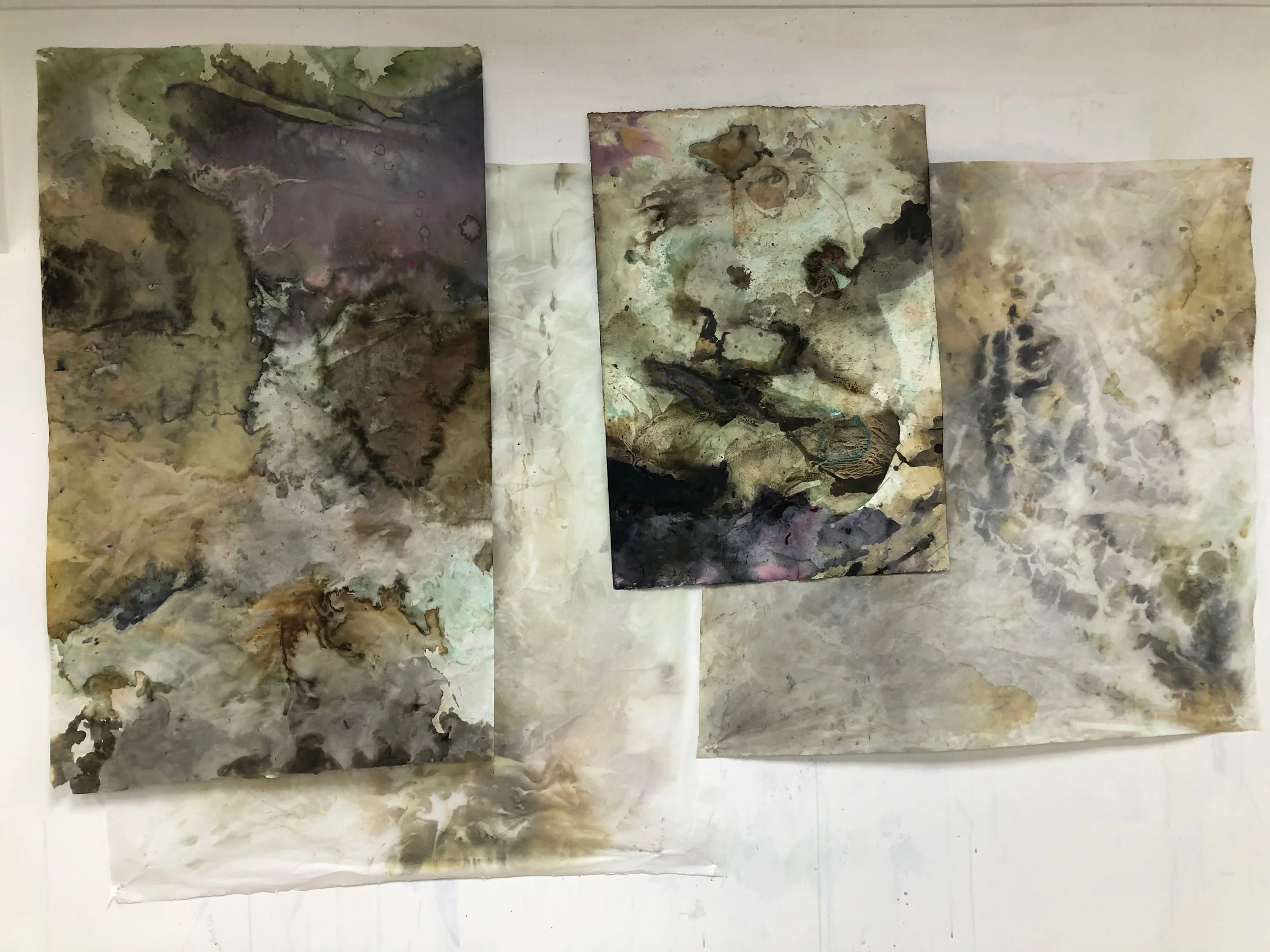
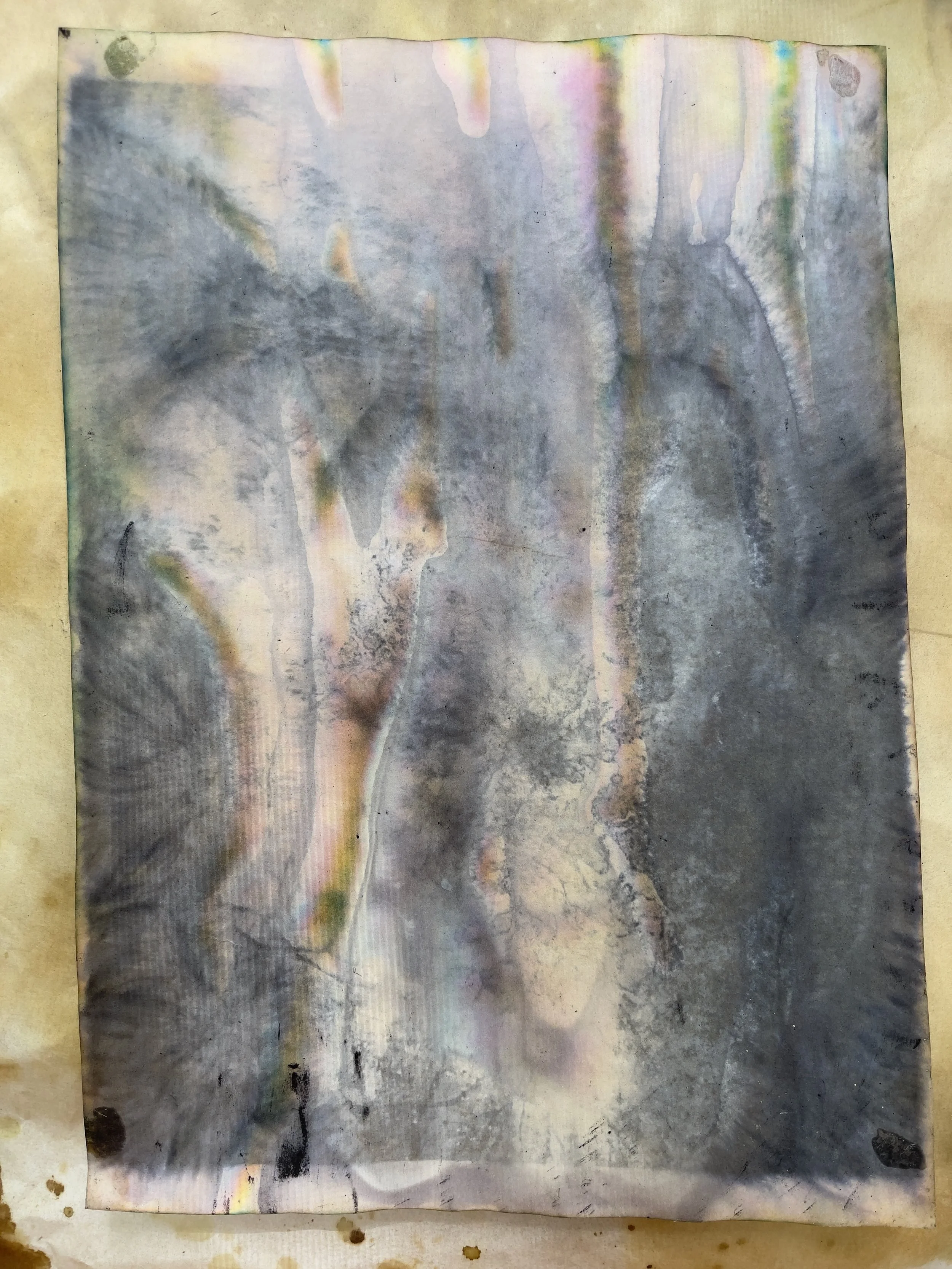
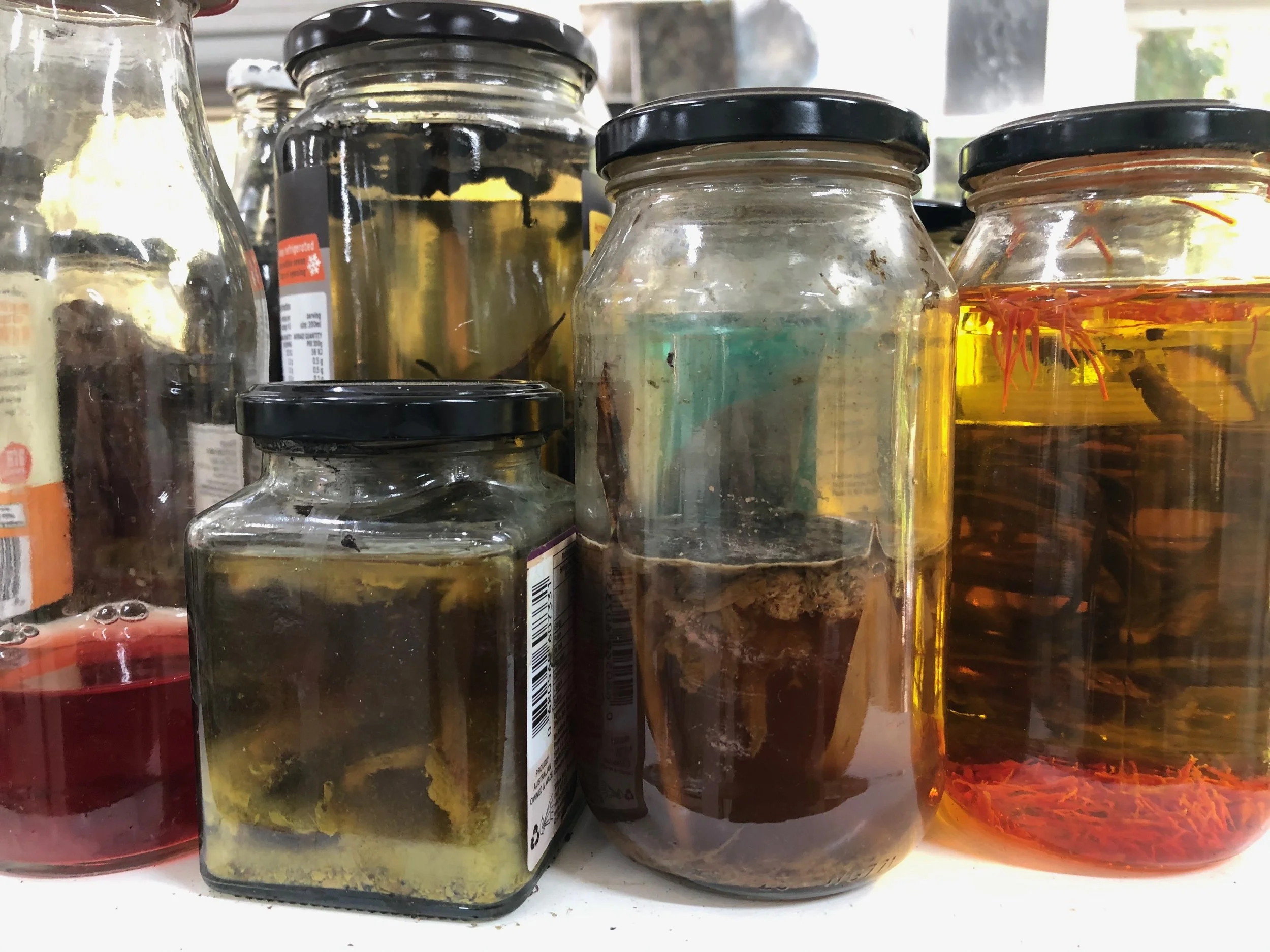
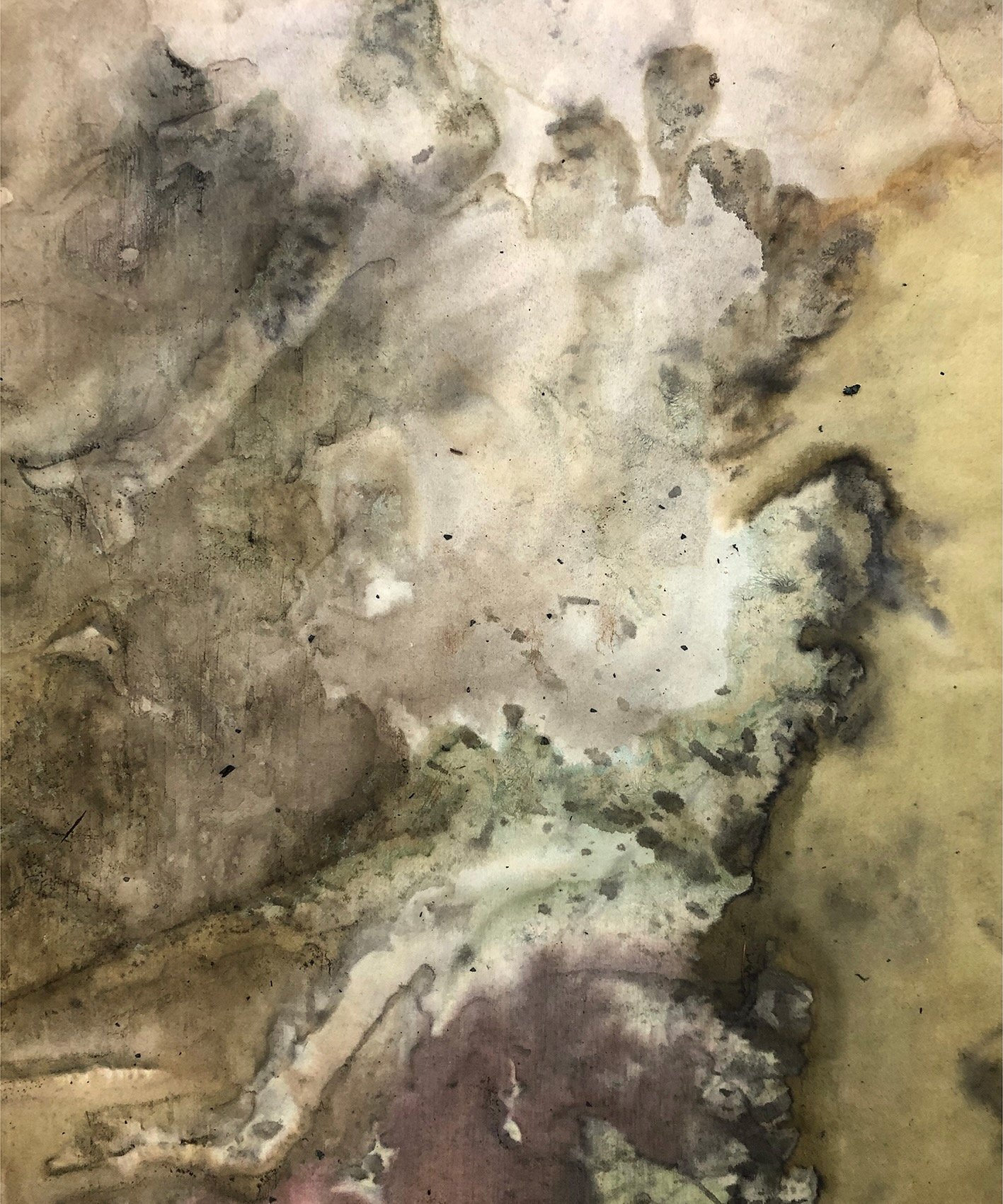
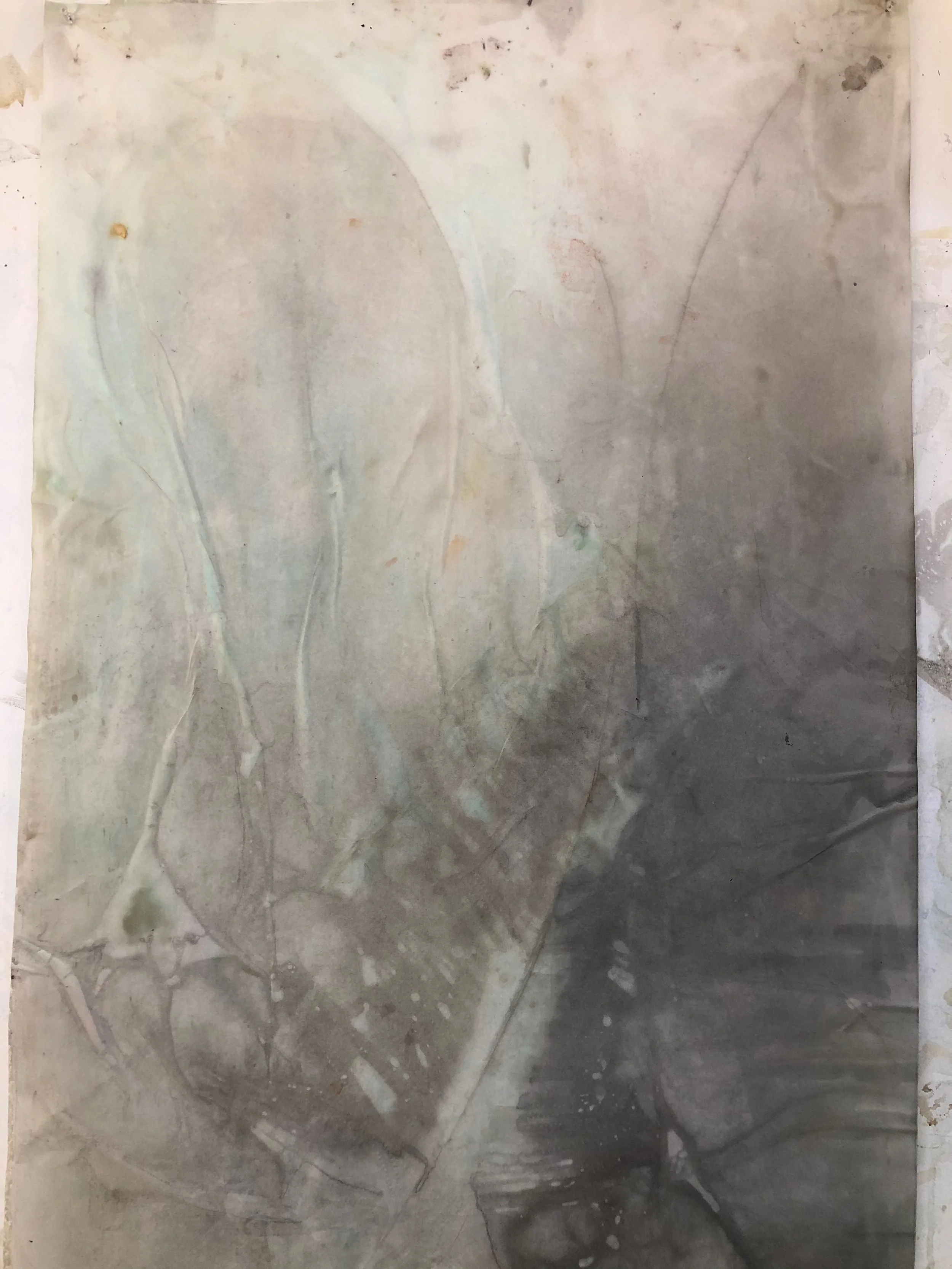
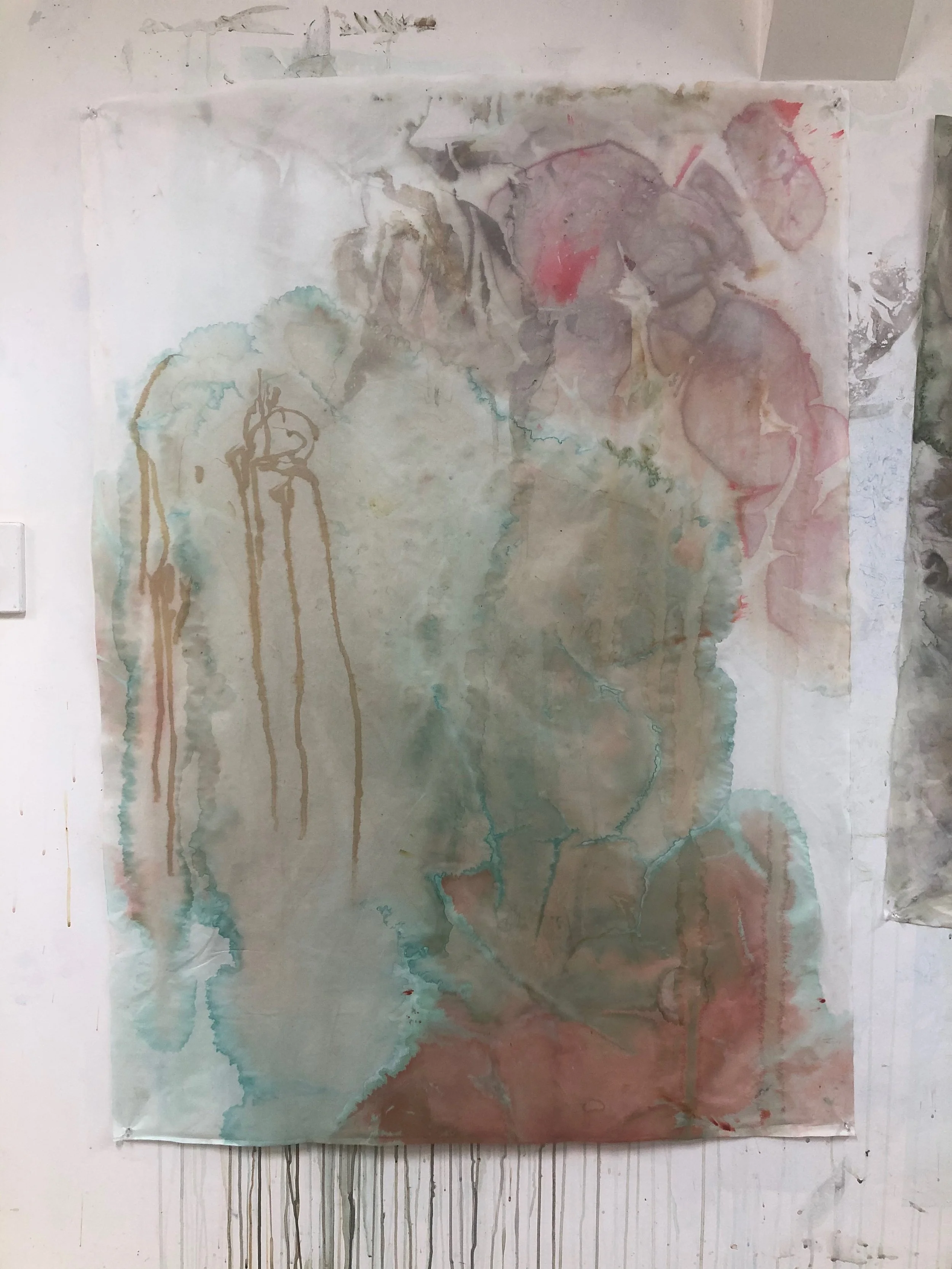
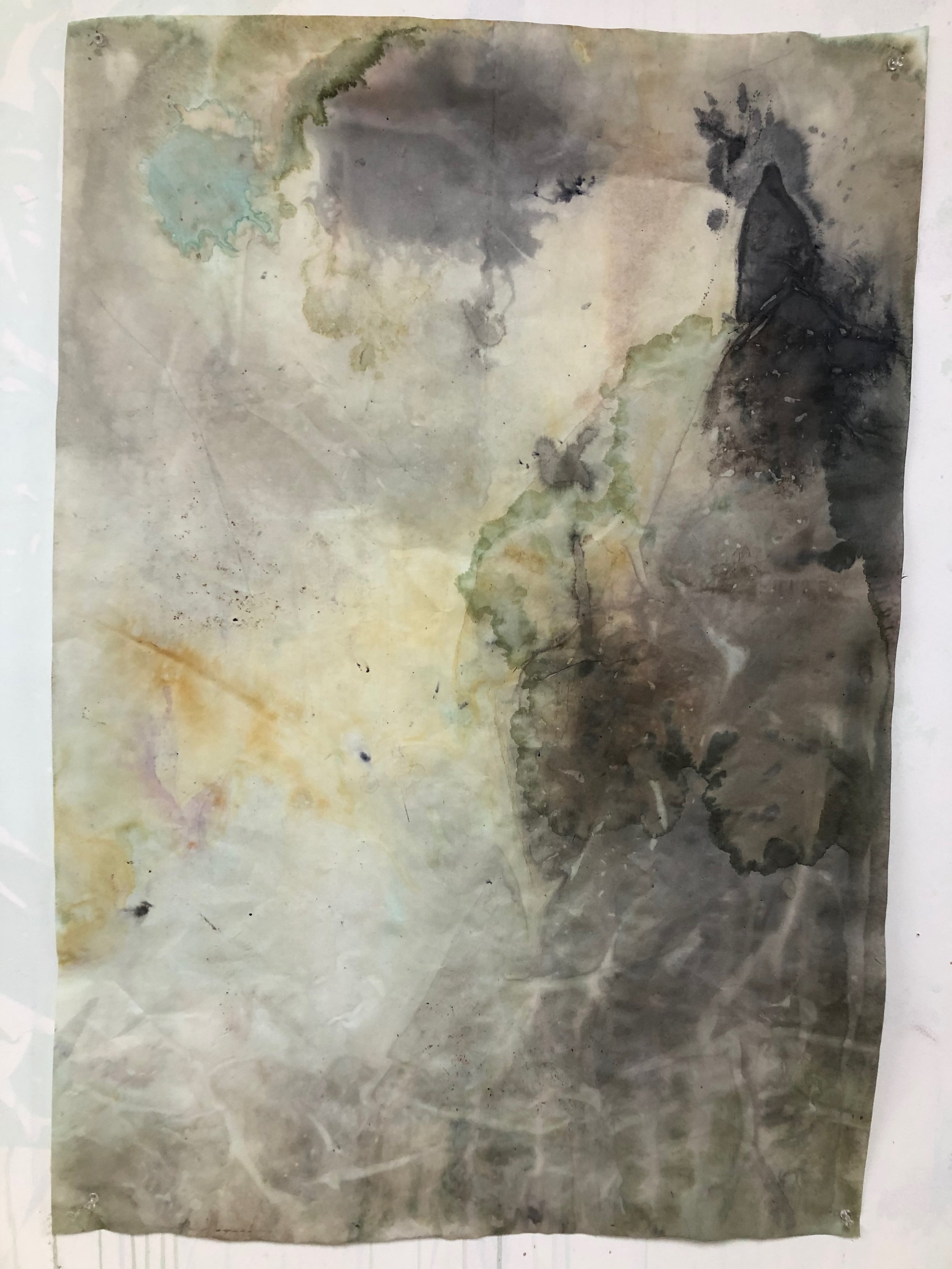
I worked with biological inks made from plant matter, mineral salts, waters and microbial growth. These materials were not media so much as communities, already carrying information about place, chemistry and duration. The inks did not depict images. They behaved. They migrated, stalled, contaminated one another, receded.
A human body holds human and microbial cells in roughly comparable numbers, though the proportions vary between bodies and over time. Research suggests that when certain bacterial populations reach critical mass, they can influence behaviour and action. Transposons move across genomes. Endosymbiosis persists in us as an old negotiation and an ongoing arrangement, a trade between microbes and our aqueous and gaseous sacks. The body is less singular entity than campsite of arrangements, a temporary hosting of negotiations between species, signals, thresholds and densities. Intelligence is not central. (Was it ever?) What emerges does so through mass, chance and cooperation.
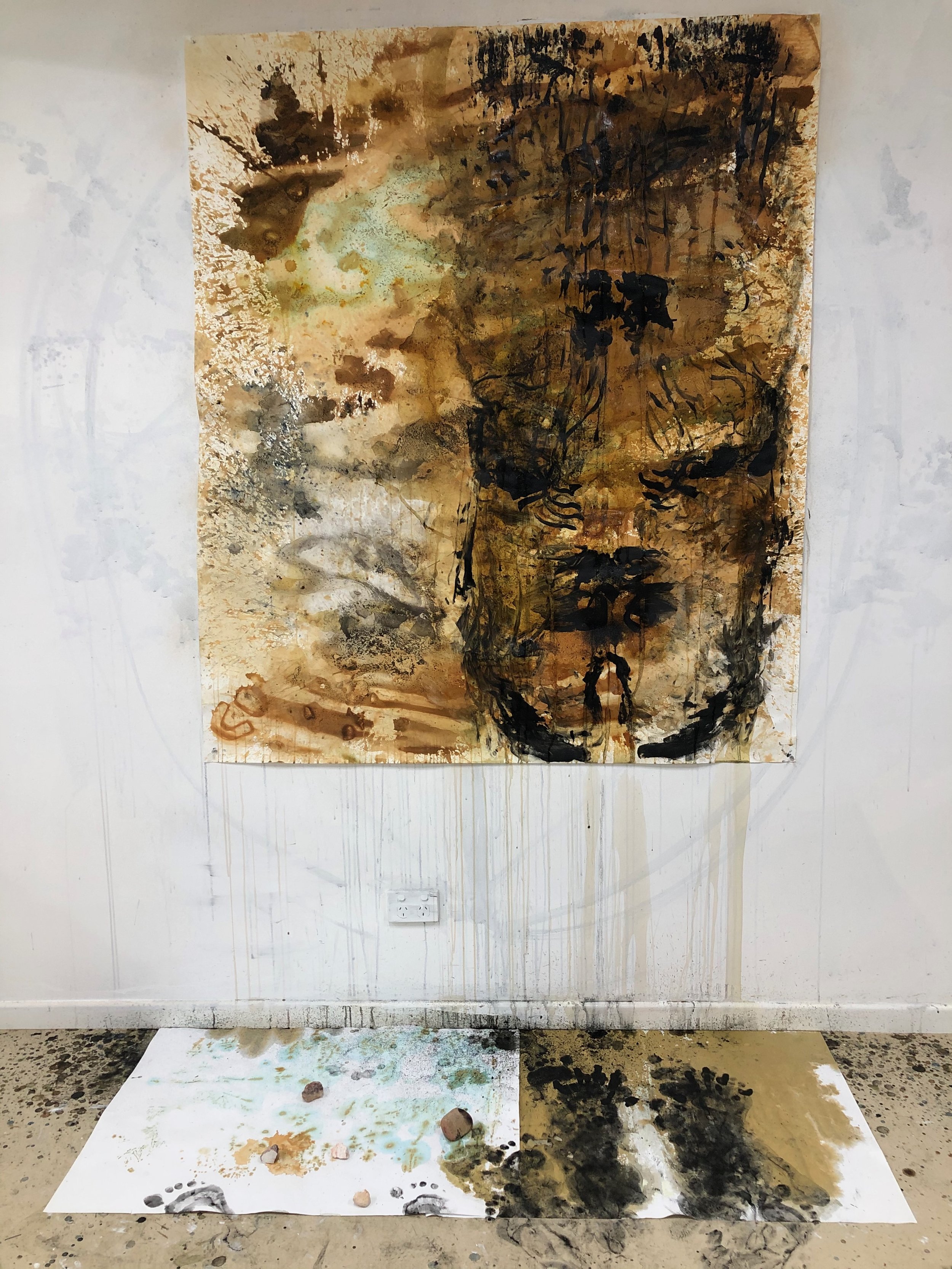
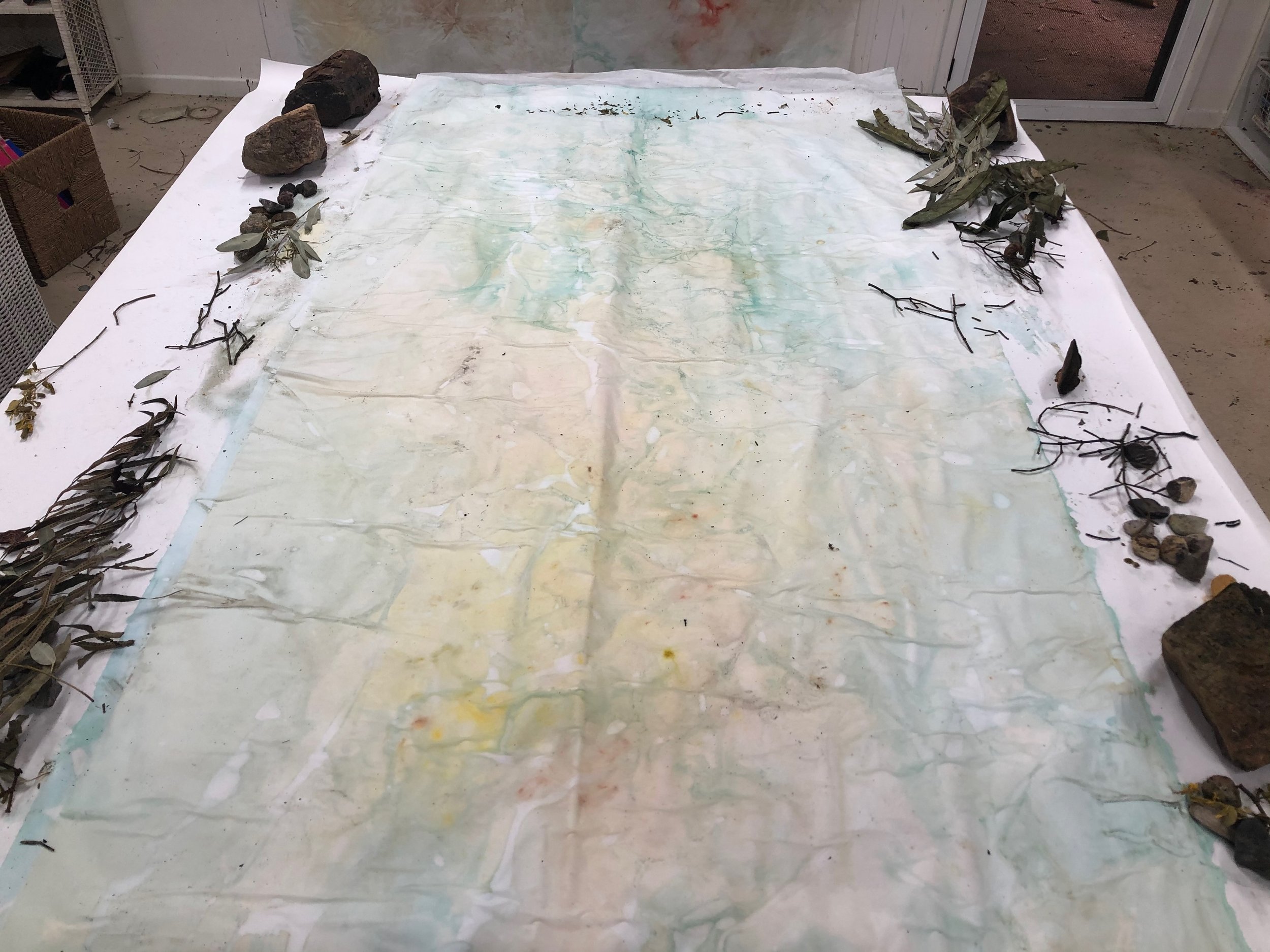
I use multi-sensory and proprioceptive acts to translate this information into marks. When my intellectual processing is overwhelmed, the body continues to sense. Gesture-led drawing, pressing, staining and contact open a conversation between body, biome, environment and micro-fauna.
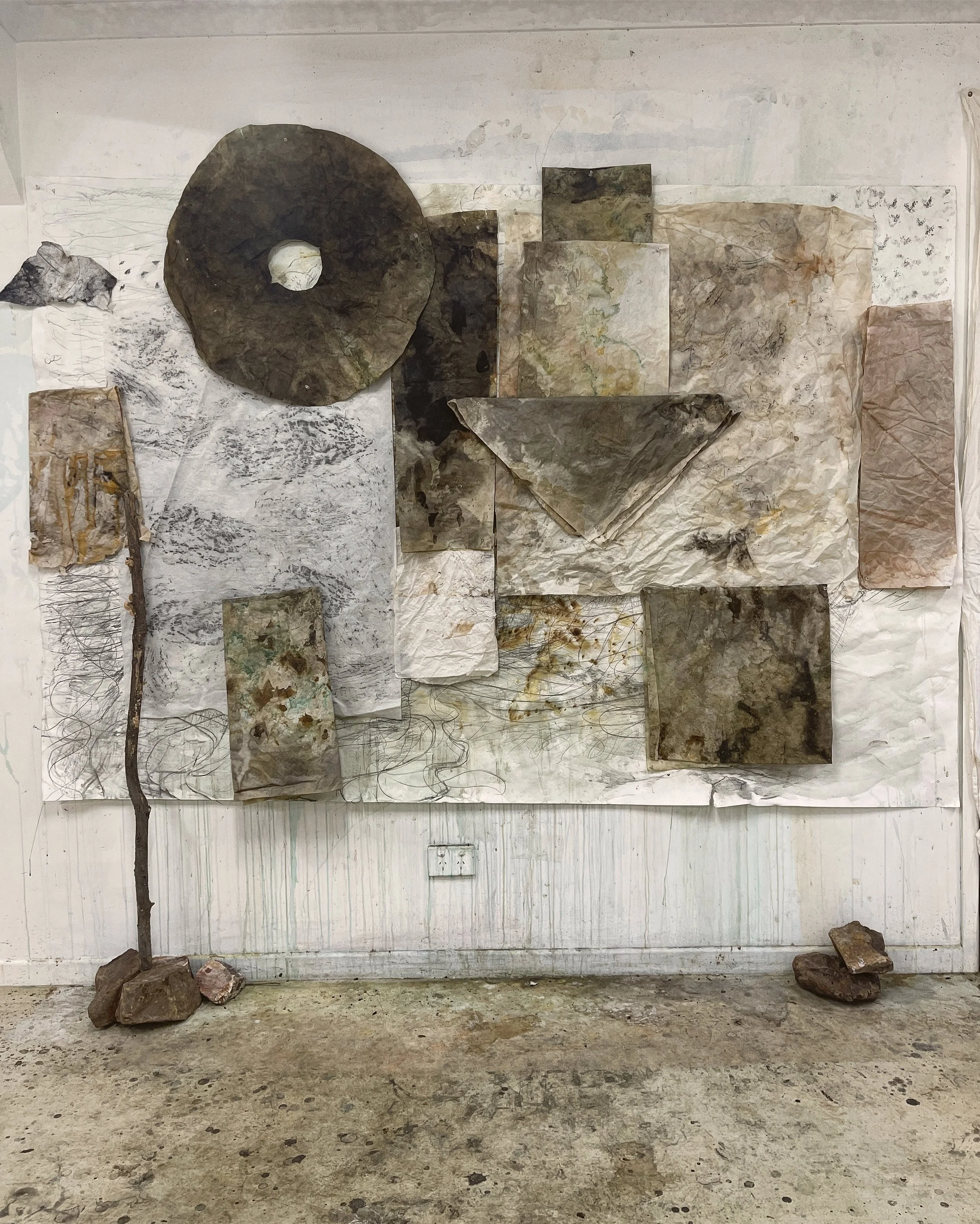
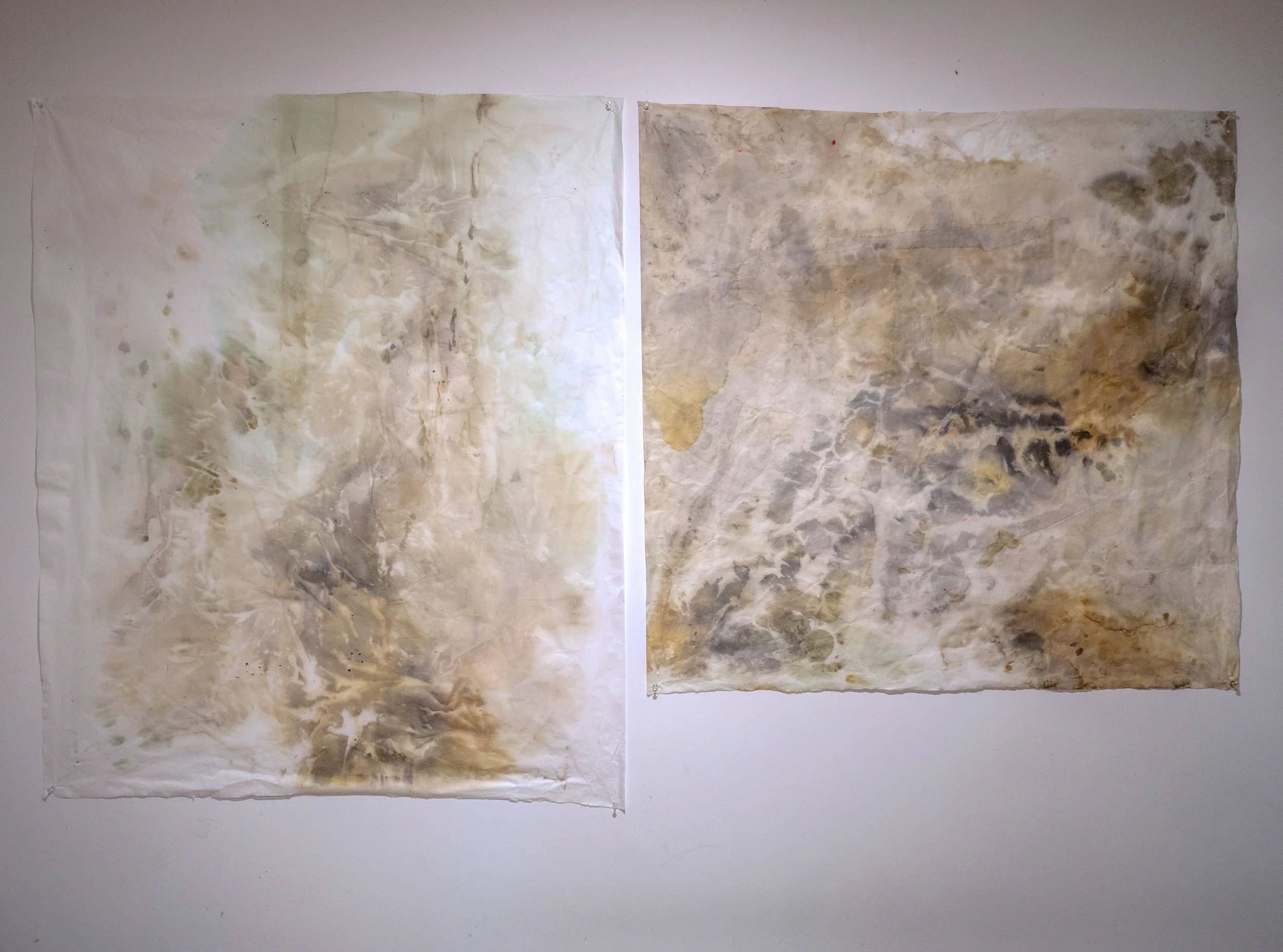
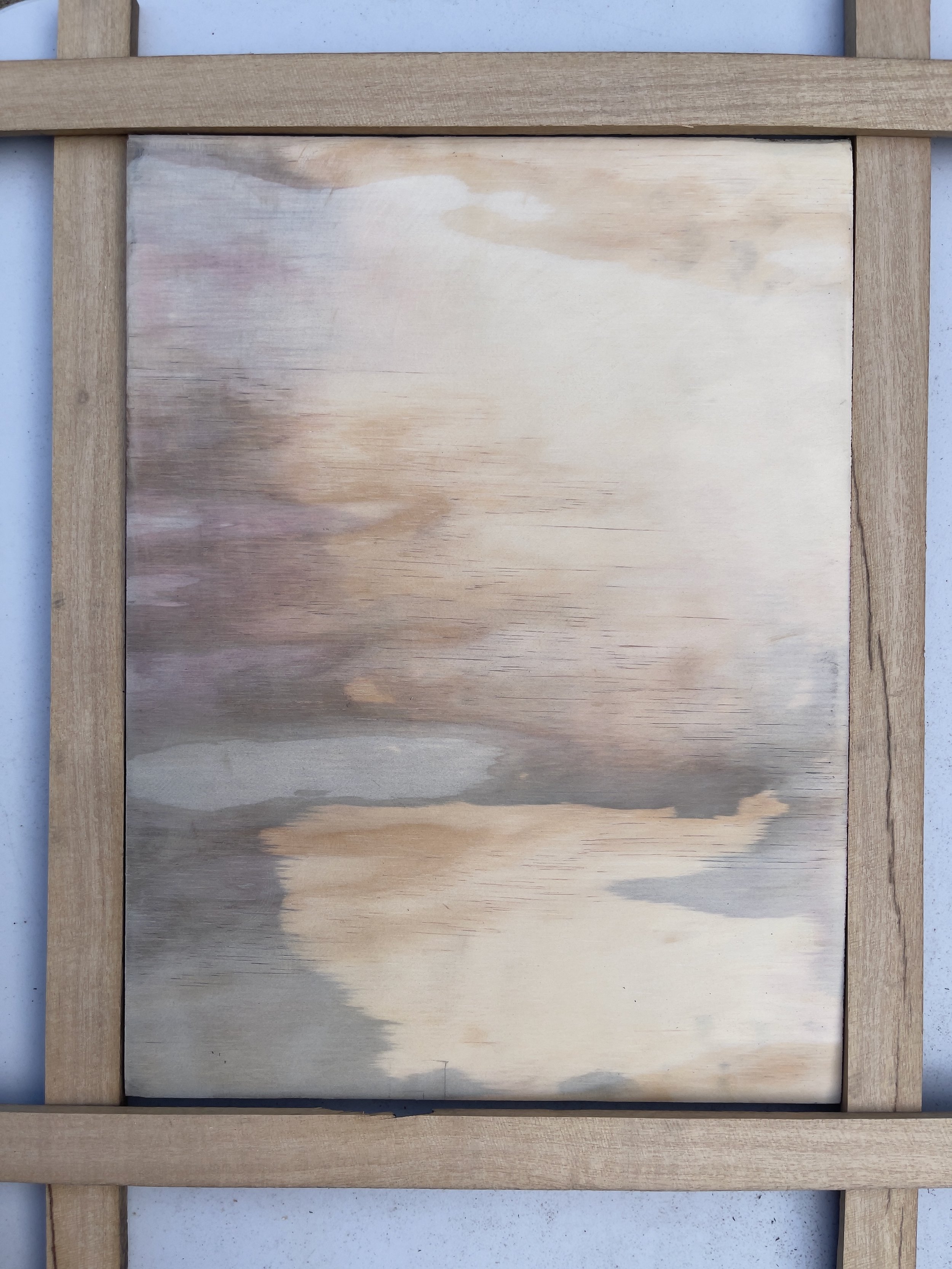
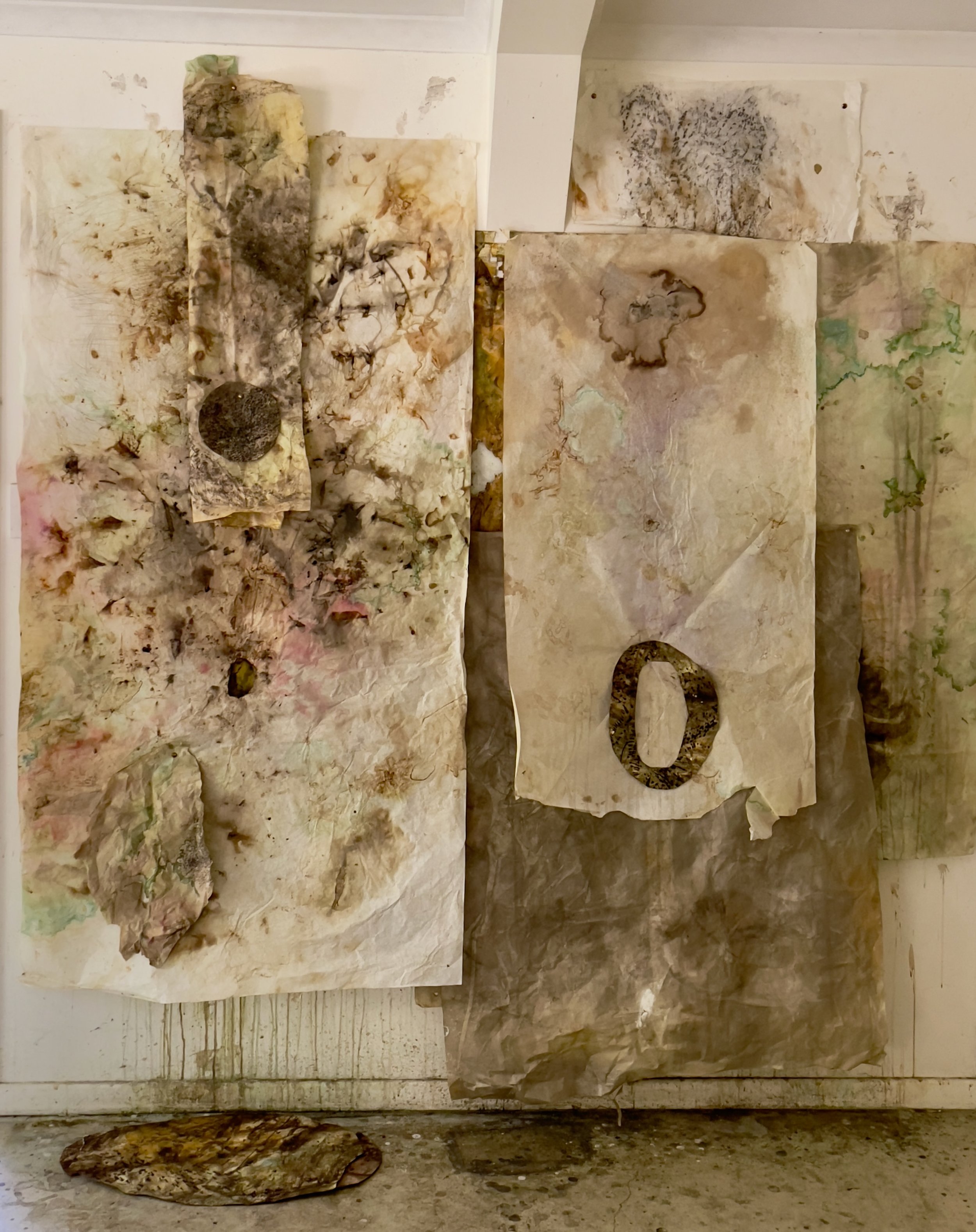
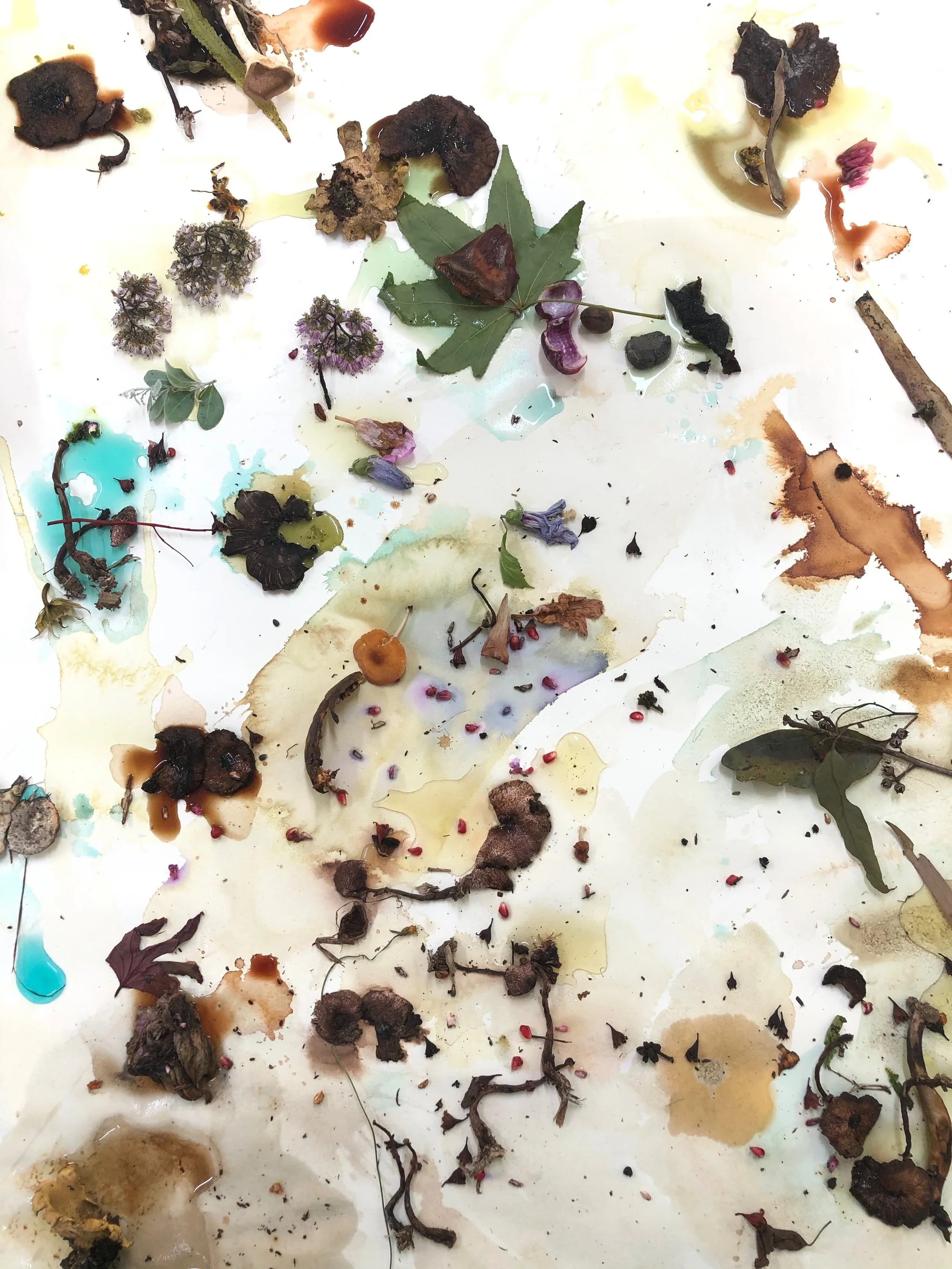
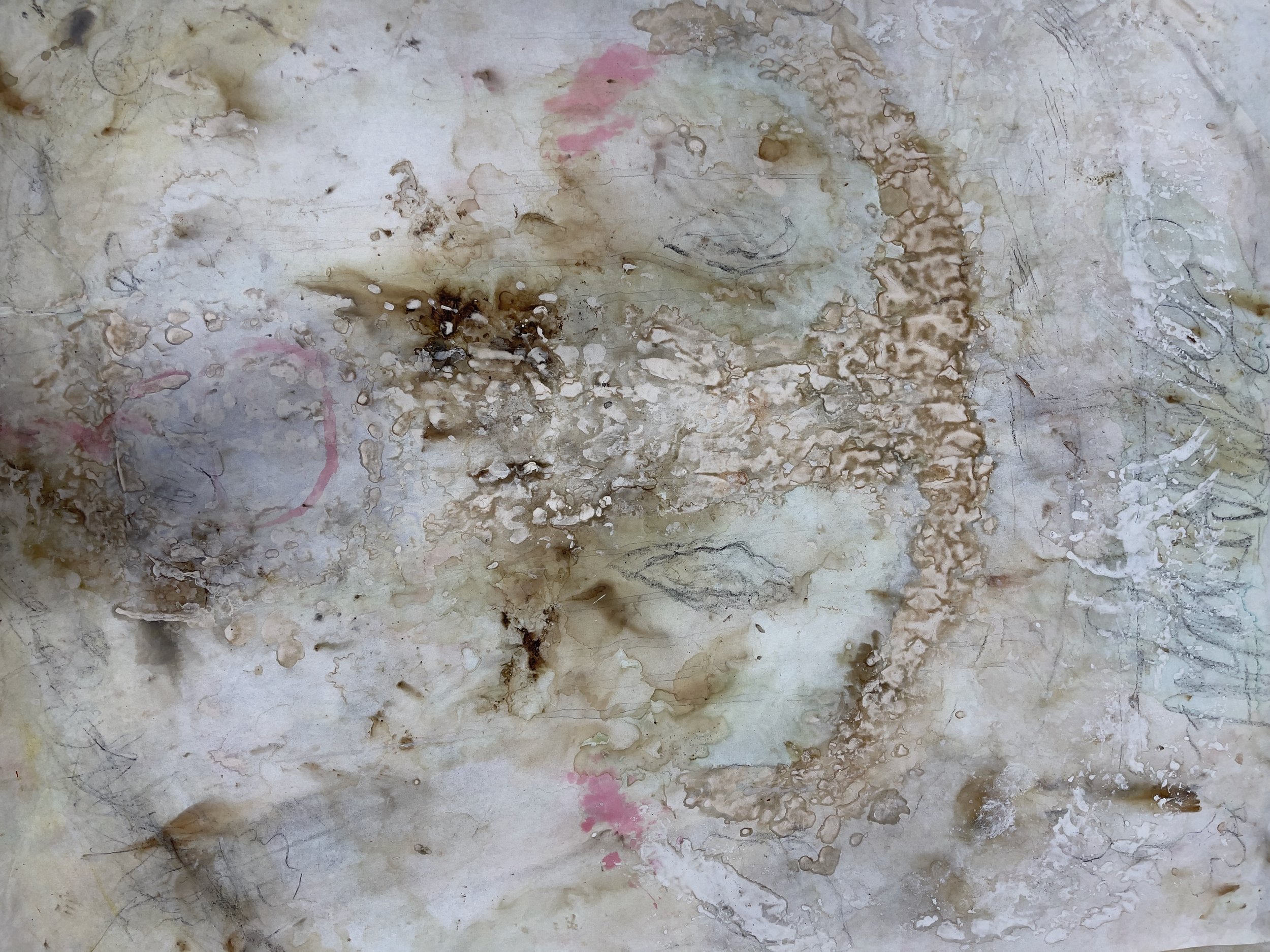
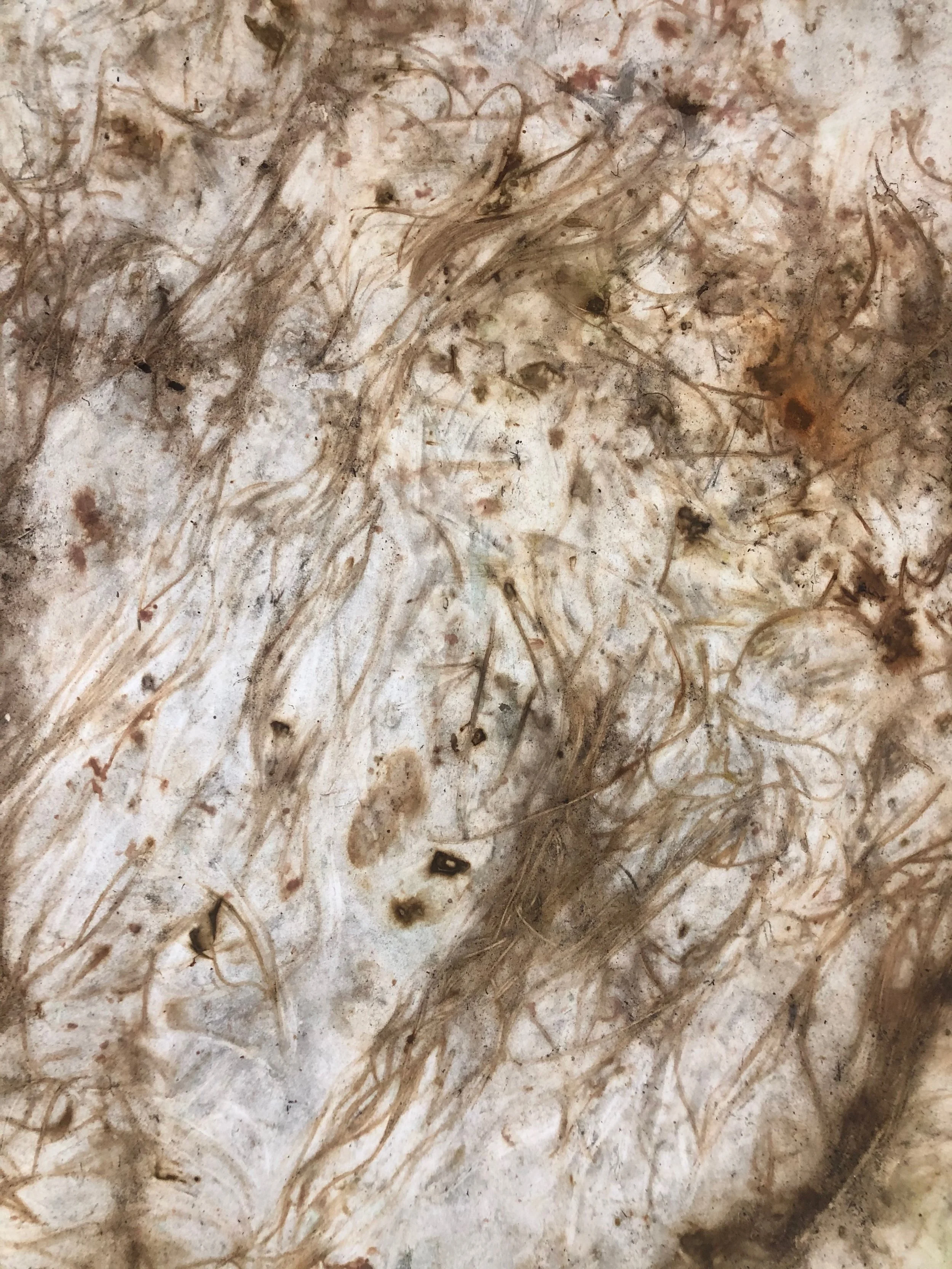
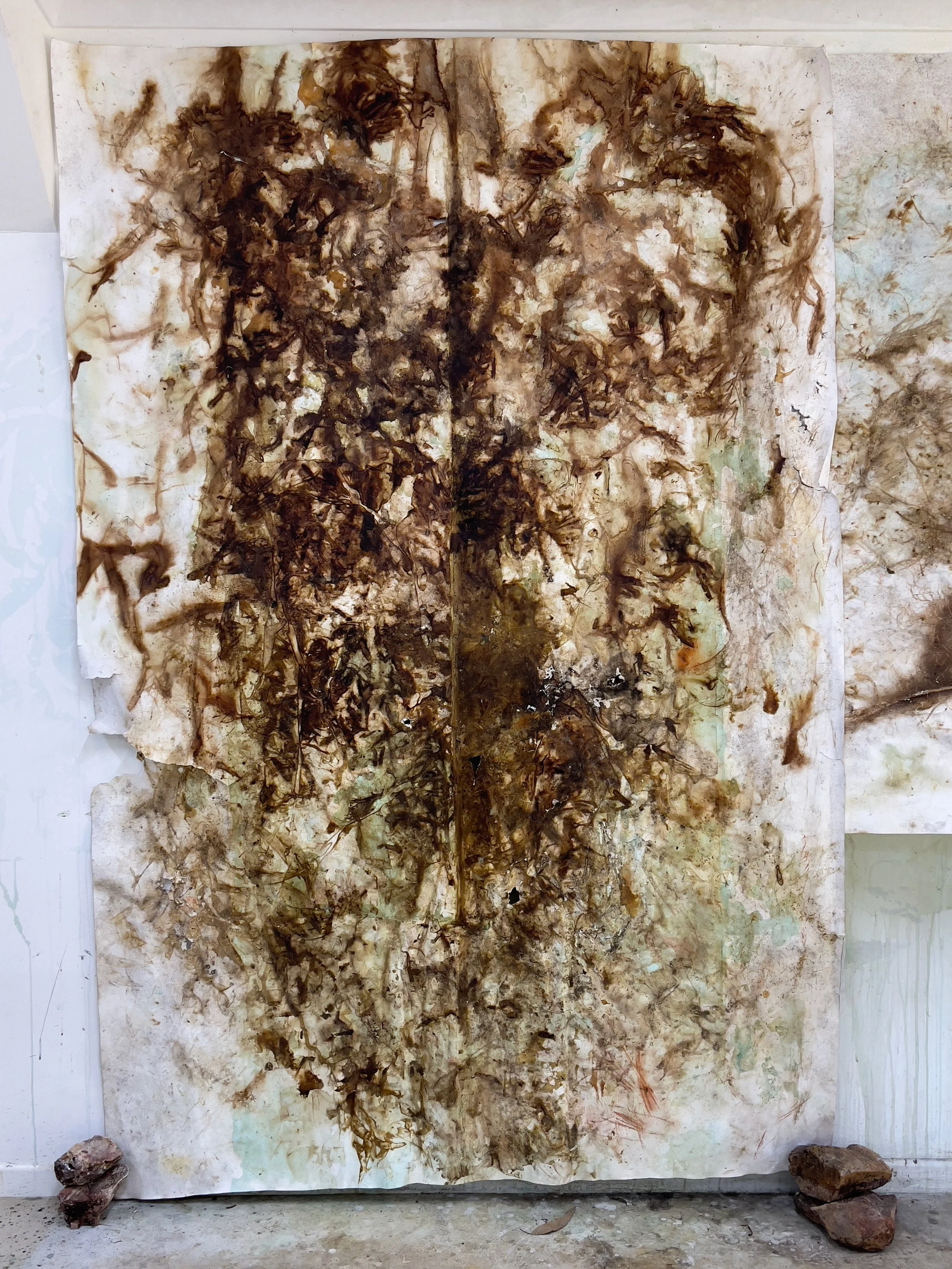
Various papers, mulberry, rice, cartridge, notebooks, and different weaves of silk and wool fabric become sites where bacterial, fungal, mineral and bodily chemistries meet. The works continue to grow and change after their making, expanding, breaking down, their communities renegotiating through time. They function as living documents, each holding its own presence, its own internal climate.
Through this process, I recognise the body as negotiated territory rather than sovereign whole. Exchange includes care, risk, regulation and invasion. These conditions are alive and continue to unfold through time.
Microbial and Material Intelligences also folds time differently. Bacteria carry evolutionary memory. Charcoal carries forests across eras. Minerals hold the pressure of ancient seas. Matter appears as layered ancestry.
The works hold leakiness, migration and in-between states. Meaning moves, seepages exchange histories, chemistries chatter. Boundaries disperse and are re-formed. Maps are made and renegotiated, sometimes destroyed. Information passes back and forth between bodies and materials. A micro/macro language is written for parts of myself and my shed that my consciousness is not fluent in. I am moved by these exchanges before I understand them, and mostly without understanding them at all. These messages reach me partially, displaced and fragmented, but my body reads them with urgency.
It was pretty chaotic, or maybe there was microbial order, or even a transposon track…