Material practice
Materials hold place and time. I work with them to try to understand how a place moves.
Colours/dyes/inks
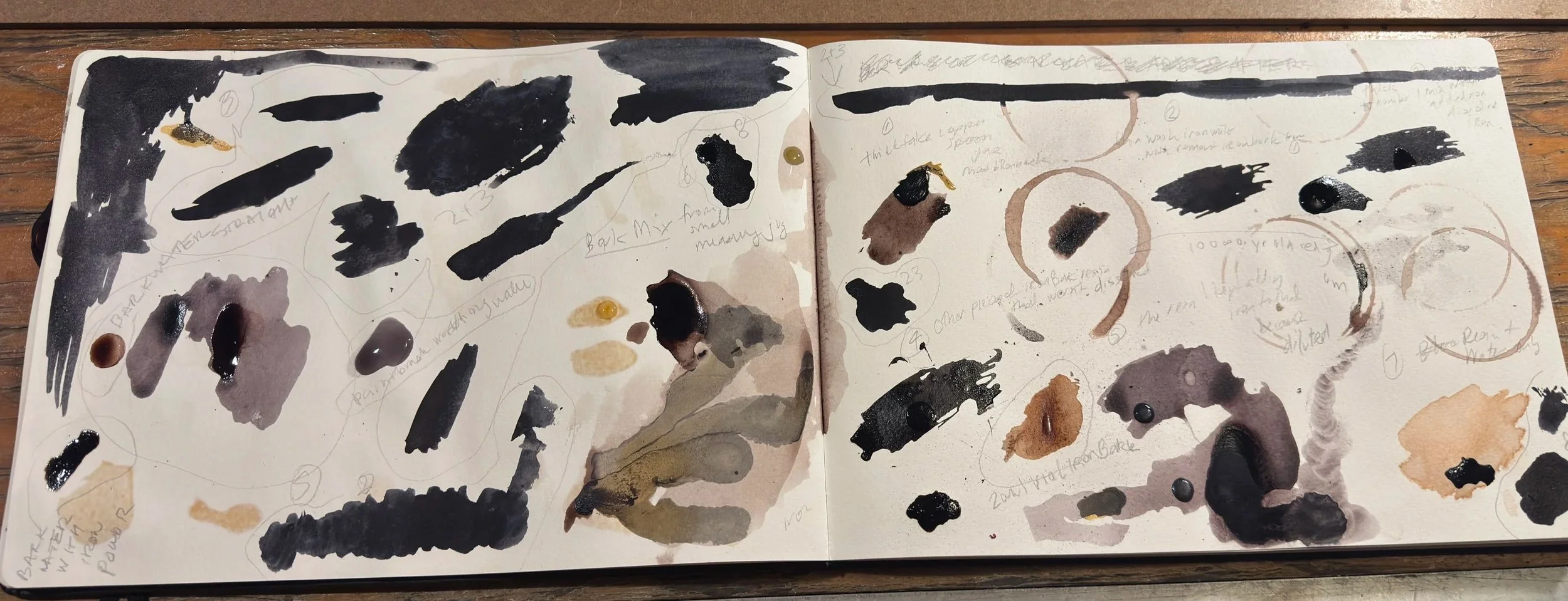
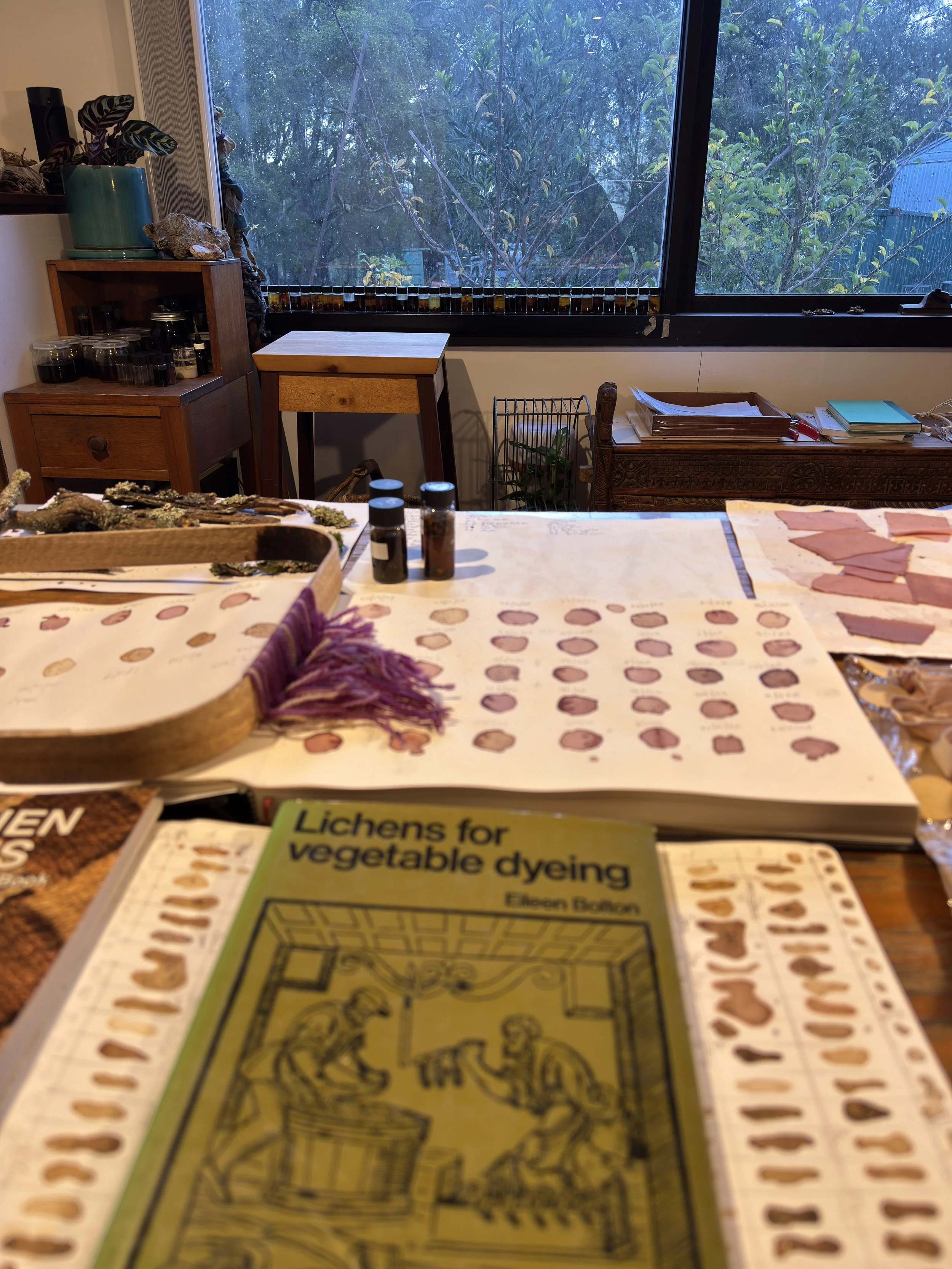
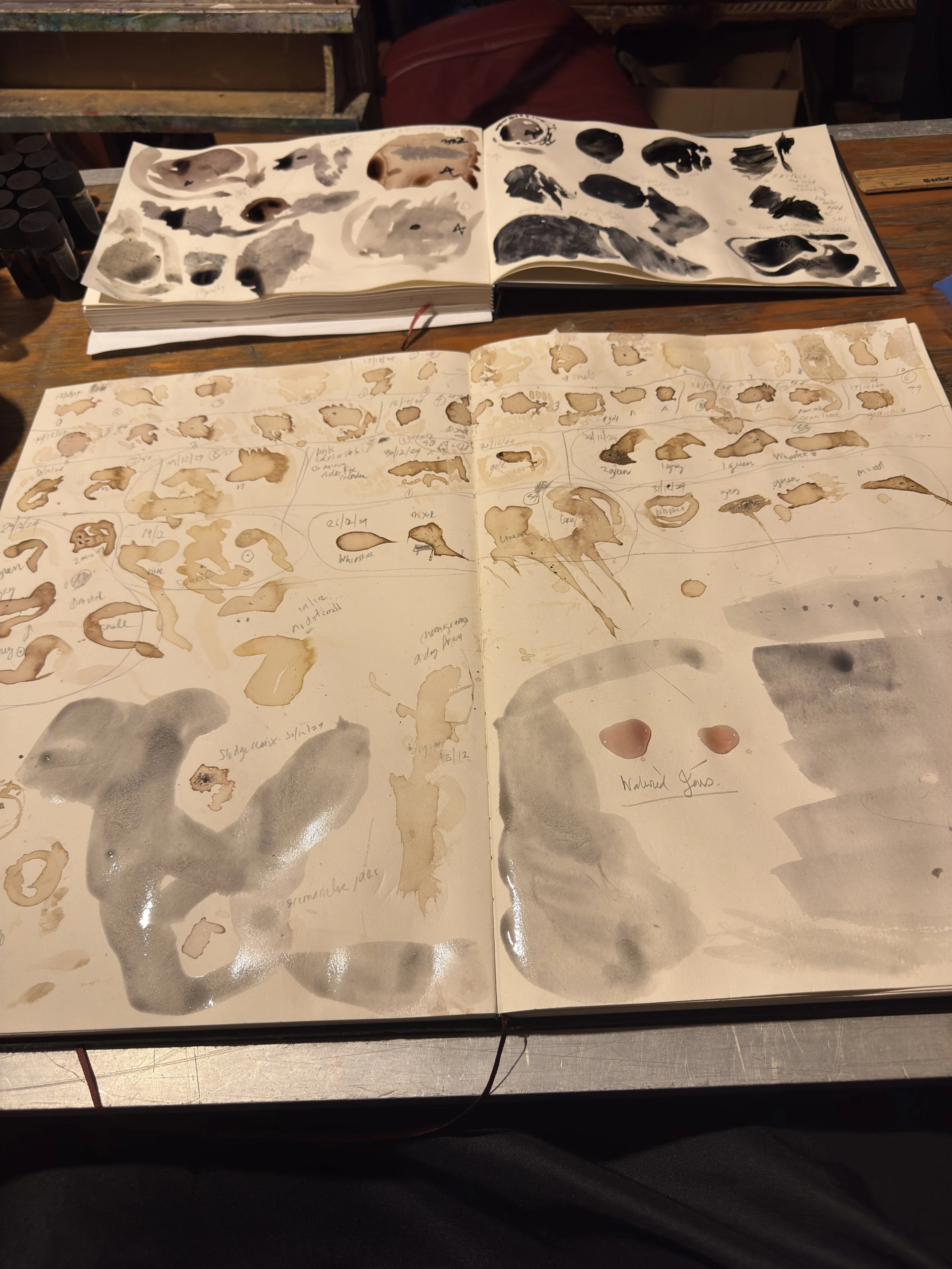
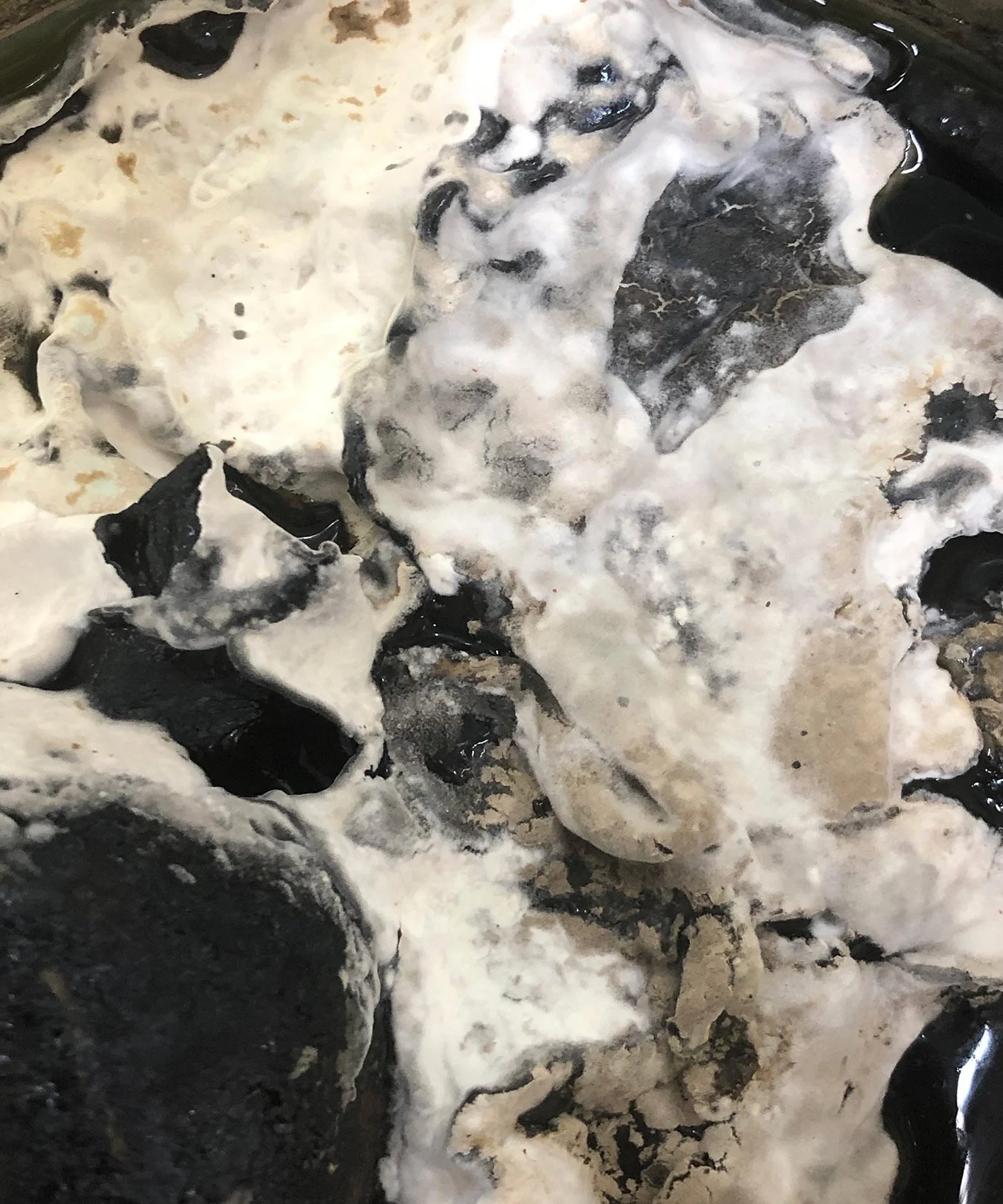
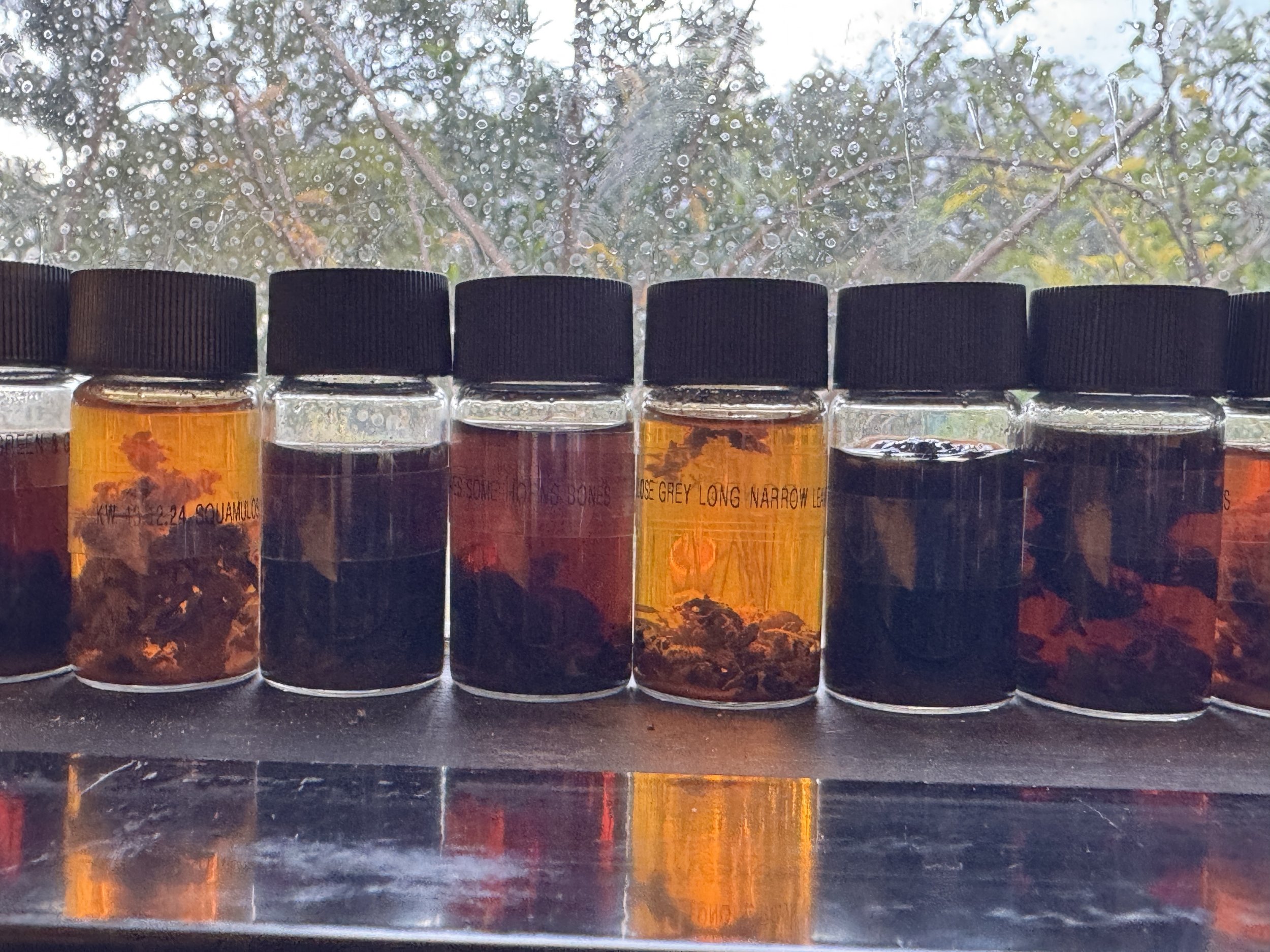
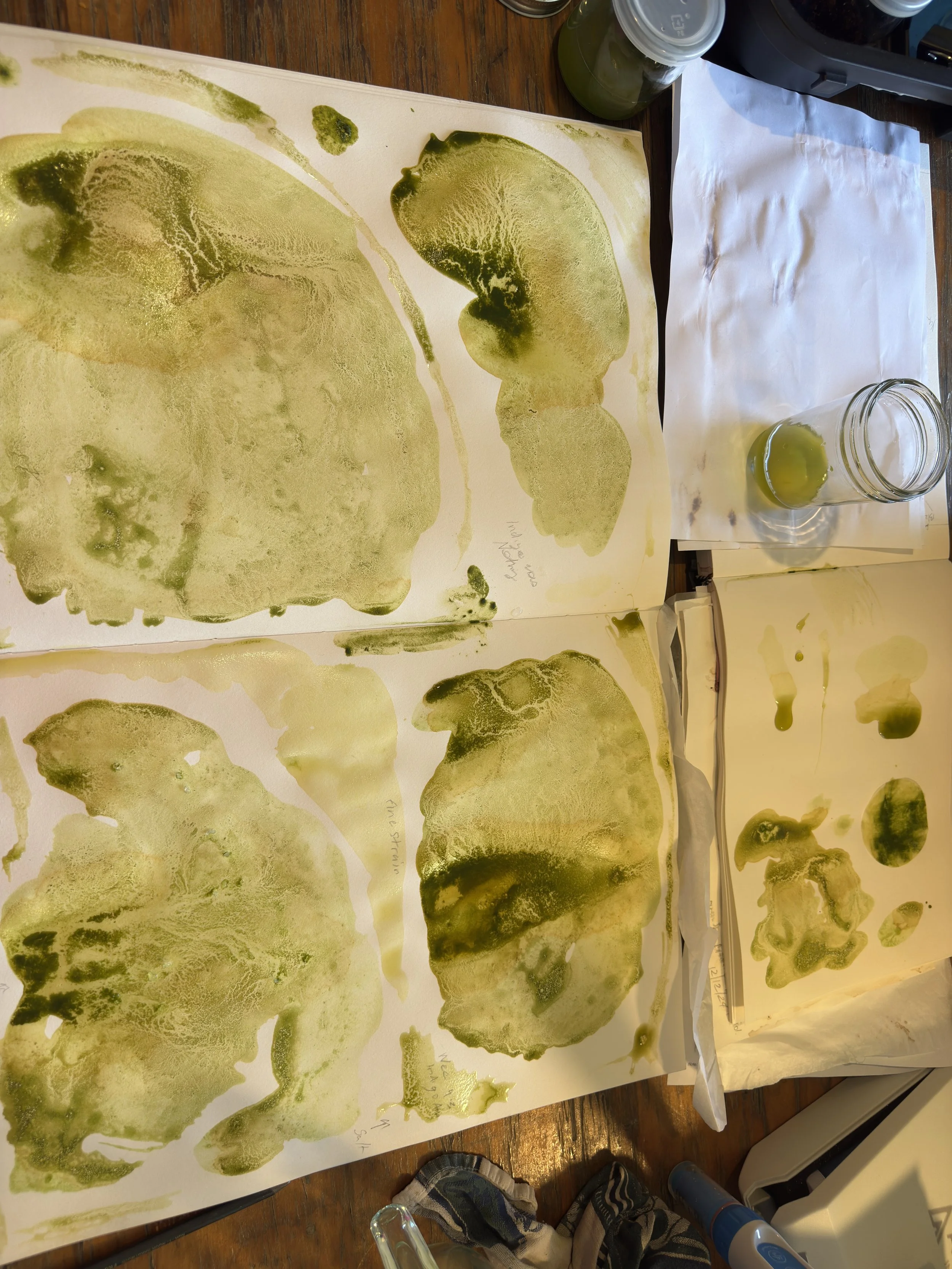
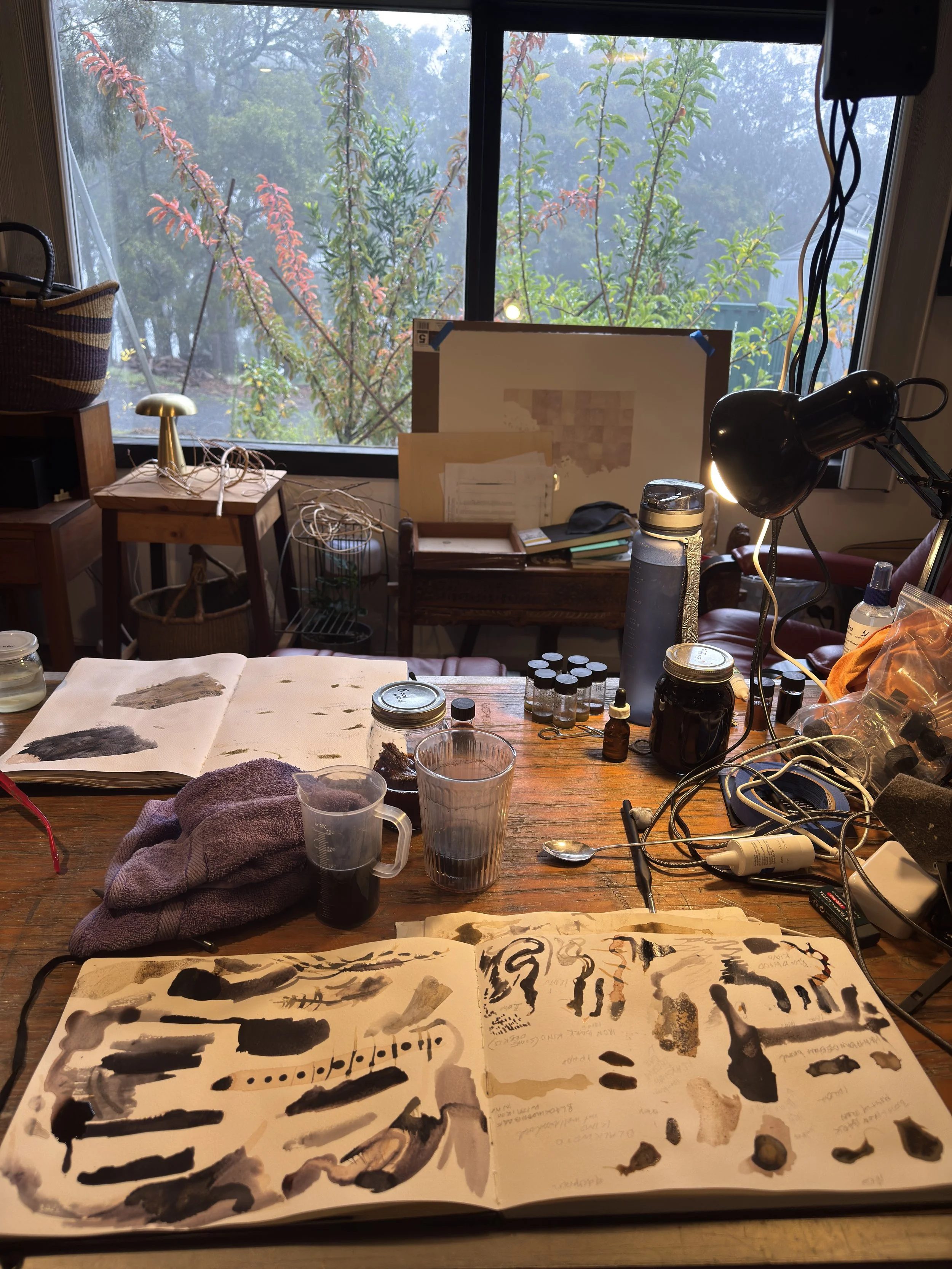
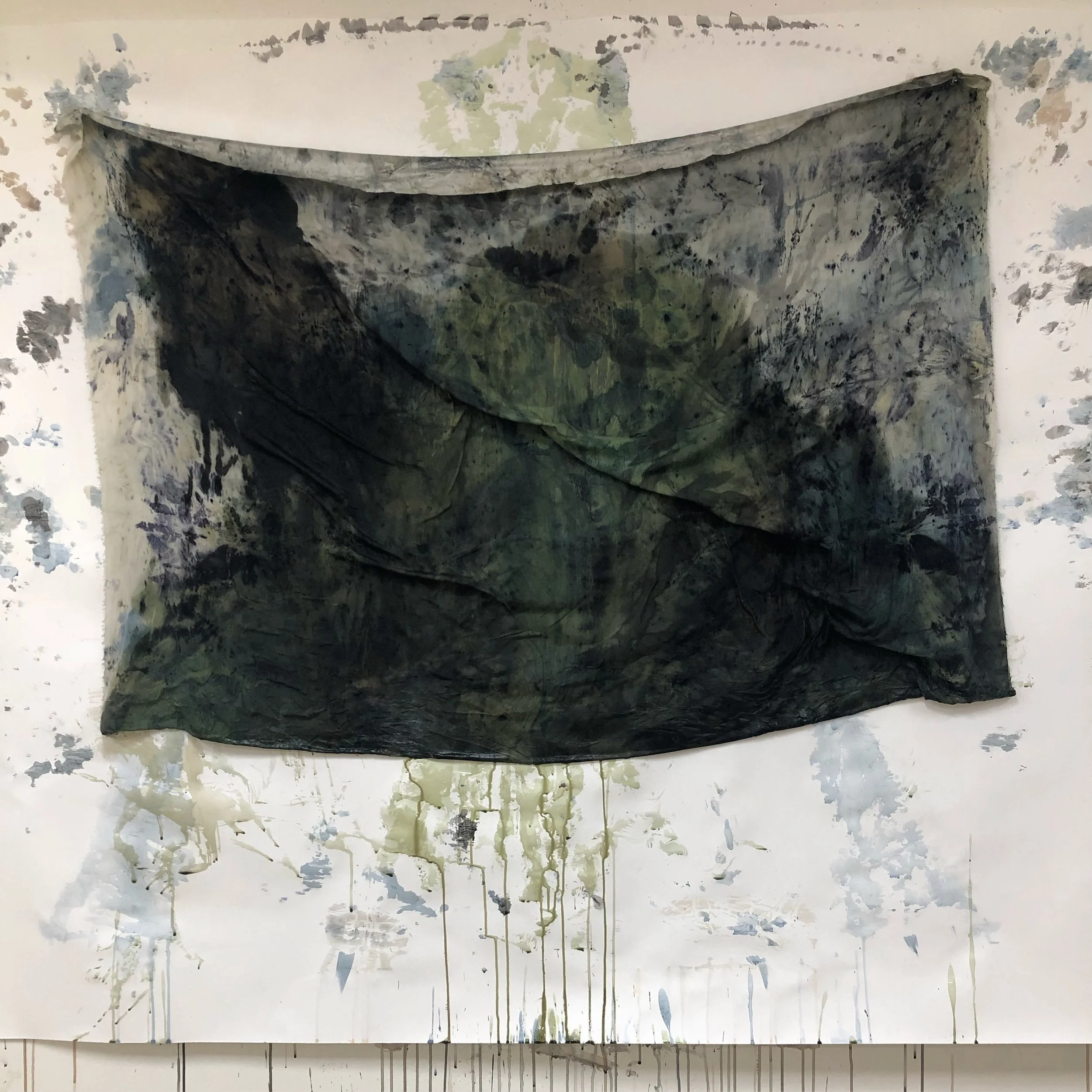
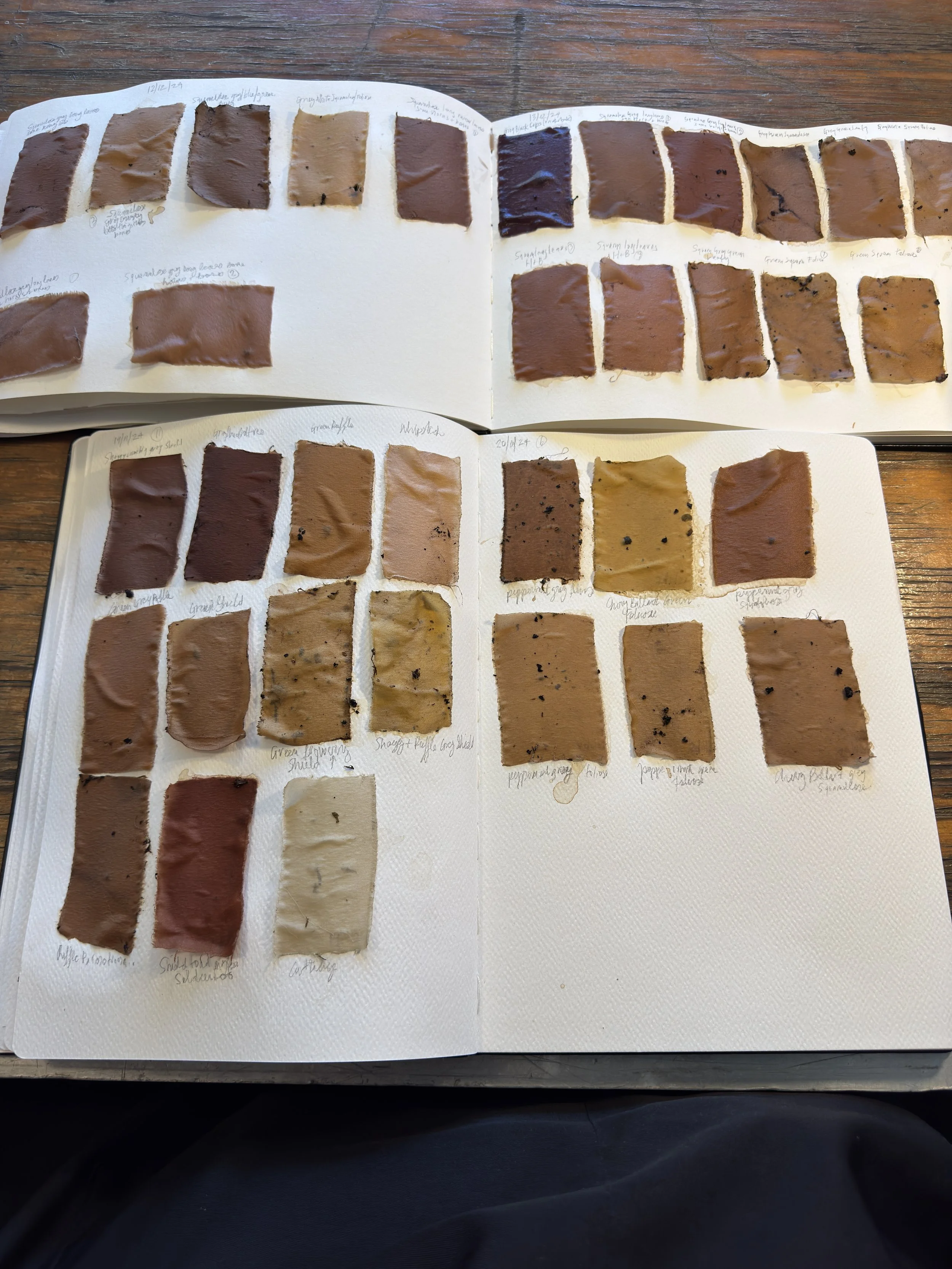
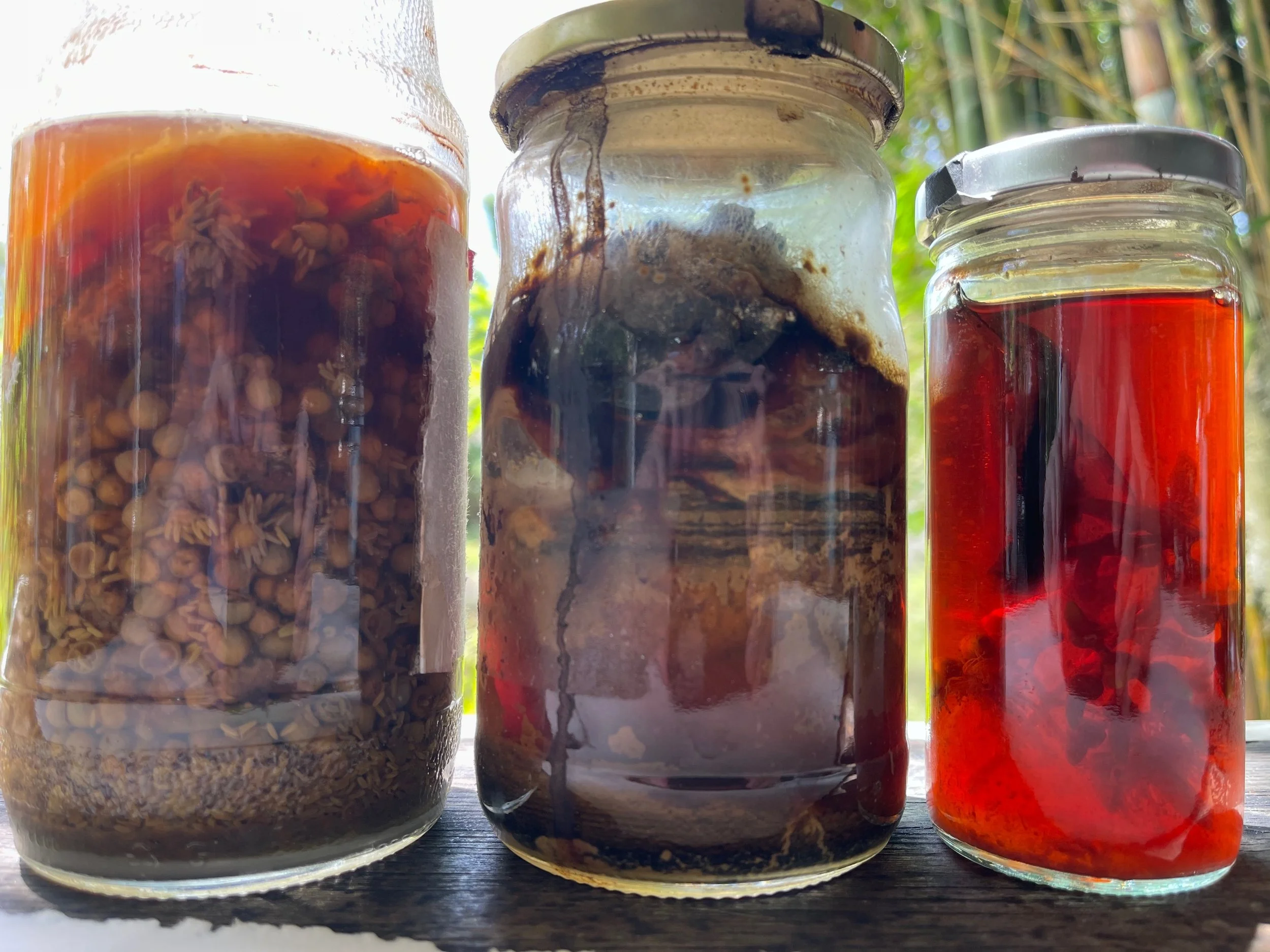
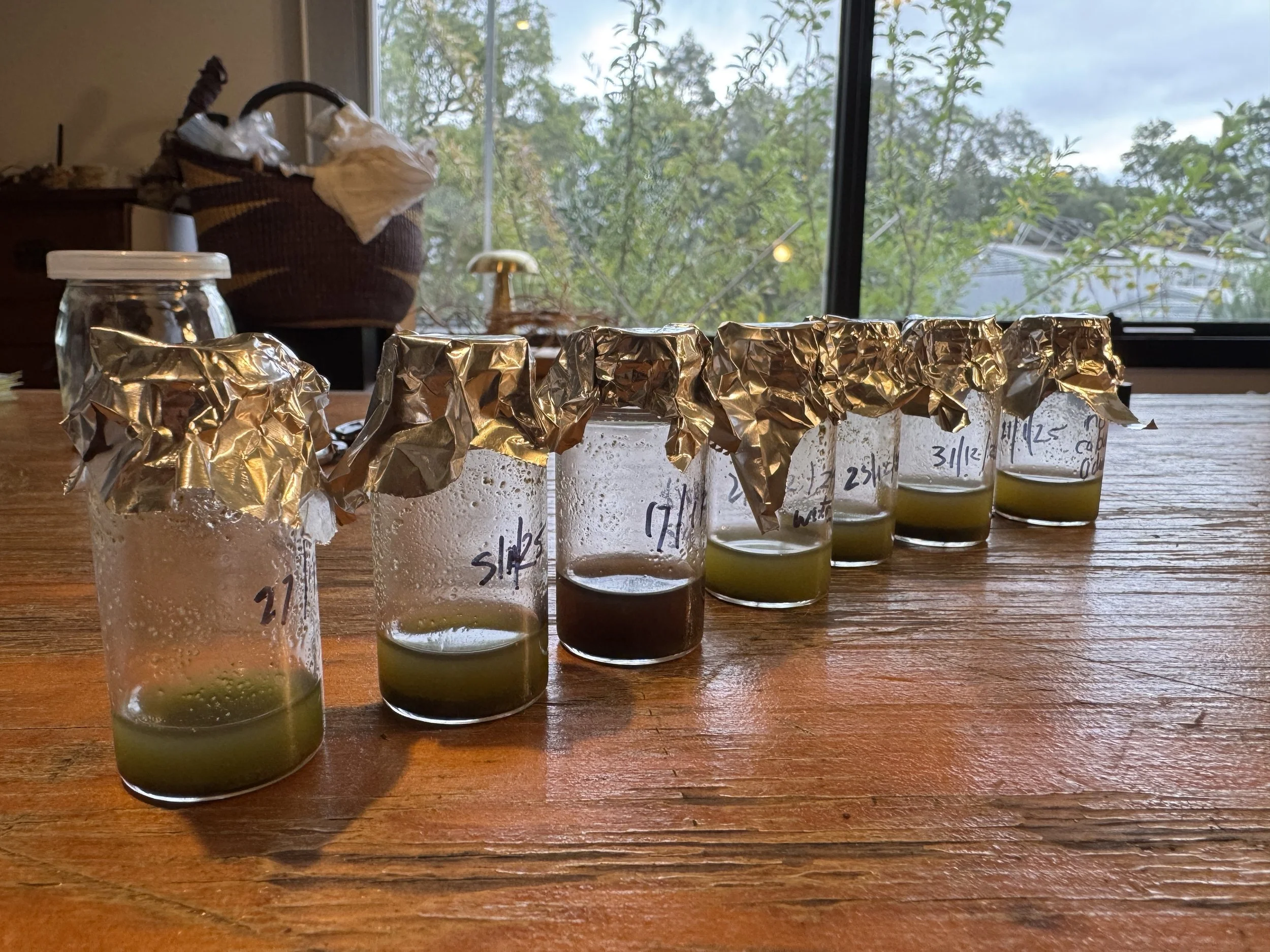
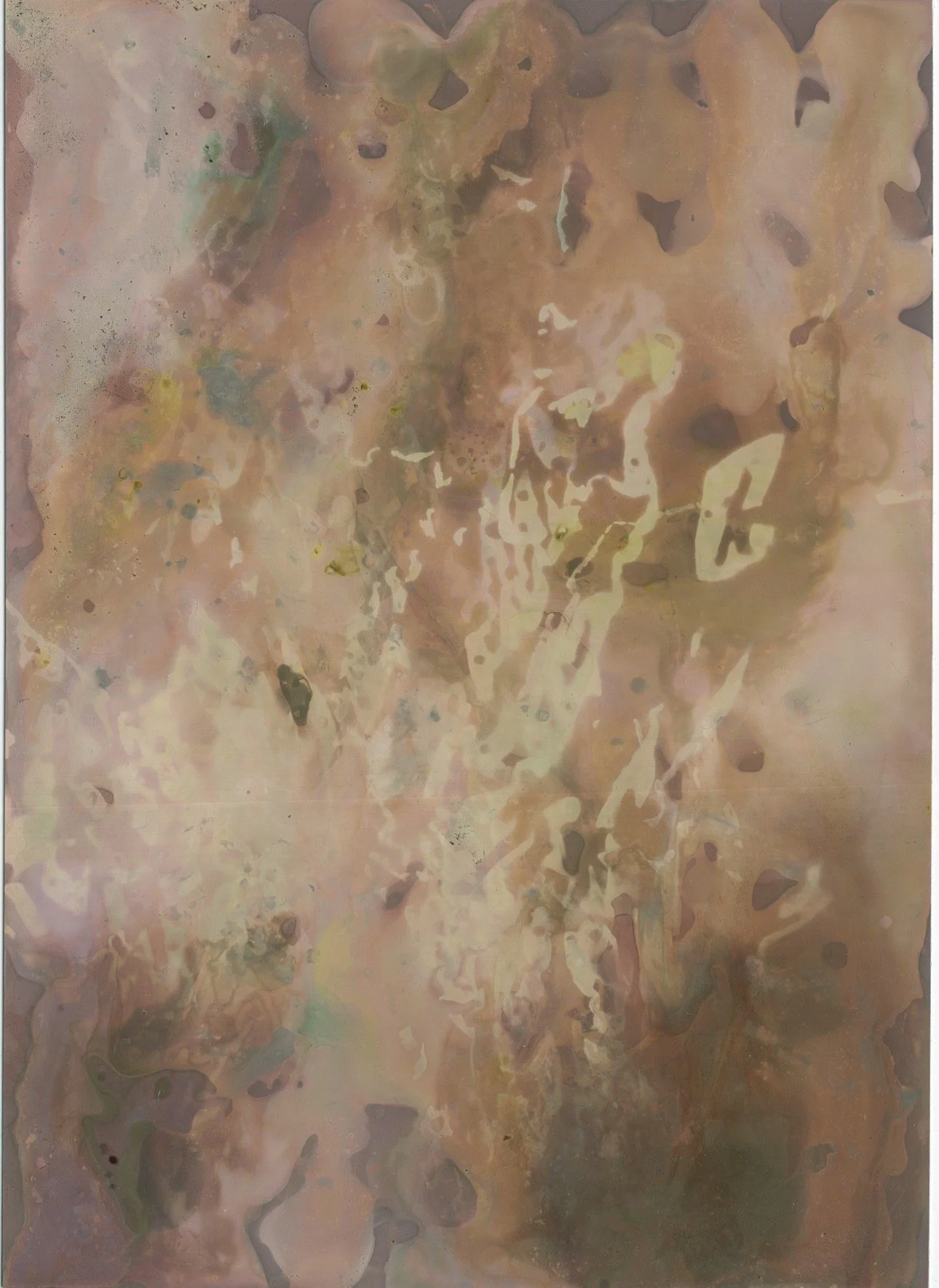
I make up recipes depending on what is in season, what is at hand and, but mostly by how the weather feels. I know a process partly by smell, colour, thickness, heat and the way liquid moves. I do not always know exactly what is happening, and I rarely know in advance where it will end up. I make inks from lichen, fungi, plant matter, minerals, salts and waters from different places, which carry unique temperaments. I use bark and sticks from mistletoe’s, their host, wood shavings from my partner’s studio and windfall. I use the colours I make mostly on paper, silk, wool and wood. A lot of my material experiments begin by combining things in jars and leaving them to rot or steep. After some time I’ll try them with other jars of fermented colour to see how they interact. These might transfer to fabric, paper, wood, photographs or a drawing. The colours can become a little like maps of journeys through weather, or attempts to understand how a place moves.
Wet studio
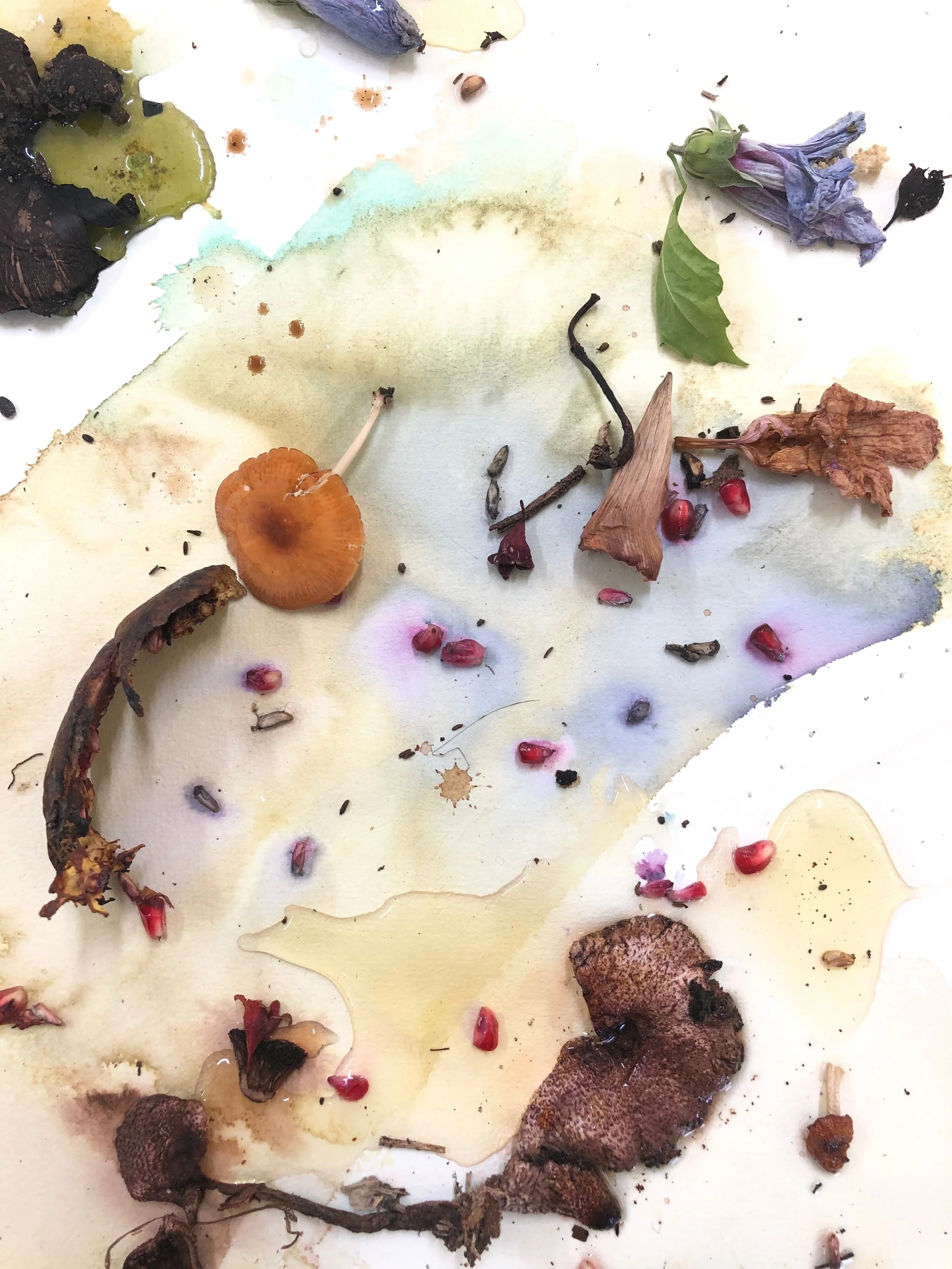
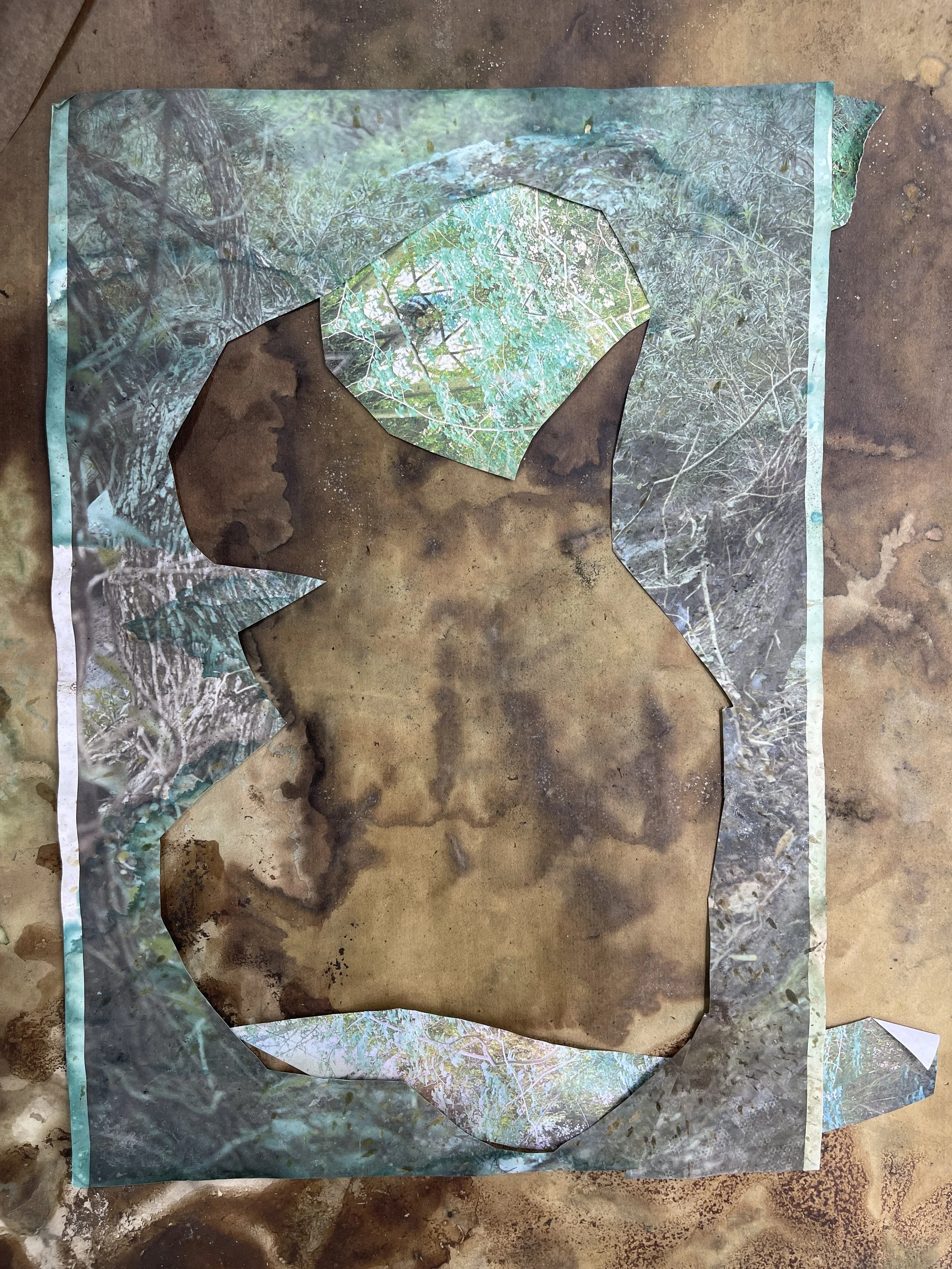
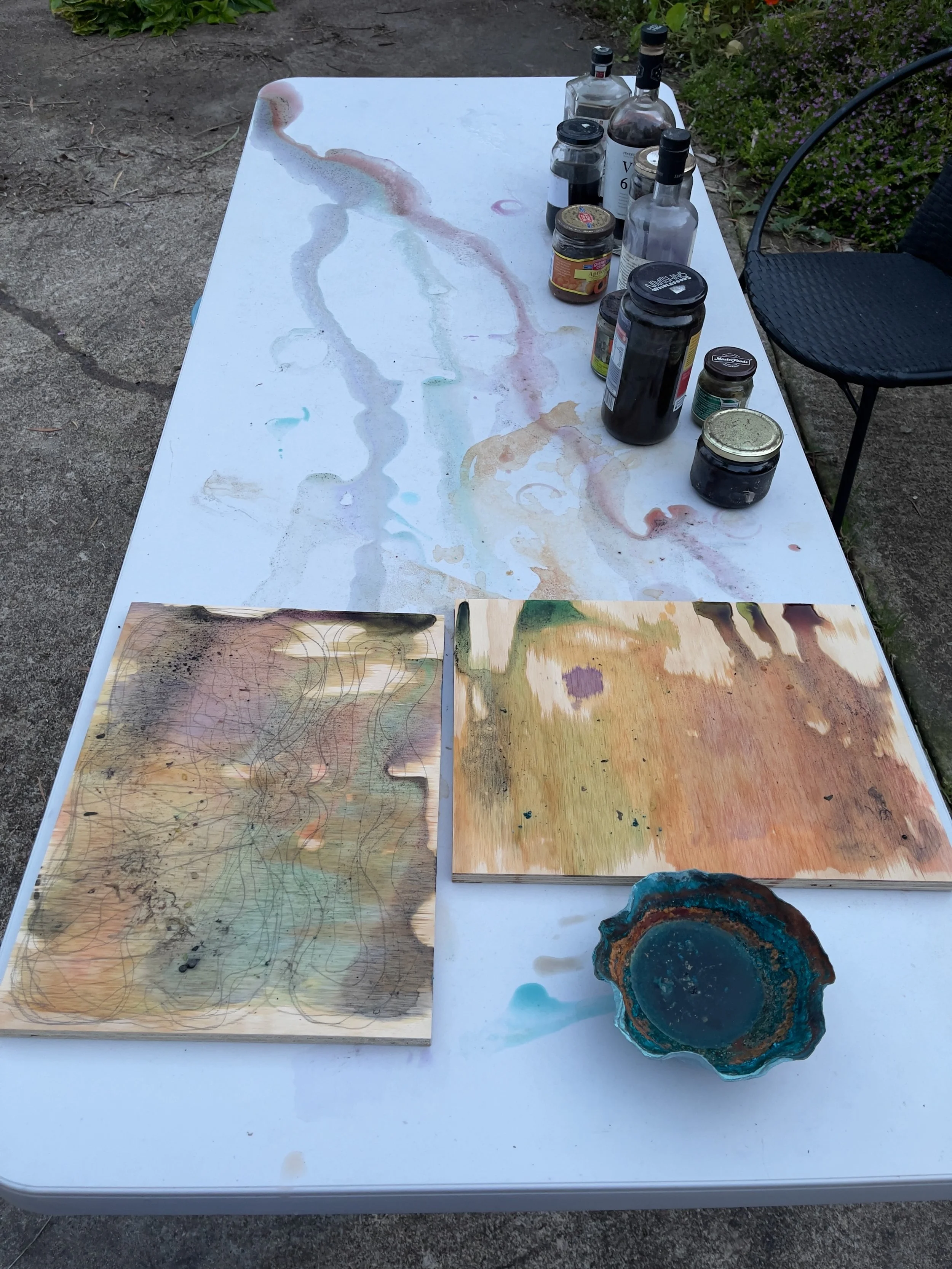
Part of this work happens in an outdoor wet studio, full of jars of concoctions and ferments, and dried windfall. In the wet studio I work on paper, photo paper and textiles. I use plant chemistry to create imprints of interactions between botanicals. I also work directly with botanicals on paper. Environmental difference, like water, soil, and air, change how materials interact. Sometimes I catch myself mumbling- did you ask the wind?..
Mistletoe
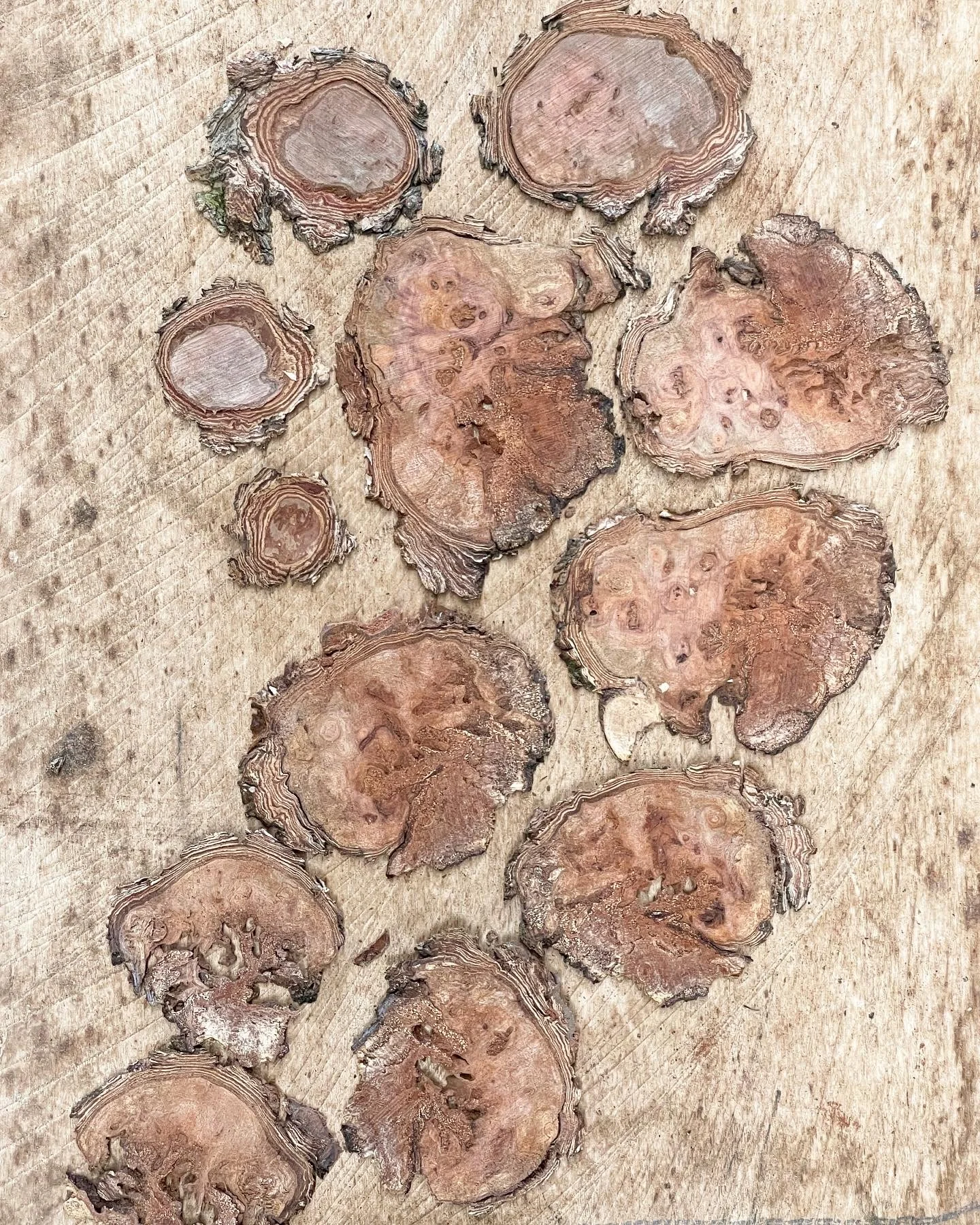
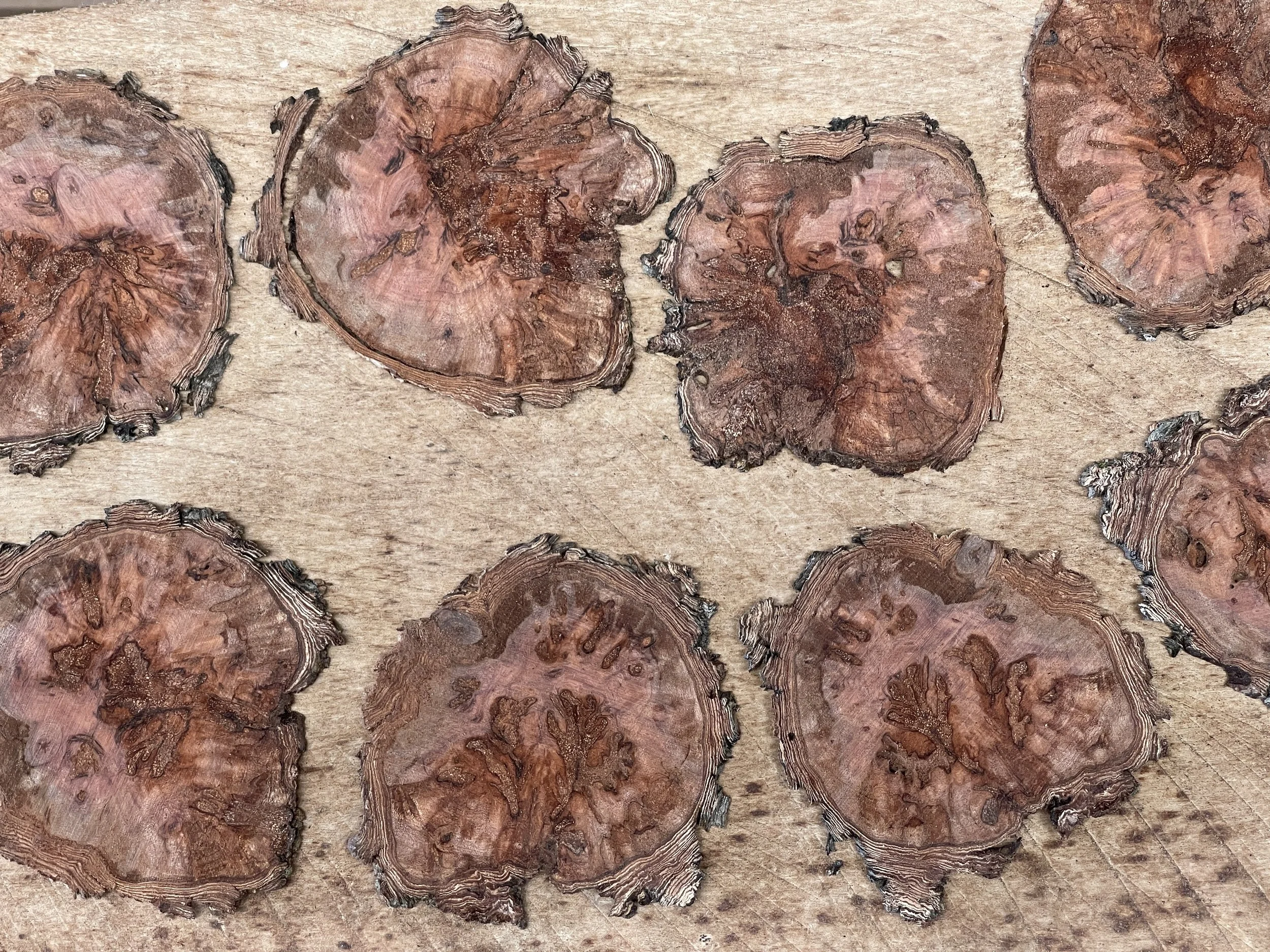
Mistletoe is a very important teacher for me. It has no legs. Once established, it depends on its host tree. That dependence has helped me think about interdependence, and help remind me that despite my body’s limited mobility and other disabilities I still belong and contribute to this world and within community. With the guidance of my very skilled partner, Ross Annels, we slice mistletoes with the bandsaw. (That’s a royal we.) Within the slices you can see the interpenetration of haustoria and host. A cross-section makes the negotiation between the two beings clearly visible. Mistletoes are keystone species, so they host many lives within their bodies. The slices will always carry insect marks, weather damage, traces, tracks and paths. I also use a wonderful old industrial Wadkin sanding machine in Ross’s studio. Through sanding I can see the interpenetration of various beings converging within the haustorium. Some of the cross-sections make Rorschach-like forms, and I find myself considering that these strange forms might be looking back at me. Mistletoe also runs through All a long longing and Everything is Speaking, where it meets fabric, moving image, sound, vibration, scent, light and carved form.
Textiles, wood and additions
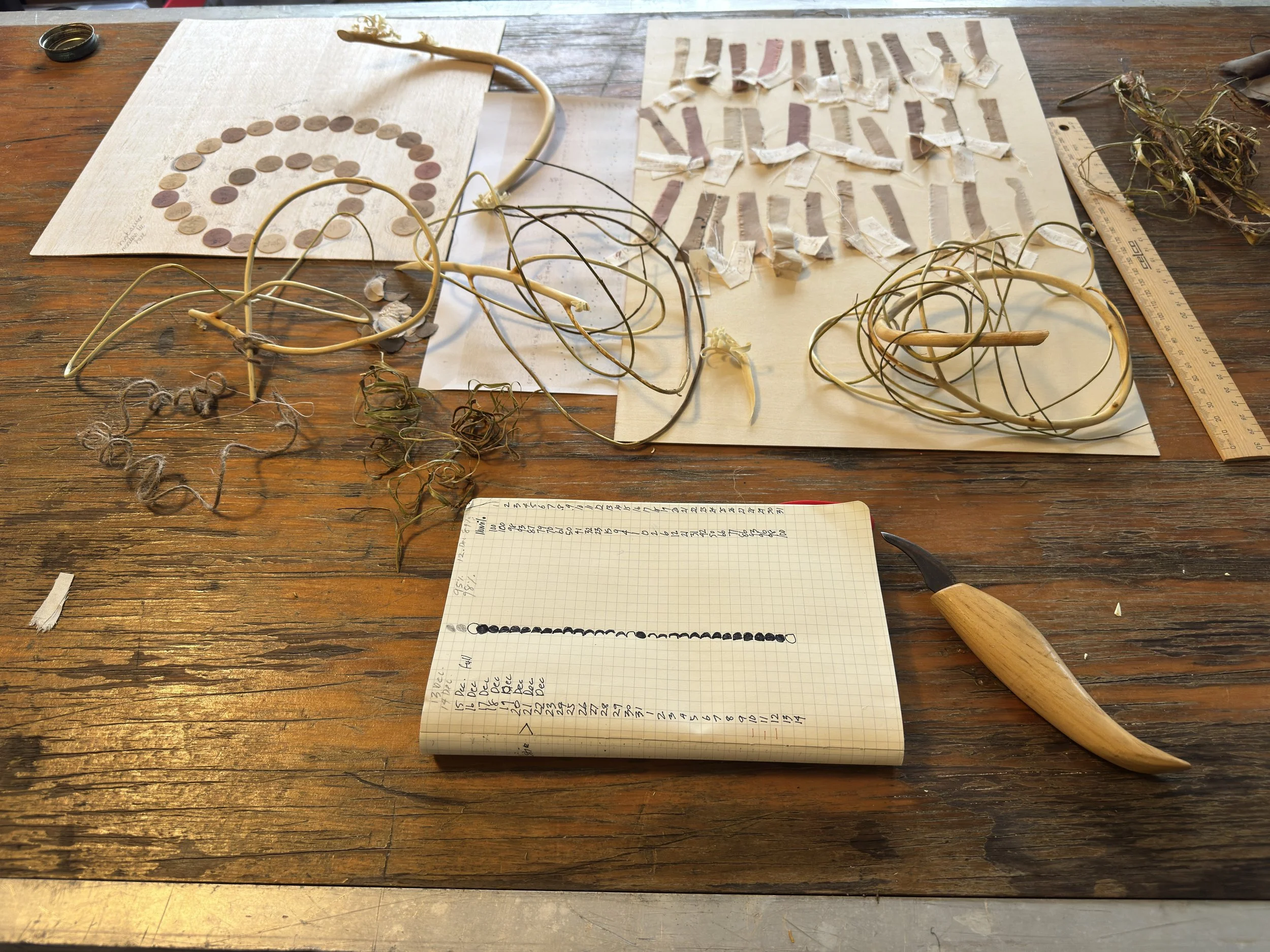
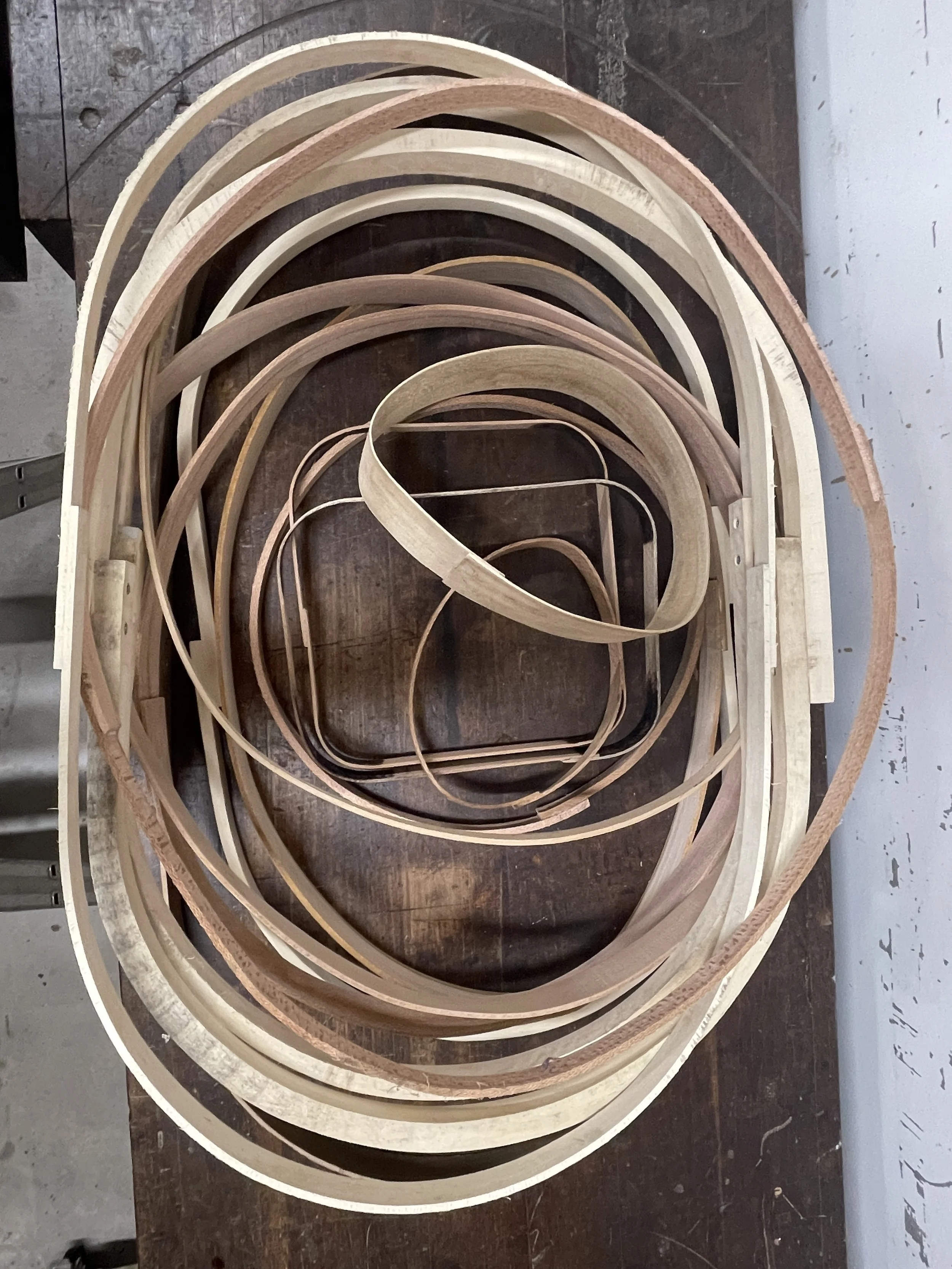
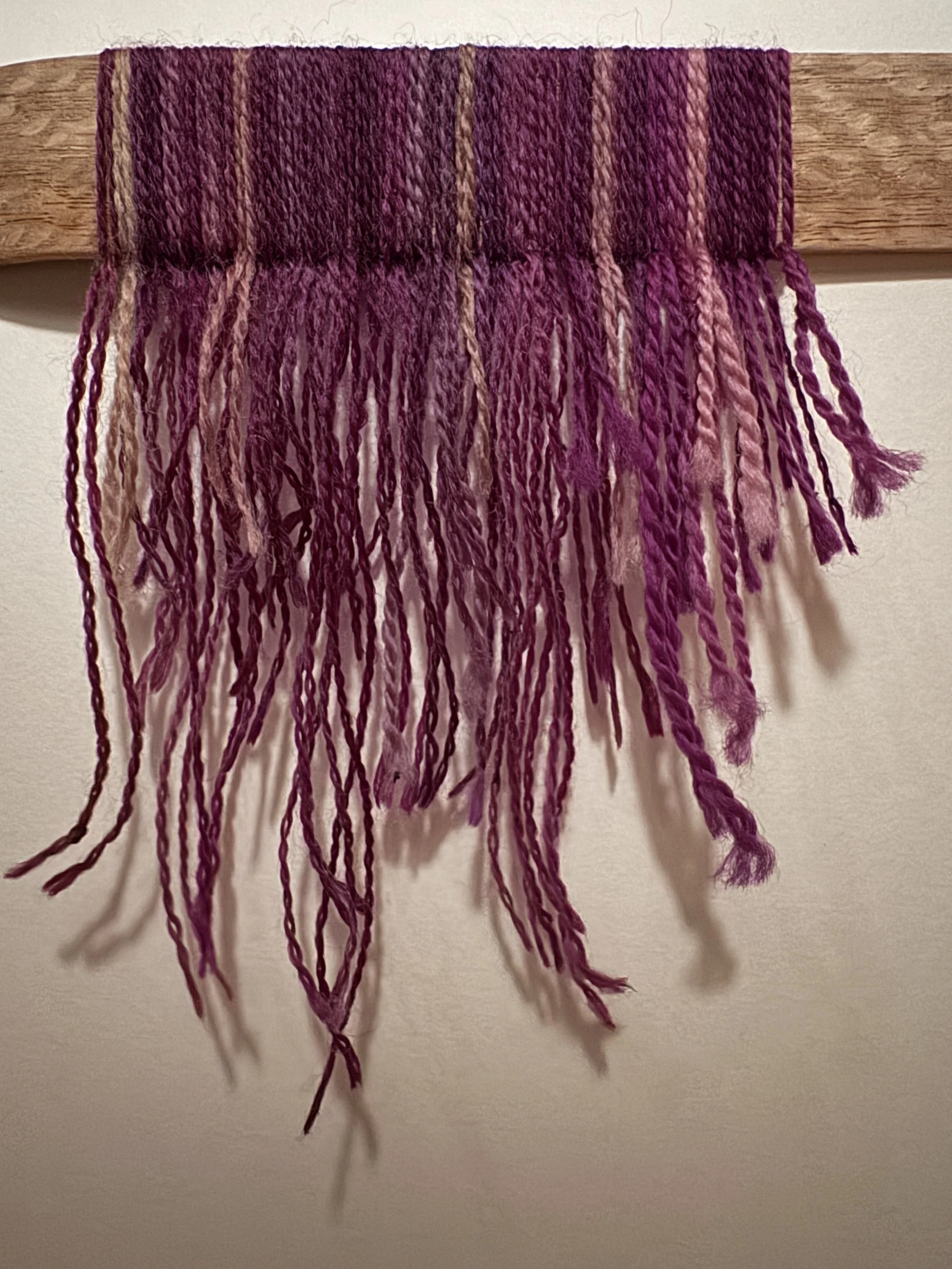
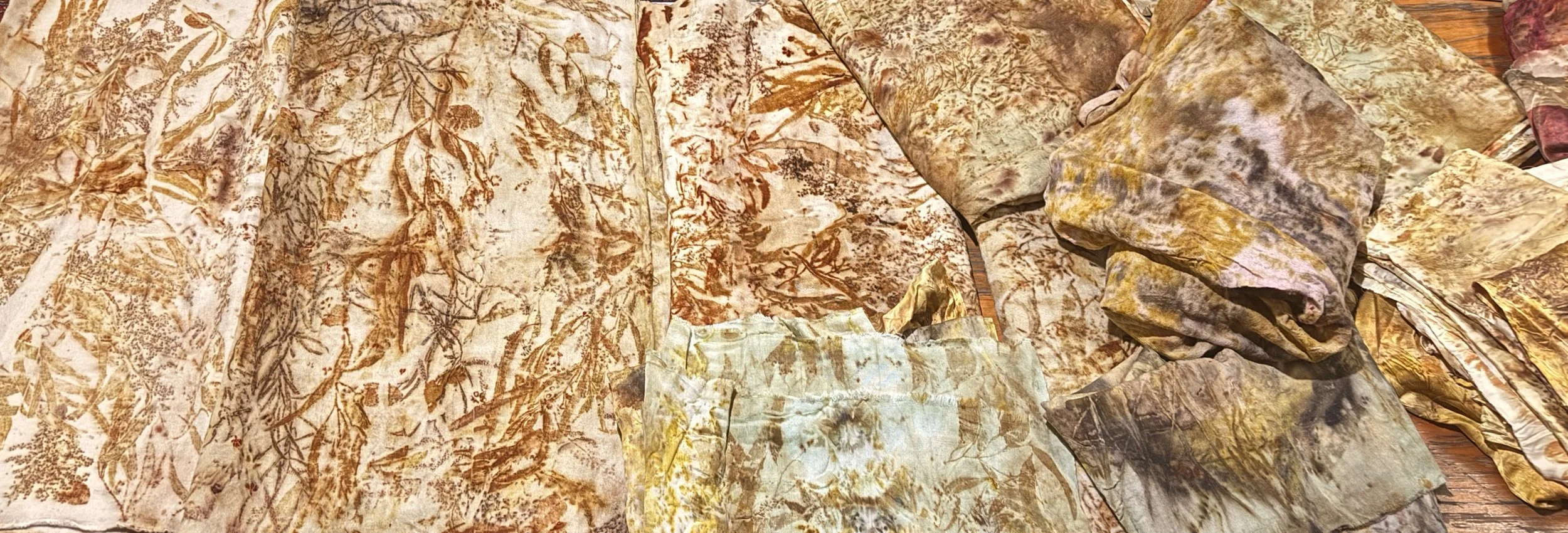
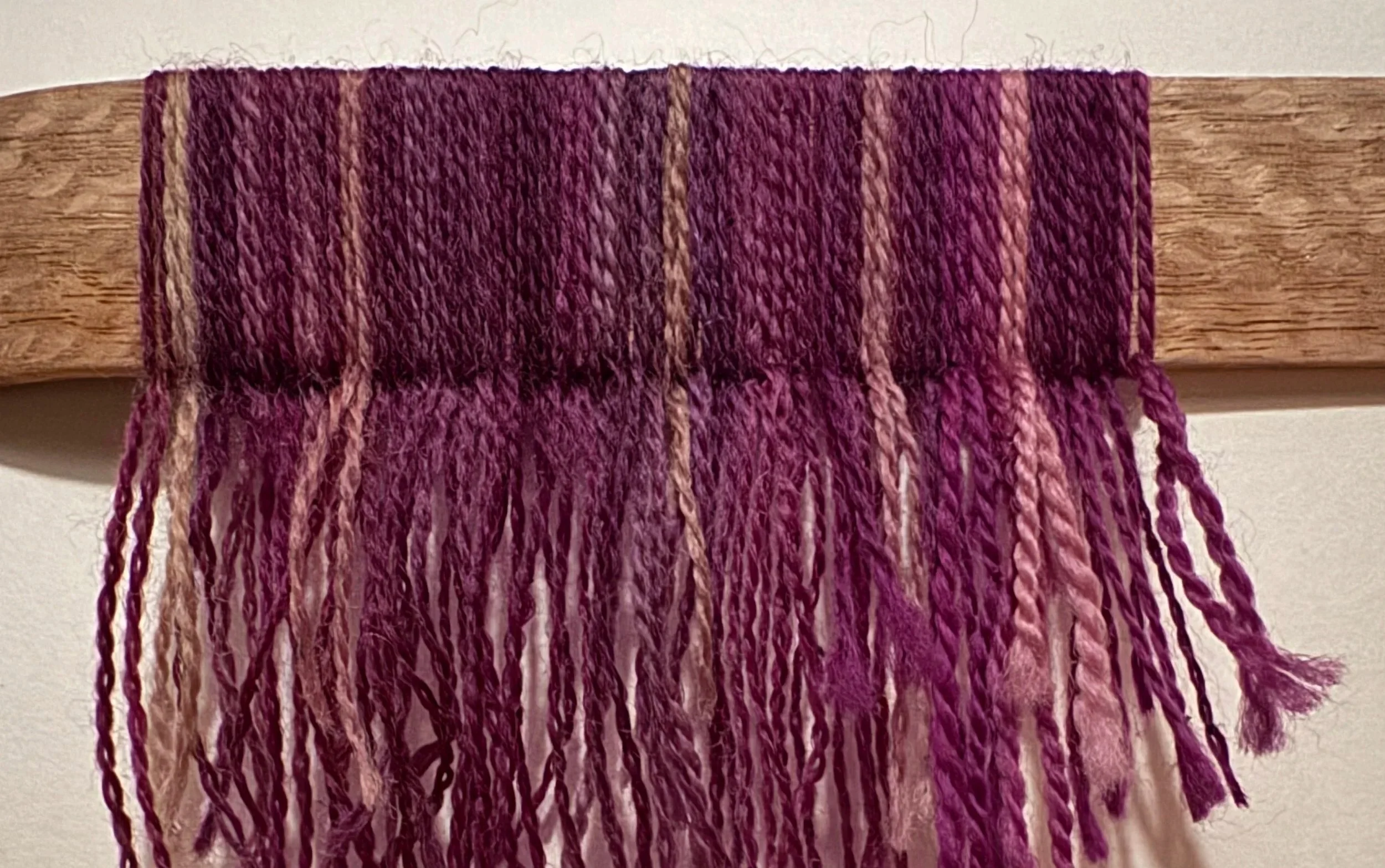
Some remnant plant-dyed fabrics influence or become layers in digital works. Later they might become hanging plaits, ties or another material attachment to the finished work. They hold traces of beings, time, transformation and place.Windfall and waste wood may hold a silk work, create sculptural forms through steam or hot pipe bending, or become a giant necklace or walking stick. Some pieces sit in the studio for a long time before I know what they are for.
Time
Time is part of the materials. A dye can need attention or be ignored, and become something else when it sits for years. My processes are interrupted by weather, illness, fatigue or whatever else is happening. My studio is 4 billion half-finished or brewing projects. And I have to work with my changing energy and sensory capacity. Everything takes it own time.
Related projects
Microbial and Material Intelligences